
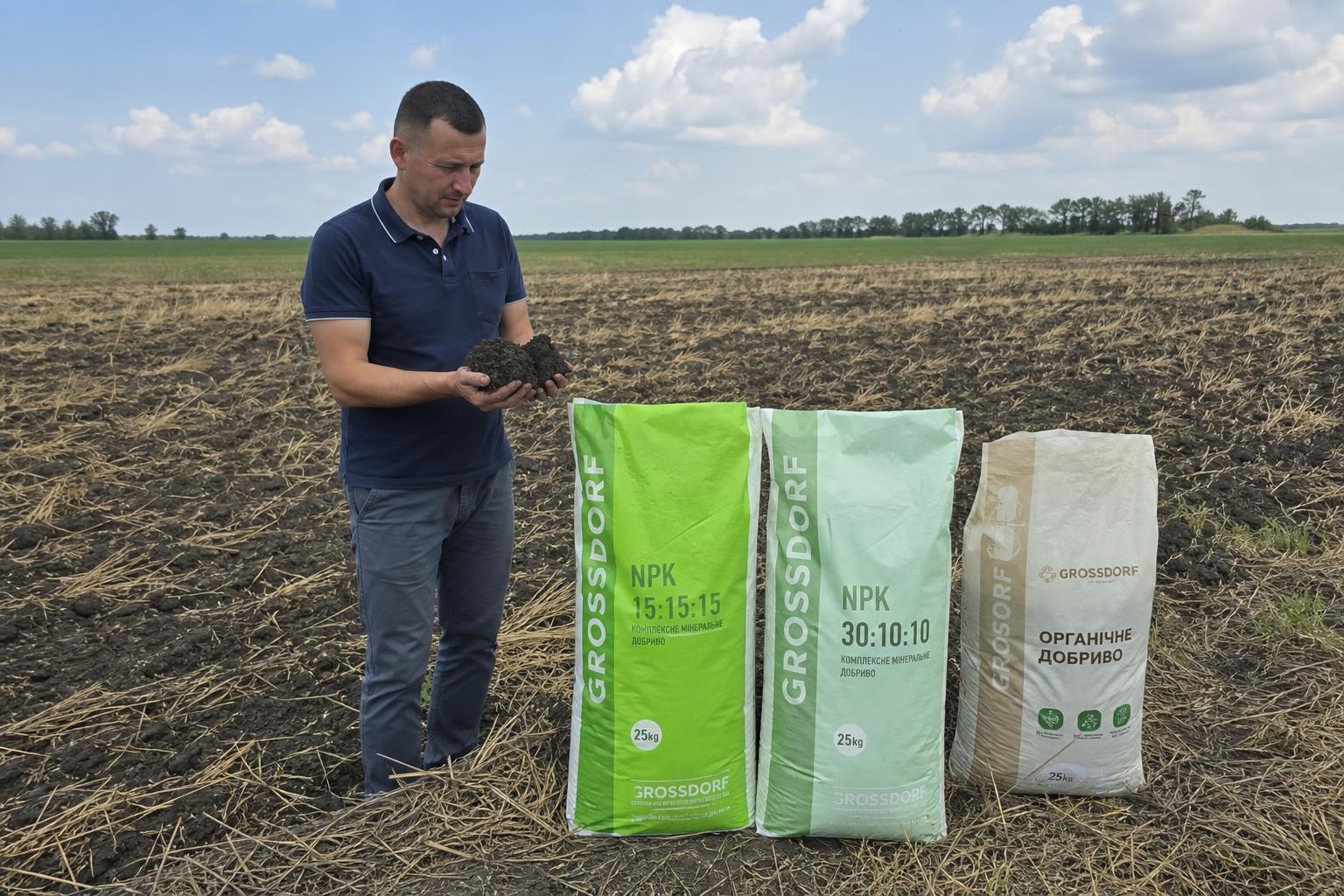
The Ukrainian fertilizer market is entering a period where demand is increasingly influenced not only by the sowing calendar but also by the actual soil conditions in specific regions. The published results of the Institute of Soil Protection research for 2023 show that many oblasts continue to face issues with humus, phosphorus, potassium, and soil pH.
For fertilizer sellers, this means a need to more precisely segment their offerings. For buyers, it entails a more careful comparison not only of price per ton but also of product suitability based on soil analysis, crop requirements, and expected yields.
What Soil Data Shows
Low soil quality has been recorded in Sumy, Volyn, and Zhytomyr regions. Volyn and Zhytomyr belong to Polissya, where typical problems include increased acidity and lower humus content. The average humus level for this region is reported at 2.43%.
Sumy region stands out as an area where soil quality assessment has decreased the most compared to previous surveys. The materials attribute this to soil exhaustion due to intensive farming practices.
Most Ukrainian regions are classified as having medium soil quality. However, agrochemical conditions vary significantly: Vinnytsia, Chernihiv, and Zakarpattia regions have a high proportion of acidic soils, while Zaporizhzhia, Odesa, Kherson, and Mykolaiv regions have predominantly alkaline soils.
Phosphorus, Potassium, and Humus: Where Demand Is Forming
A key signal for the mineral fertilizer market is the overall decline in phosphorus and potassium concentrations in agricultural soils across Ukraine. According to data, phosphorus availability ranges from 56 mg/kg in Chernivtsi to 176 mg/kg in Kherson.
This supports interest in complex NPK solutions and specific phosphorus-potassium fertilization schemes. At the same time, a universal recommendation is risky: regional differences are too significant, making current soil analysis critical for buyers.
An additional demand segment is organic fertilizers and organic matter sources. The highest humus deficit identified in the study is in Odesa, Cherkasy, and Zaporizhzhia regions, with 810, 760, and 630 kg per hectare respectively. The reasons include insufficient application of mineral fertilizers and organic residues.
Regional Fertilizer Sales Logic
For Polissya, the focus may shift toward solutions that consider soil acidity and the need to maintain humus levels. In southern regions with alkaline soils, precise selection of fertilizer forms and compatibility with specific field conditions becomes more important.
Kirovohrad and Kharkiv regions are noted as areas with high average soil quality. However, even in Kharkiv, where the highest humus content is recorded at 4.3%, there is a decline in phosphorus and potassium levels. This indicates that high initial soil potential does not eliminate the need for systematic fertilization.
For sellers on AgroPost, it is useful to specify not only the fertilizer brand but also key parameters: N, P, K content, element forms, packaging, quality certificates, shipment region, and minimum order quantity. For buyers, this simplifies comparison of offers.
Key Market Participants’ Conclusions
- NPK and phosphorus-potassium products remain in focus due to observed declines in phosphorus and potassium in soils.
- Organic fertilizers may see increased demand in regions with humus deficits.
- Regional specifics are becoming more important than universal application schemes.
- Soil analysis is a crucial argument in choosing fertilizers, application rates, and nutrient forms.
- Sellers should detail product characteristics to ensure proposals are clear for farms across different soil zones.
Implications for the market: demand for fertilizers in Ukraine will increasingly depend on agrochemical diagnostics rather than seasonal hype. On AgroPost, the most competitive listings will be those that clearly explain which soil conditions and crops the product suits, which nutrients it supplies, and how quickly it can be delivered to the target region.
Comments
No comments yetNo comments yet - be the first.