
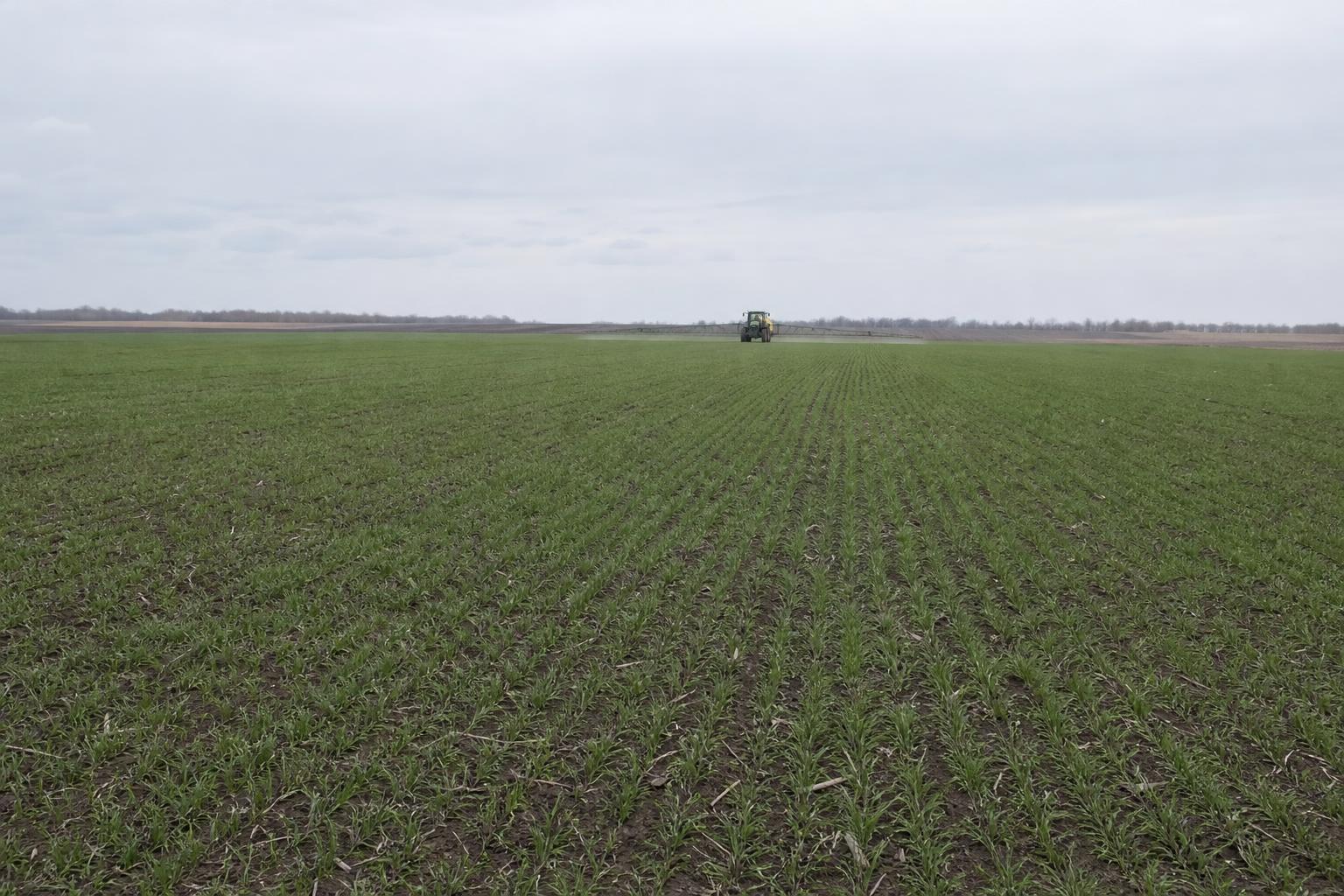
For farms growing winter cereals, autumn weed control is about more than keeping fields clean. It can reduce competition for moisture and nutrients, as well as mitigate the risk of plants becoming overgrown before winter.
At the same time, treatment should be planned with actual weather conditions, financial resources and the application requirements of the selected herbicide in mind.
Why control weeds in autumn
According to Oleksandr Myhlovets, head of the agrotechnology department at Ukravit, autumn treatment of broadleaf weeds helps reduce their competition with winter crops for resources. Control at this time can also prevent excessive plant elongation.
Another reason to opt for autumn treatment is to ease the spring workload. Weeds controlled in autumn should pose less of a threat after vegetation resumes, when weather conditions or machinery workloads may make timely spraying difficult.
What to check before treatment
- Crop condition and weed species. Determine whether the problem is one the selected product is designed to address.
- Weather conditions. Ukravit’s guidance for the solution recommended by the company specifies an average daily temperature of +9…+10 °C. This is not a universal threshold for all herbicides: follow the label for the specific product.
- Cost and availability of resources. Compare treatment costs with the farm’s budget and its ability to apply the product at the right time.
- Spring work plan. Consider whether autumn control could reduce the risk of spraying overlapping with spring fertilisation and other field operations.
Practical guidance for farms
A Ukravit expert advises against ruling out autumn herbicide treatment when weather conditions and financial resources are suitable. The company also lists volunteer sunflower and rapeseed among the broadleaf weeds controlled with selective herbicides.
Before purchasing, check that the product is approved for the specific crop and target weeds, and follow its instructions. Applying a herbicide in autumn does not guarantee the same results in every field.
What this means for the market
For farms and crop protection suppliers, autumn weed control is a matter of planning ahead: product requirements should be matched to the crop, crop condition, weather window and budget. Buyers should clarify application requirements, while sellers should provide information on the crops for which a specific product is approved and any restrictions that apply.
Comments
No comments yetNo comments yet - be the first.