
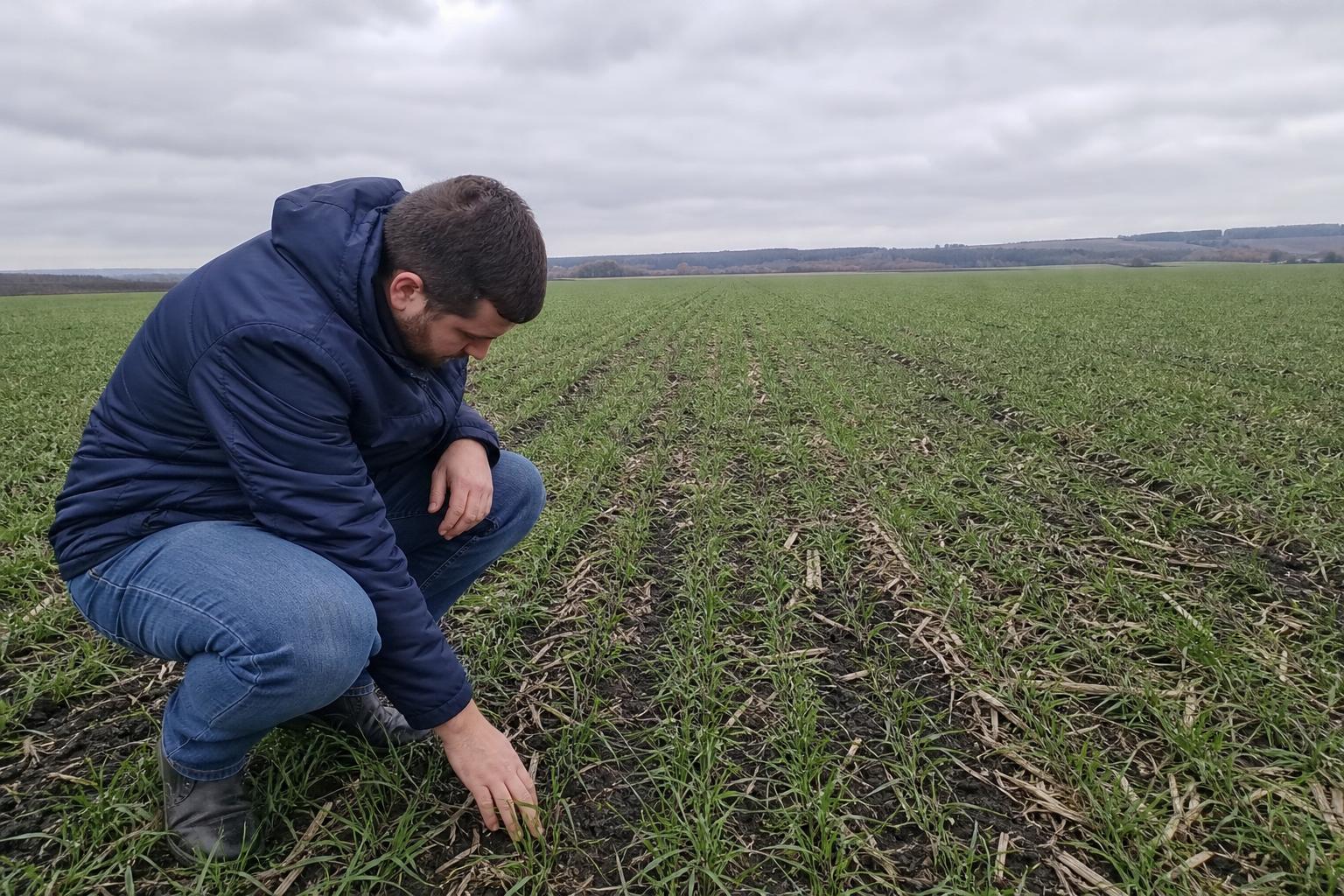
Winter wheat in Ukraine may enter winter at different growth stages, from initial emergence to tillering. According to the NAAS agrometeorological review for October 2026, some crops sown in the first half of November may begin winter dormancy before emergence.
When planning crop protection, it is important to account for variability across fields. Late emergence or weaker growth alone does not constitute a recommendation to apply crop protection products: decisions should be based on the actual condition of the field and the specific problem identified.
Different sowing dates, different crop conditions
Long-term observations show that autumn growth of winter wheat across most of Ukraine usually ceases in the second or third ten-day period of November. For successful overwintering, plants need to grow for at least 45–50 days after emergence and develop 3–5 shoots.
At low temperatures, seedlings may emerge 29–30 days after sowing, with tillering beginning another 26–28 days later. As a result, late-sown crops may enter winter with an underdeveloped root system and tillering node, or without a tillering node altogether.
What to check before making crop protection decisions
- Assess crop development separately in fields with different sowing dates.
- Record the actual growth stage and the variability of plants within each field.
- Do not treat weak growth on its own as confirmation that pesticide treatment is needed.
- Discuss the suitability of a specific measure with an agronomist, based on crop condition and the problem identified.
The October NAAS review noted that, by the end of the month, crops sown within the recommended window were in better condition than a year earlier. October rainfall totaled 74.9 mm, or 197% of the climatological norm. Wheat following bare fallow developed best; after sunflower, crop condition ranged from full emergence to the beginning of tillering.
What this means for the market
For crop protection product buyers, variability in winter crops is a reason to first assess the condition of the specific field rather than choose a product based only on the crop or sowing date. Sellers on AgroPost should clearly state a product’s intended use and specifications so farmers can match an offer to their needs. The wheat development data presented here do not, on their own, establish a need for herbicides, fungicides or other crop protection products.
Comments
No comments yetNo comments yet - be the first.