
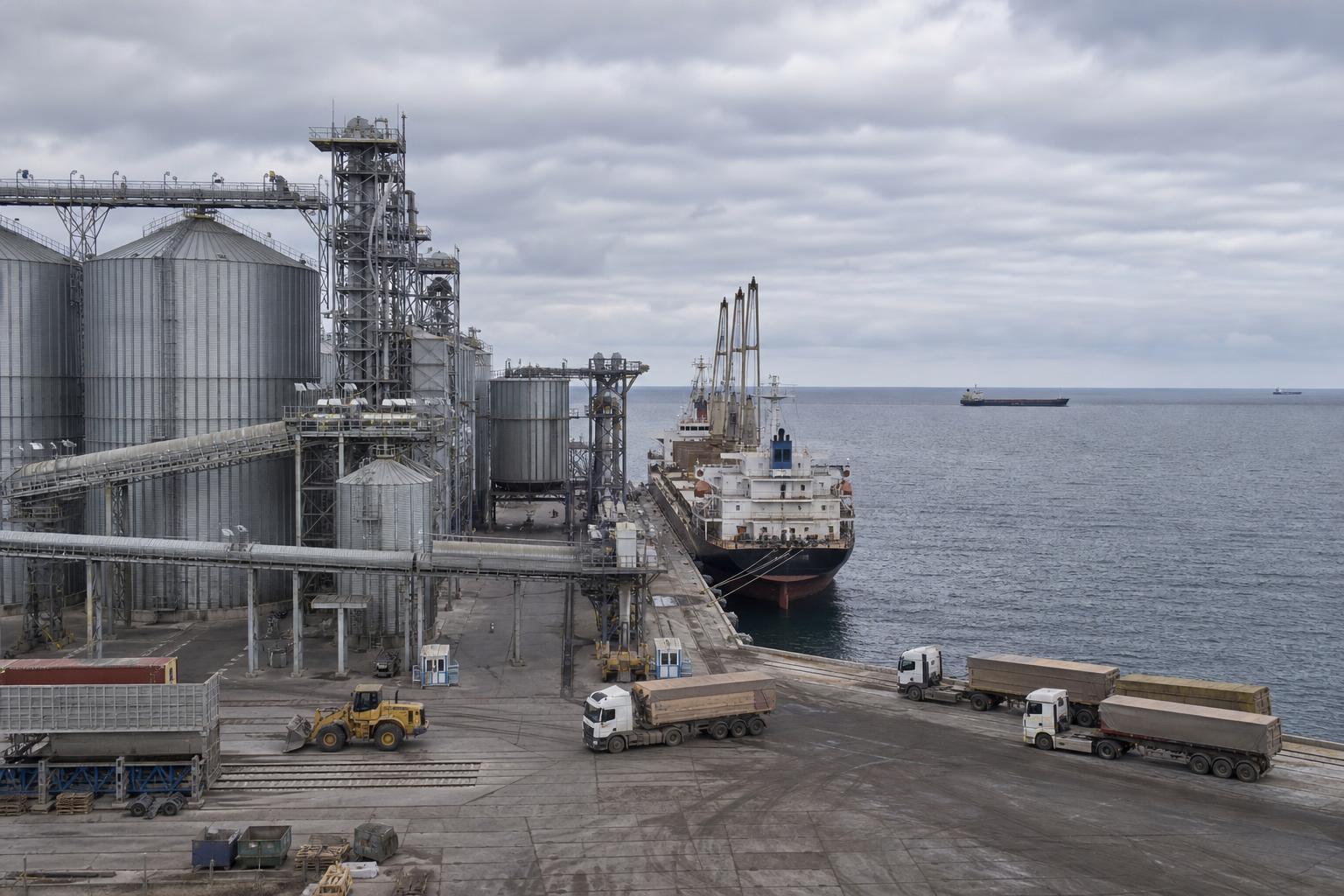
Marine logistics remains critical for Ukrainian agriexport, but recent reports from the port sector indicate that security concerns are once again taking center stage for shipowners, traders, and cargo shippers.
For agribusiness, this is not only a matter of freight costs. Risks near ports and approaches can affect vessel schedules, carriers’ willingness to accept cargo, insurance conditions, and negotiations between sellers and buyers.
Ship and crew safety has become a separate market signal
The Indian Seafarers’ Union has called for the evacuation of 13 Indian nationals from the vessel M.V. AMIR1 at the port of Chornomorsk. The union’s statement cited dangers from drone and missile attacks in close proximity to the vessel.
The Indian Embassy in Ukraine reported that it is closely monitoring the situation and is in contact with involved parties regarding crew safety. The Indian Ministry of External Affairs also expressed concern following an attack on the merchant vessel MV OMORFI near Odesa, which had Indian sailors onboard.
For Ukrainian exporters, this means that crew safety issues could directly influence shipowners’ decisions on port calls, waiting at anchor, and accepting new contracts.
How this changes transportation negotiations
In current conditions, buyers and sellers should agree in advance not only on the product price but also on logistical parameters of the deal. This is especially important for batches of grain, oilseeds, meal, oil, and other export cargoes that depend on maritime routes.
- Delivery basis. Clarify at which stage costs and risks transfer: elevator, port, terminal, or vessel.
- Loading window. Set a realistic period for transport dispatch, batch accumulation, and possible schedule changes.
- Documents and insurance. Verify that contract conditions match the actual route and carrier requirements.
- Alternative route. When possible, compare maritime delivery with alternatives via Danube, rail, or road transport.
Regional context: risks are rising not only for Ukraine
According to Bloomberg, Russia is considering additional measures to protect grain carriers, including military escort, installation of protective equipment, and deployment of armed personnel on certain segments of the route in the Sea of Azov and the Black Sea.
The reports also noted that part of Russia’s grain exports pass through the Sea of Azov ports, but commercial shipping there has been virtually halted since July 10 due to attack risks. SovEcon estimates suggest Russian grain export losses could range from 0.5 million to 1.5 million tonnes per month if restrictions persist.
For the Ukrainian market, this background is not a direct price indicator but an overall signal of heightened nervousness in Black Sea logistics. Shipowners and traders assess risks across the region, which means freight conditions and willingness to operate in certain directions can change rapidly.
Quick checklist for sellers and buyers on AgroPost
- Sellers: Clearly specify available volume, storage location, and options for delivery to the port or alternative shipment points in your listings.
- Buyers: Clarify whether logistics costs are included, who is responsible for delays, and how route changes are documented.
- Exporters: Do not leave insurance, demurrage, certification, and transport submission deadlines open.
- Carriers: Update information on available routes, transport types, tonnage restrictions, and readiness to handle port cargoes.
What this means for the market: Ukrainian agricultural logistics is entering a period where the product price alone, without a clearly defined route, no longer provides a complete picture of the deal. On AgroPost, sellers should make their announcements as specific as possible regarding shipment conditions, and buyers should verify logistics details before finalizing price agreements.
Comments
No comments yetNo comments yet - be the first.