
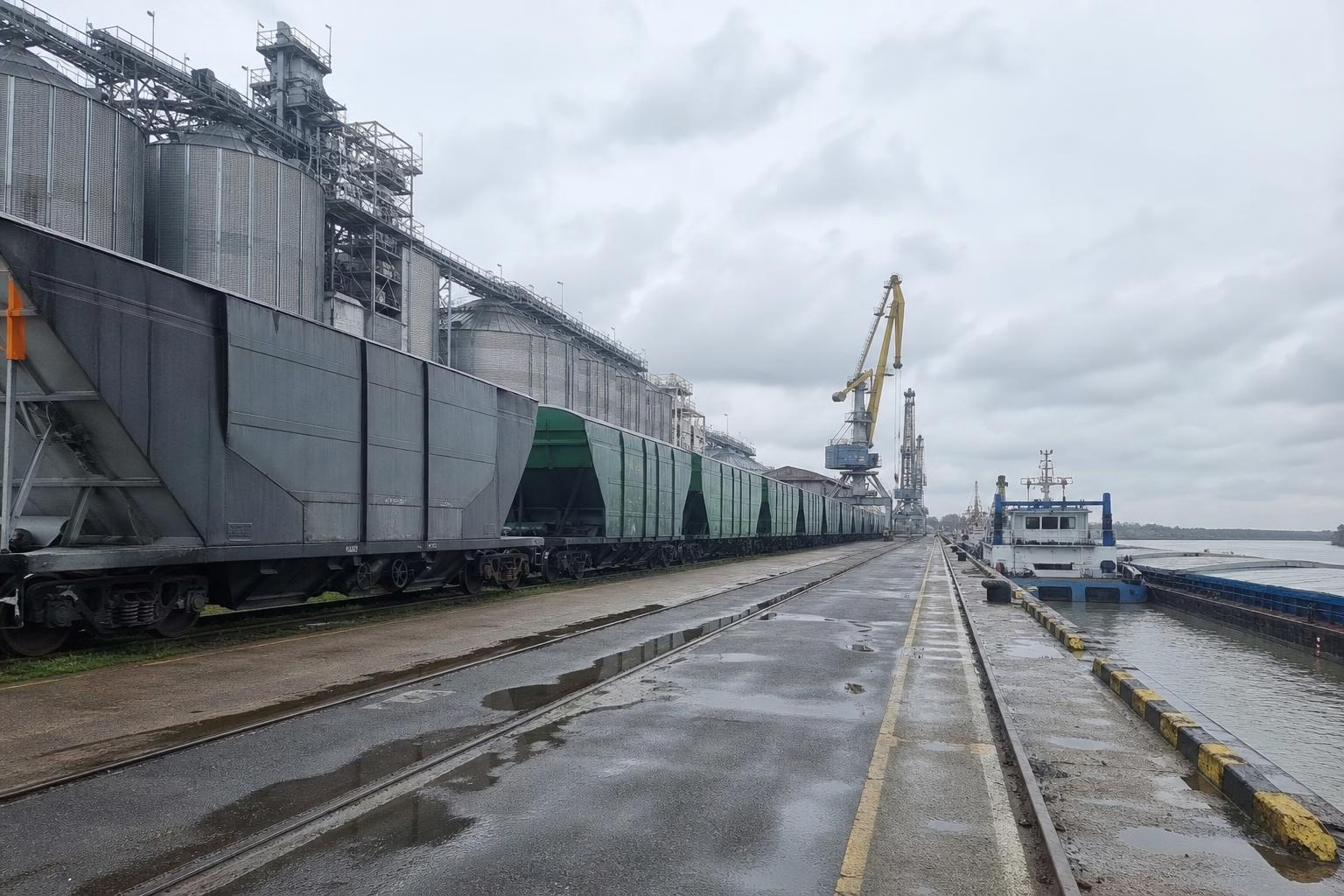
The Danube export route has once again become a focal point in the agricultural market. Damage to the bridge in Odesa region complicates railway supplies of grain to river ports, which remain an important alternative for export.
For grain sellers, this means paying closer attention to delivery timelines, contract terms, and actual route costs. For buyers, it underscores the need to incorporate delay risks into acceptance and payment schedules.
What’s happening with deliveries to Danube ports
According to Ukrzaliznytsia, due to the bridge damage in Odesa region, transporting grain to Danube ports has become significantly more challenging. The company reports that without using this crossing, some wagons may require up to 26 days to reach the ports.
Currently, approximately 3,000 wagons with grain are heading towards Danube ports for further export. An alternative route through Moldova is possible, but its capacity is limited.
Since the beginning of the month, 118,000 tons of grain have been transported to Danube ports. An additional 346,200 tons have been exported via land border crossings with Eastern European countries.
Corn prices decline amid logistical risks
At Danube ports, purchase prices for new crop corn have decreased by $3–10/ton since the start of the week. As of September 17, prices mostly ranged from $165 to $170/ton CPT port.
Several factors are exerting downward pressure on prices: new harvest arrivals, existing transitional stocks of about 5.5 million tons, more expensive alternative logistics, and issues with export routes.
An additional market factor is the minimal export prices, which, according to market participants, can reach up to $195/ton under CPT terms. If such levels exceed current market prices, it complicates customs clearance and negotiations between sellers and buyers.
What sellers and buyers should consider on AgroPost
- Specify the route in your commercial proposal. For grain destined for the Danube, it is crucial to immediately indicate whether the batch is ready for shipment by rail, road, or via a combined route.
- Clarify delivery timelines. Due to potential delays, it is advisable to agree not only on the dispatch date but also on an estimated window for arrival at the port or border crossing.
- Separate product price and logistics costs. In a market where freight rates and railway routes change rapidly, transparent pricing helps avoid disputes.
- Check CPT conditions. If the deal is linked to CPT port, the seller needs to understand which costs and risks are already included in the price.
- Have a contingency plan. For large grain batches, it is advisable to pre-calculate alternative land crossings or other port options.
Key market insights
The Danube remains an important export channel, but its capacity depends not only on port infrastructure but also on the stability of approaches to these ports. Damage to a single infrastructure node immediately increases load on alternative routes.
The decline in corn prices at Danube ports indicates that buyers are factoring logistical risks into their bids. Sellers will need to compete not only on quality and volume but also on delivery predictability.
What this means for the market: In the near term, logistics may continue to be a primary factor in grain export pricing. For AgroPost participants, a practical advantage will be those who clearly specify shipment origin, available transport, delivery conditions, and readiness to work with alternative routes in their announcements.
Comments
No comments yetNo comments yet - be the first.