
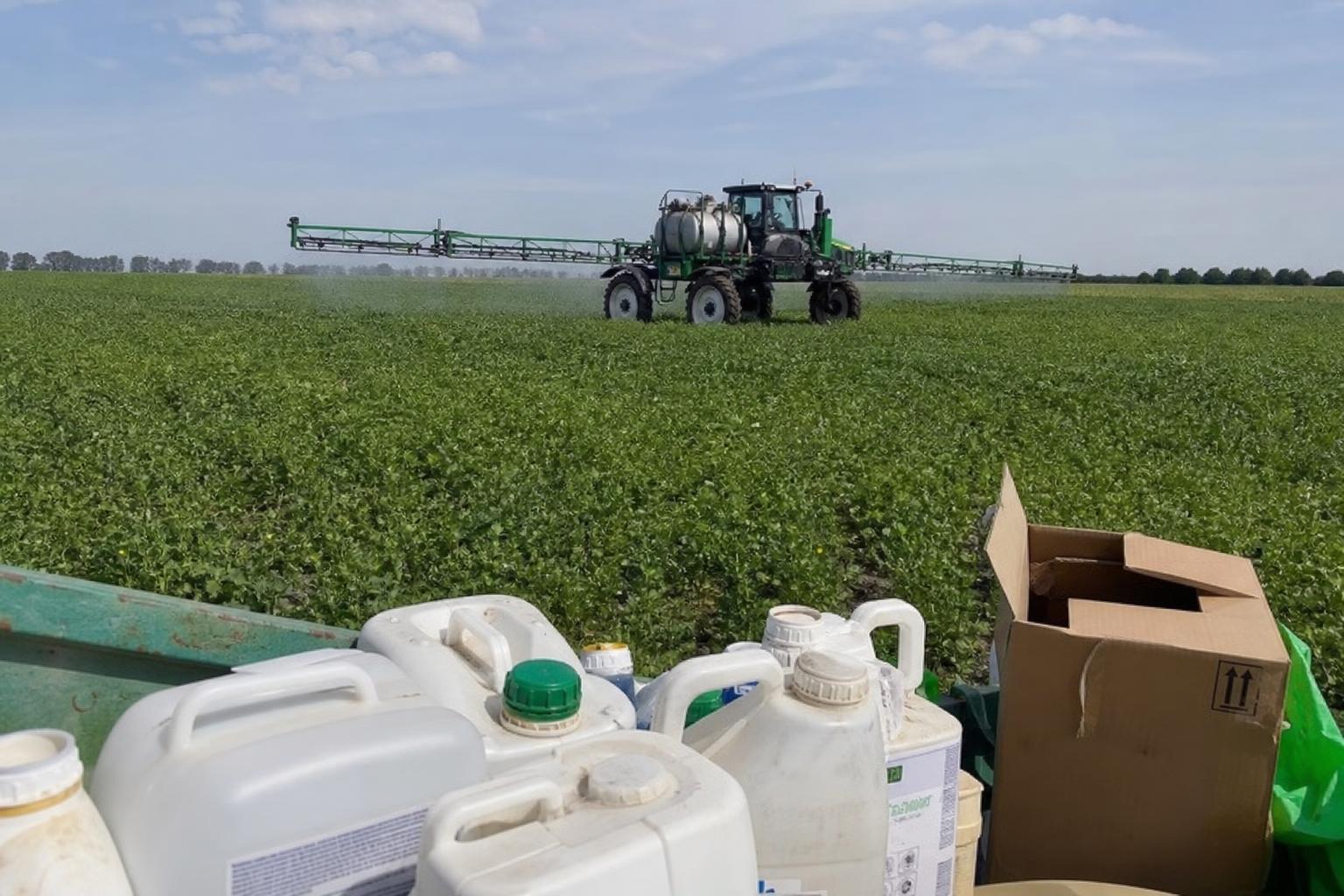
The Ukrainian crop protection market remains sensitive to seed funding, crop structure, and the availability of quality products. For farms, this means a need to plan pesticide purchases earlier, while for sellers, it involves providing more precise product descriptions and offering solutions tailored to specific tasks rather than just individual products.
In professional circles, increasing attention is paid not just to the availability of herbicides or fungicides, but to the effectiveness of protection schemes in the field. Practical efficacy becomes a key argument in negotiations between suppliers, dealers, and agricultural producers.
Demand shifts toward proven schemes
For farmers, purchasing pesticides is not a one-time operation but part of a technological plan. Buyers evaluate products based on crop type, growth stage, weed and disease risks, and the timing of application.
Therefore, on the marketplace, it is important not to limit listings to just the product name. Ads that specify active ingredients, crop suitability, spectrum of action, and packaging format hold higher practical value for buyers.
For sellers, this also helps reduce non-target inquiries. When farmers immediately see which crops and tasks a product is suitable for, communication shifts from clarifications to concrete deals.
Herbicides and fungicides: what to clarify before purchase
In the herbicide segment, key considerations remain crop type, weed spectrum, and application timing. It is critical for buyers to understand whether the product is soil-applied, protective, or specialized for a specific problem in the field.
For fungicides, the main focus is on prevention or control of existing disease pressure. Buyers should inquire not only about price per liter or kilogram but also about application rates, compatibility with other products, and recommended application stages.
- Buyers should verify registration, originality, expiration date, and storage conditions.
- Sellers should include photos of packaging, batch numbers, and full descriptions of active substances.
- Dealers should formulate offers not only for individual products but also for technological schemes for main crops.
Funding influences procurement pace
In 2027, budget support for farmers is planned at 7.4 billion UAH, according to industry reports. At the same time, some expected contributions to the special fund have been revised based on actual export duties on soy and rapeseed.
For the pesticide market, this does not automatically mean price or demand changes but confirms the overall trend: farms will carefully manage working capital. Under these conditions, proposals that clearly outline not only the product price but also the economics of its application will be preferred.
Buyers may increasingly split purchases into stages: basic products for sowing, protective solutions based on field conditions, and fungicide treatments depending on weather and phytosanitary situation.
How to list pesticide offers on AgroPost
To effectively sell pesticides on AgroPost, it is important to make listings as practical as possible. A brief description without technical details is less effective in a segment where a wrong choice can impact yield and farm expenses.
- Specify the product type: herbicide, fungicide, insecticide, seed treatment, or other.
- Add active ingredient and concentration if available in documents.
- Describe the crops for which the product is intended.
- Indicate packaging, remaining stock, shipment region, and delivery options.
- Include information about documents, certificates, and storage conditions.
This structure simplifies comparison for buyers and increases trust for sellers, helping them stand out among listings with minimal descriptions.
What this means for the market. In Ukraine’s crop protection segment, the value of precise product positioning is growing. Farmers will seek not just cheap pesticides but products with verified origin, clear purpose, and practical application schemes. On AgroPost, this creates an advantage for sellers offering herbicides, fungicides, and other protection agents as ready solutions for specific field tasks.
Comments
No comments yetNo comments yet - be the first.