
Planning for crop protection in Ukraine is increasingly shifting from simply selecting a herbicide or fungicide for a specific field. For sellers and buyers of pesticides, financing, crop structure, quality requirements, and sales expectations are becoming crucial.
Recent signals from the agricultural market indicate that grain and oilseed crops remain in focus, meaning demand for herbicides, fungicides, and other products will be driven by the economics of these crops. For AgroPost, this underscores the importance of accurate, clear, and well-structured pesticide listings.
EU Integration Factor: Greater Focus on Pesticide Transparency
The European Commission, according to specialized media reports, is considering individual conditions for Ukraine’s agricultural integration after accession to the EU. Documents mention potential restrictions on financial support and market access for certain agricultural commodities, including grains.
For the crop protection market, this is not a direct price signal. However, it serves as an important guideline for business preparation: pesticide buyers will increasingly pay attention not only to price but also to the origin of the product, registration, documentation, residue limits, and compliance with future sales requirements.
For sellers, it is advisable to make listings more detailed: specify the crop, problem, formulation, packaging, availability of documents, and delivery conditions. Trust in the product often matters as much as discounts in the pesticide segment.
Oilseed Crops Remain a Key Driver of Demand for Protection
Data from the processing sector confirm that oilseed crops continue to be a strategic focus for Ukrainian agribusiness. One of the largest processors reported a record processing volume of 2.7 million tons of sunflower seed in the 2026 fiscal year.
At the same time, total oilseed processing at the company amounted to 3.2 million tons, which was lower than the previous year amid sunflower seed shortages. Utilization of processing capacities remained at 83%, with soy and rapeseed filling part of the raw material balance.
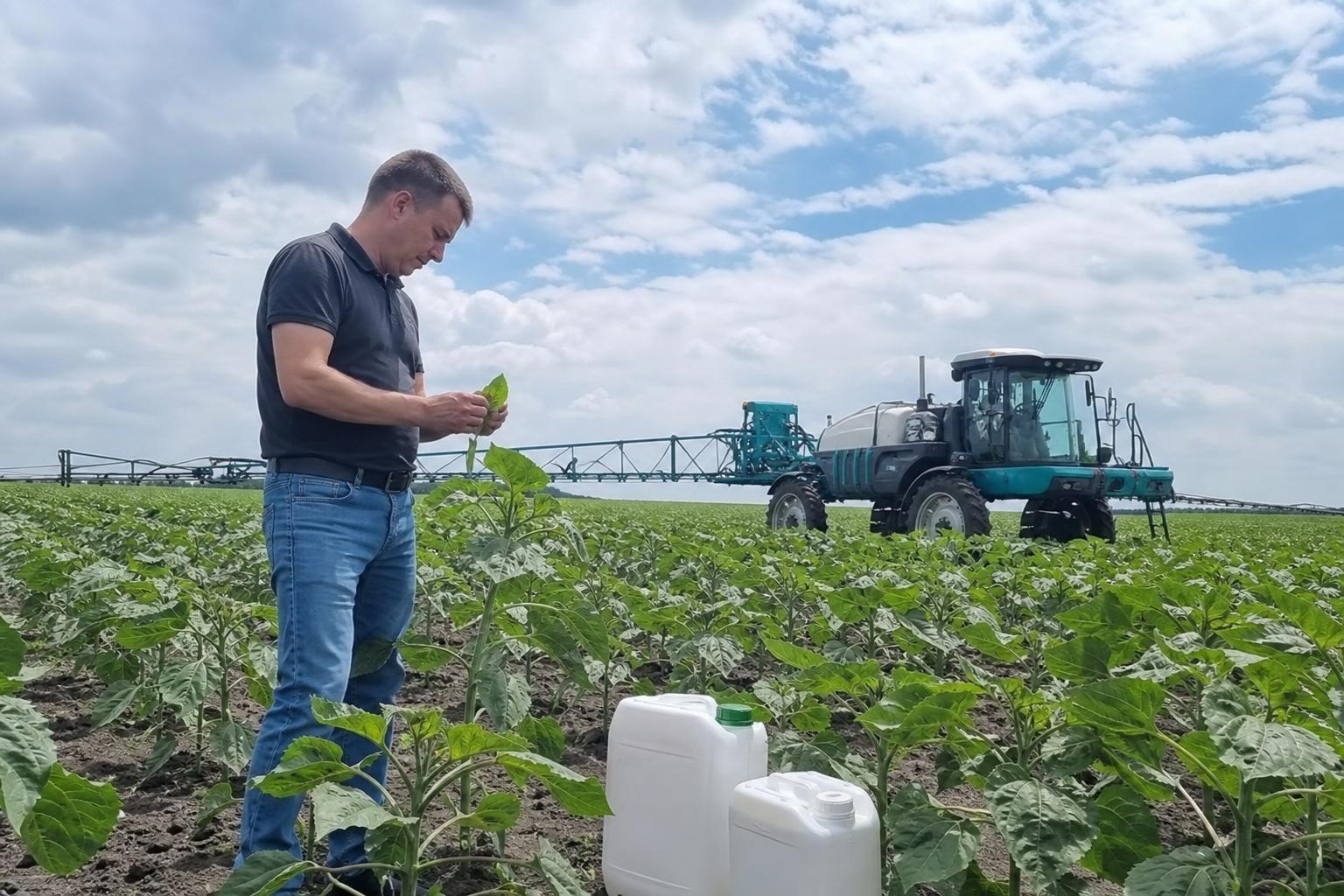
For the pesticide market, this means that protection technologies for sunflower, soy, and rapeseed will stay in the spotlight. Buyers should proactively identify their needs by crop, while sellers should avoid limiting their range to only universal products.
What Will Be Purchased More Actively: Practical Guidelines for AgroPost
In the 'Crop Protection' category, the most understandable listings for buyers will be those linked to specific agronomic tasks. For example: weed control in sunflower, autumn rapeseed protection, fungicide support for cereals, insurance solutions for soy.
Buyers should compare not only the price per liter or kilogram but also application rates, product originality, shelf life, batch availability, logistics, and the possibility of quick reordering during the season.
It is advisable for pesticide sellers to prepare separate offers for different farm types: small farmers, medium-sized producers, and large agricultural enterprises. Each group has its own purchasing logic: from minimizing costs to ensuring supply stability and technical support.
Key Conclusions for Sellers and Buyers
- Plan pesticide purchases early. Seasonal procurement becomes sensitive to financing, logistics, and crop structure.
- Oilseed crops remain an important segment. Sunflower, soy, and rapeseed require well-designed herbicide and fungicide protection schemes.
- Documentation becomes a competitive advantage. Sellers should confirm the legality and characteristics of the product.
- Listings should be specific. The better the description of the crop, problem, and delivery conditions, the higher the likelihood of a quick deal.
Implications for the market: The pesticide segment in Ukraine is shifting from ad hoc purchases to more strategic planning. On AgroPost, the winners will be those sellers offering not just 'herbicide in stock' but clear solutions tailored to the crop, season, and actual farm needs.
Comments
No comments yetNo comments yet - be the first.