
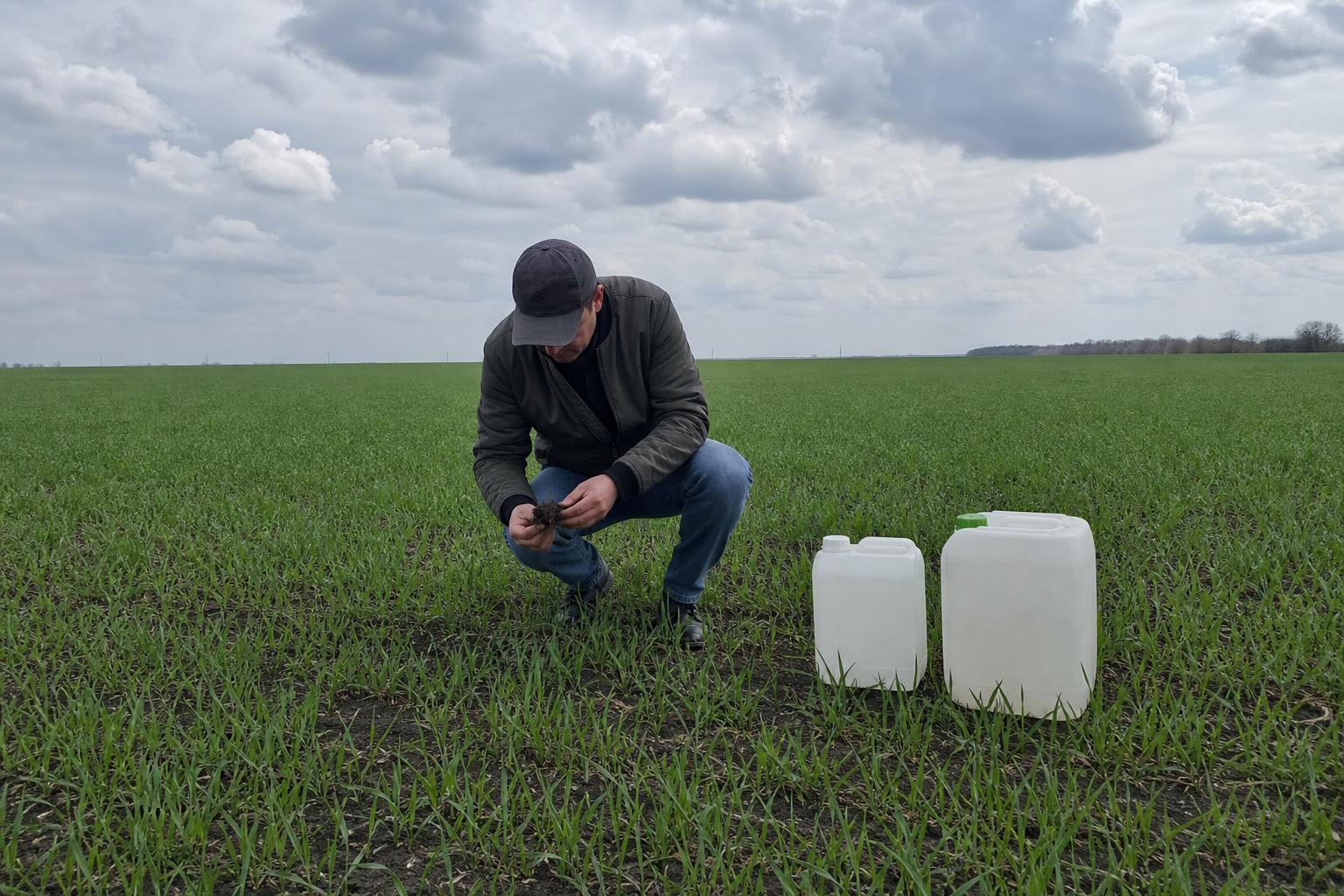
The Ukrainian plant protection market enters the planning season not only with considerations of herbicide, fungicide, or insecticide prices. Increasingly, the key factor is how well the product and application technology match specific field conditions.
One of the fundamental factors is the soil granulometric composition — the ratio of sand, silt, and clay. It influences water regime, nutrient availability, and crop health, thereby affecting practical decisions regarding crop protection.
What Ukrainian soil data reveal
According to research by the Ukravit Institute, over 2,000 soil samples from various regions of Ukraine were analyzed in 2025. The results showed significant differences between natural zones.
- Polissya: approximately 56% of samples were light sandy loam soils, with another 32% being medium loam.
- Forest-steppe: 25% of samples were light loam, 41% medium loam, and 34% heavy loam.
- Steppe: predominantly heavy loam soils — 71%, with 21% medium loam and 8% light loam.
This information is crucial for the crop protection market because the same crop in different zones can be at different physiological stages during treatment. On light soils, plants respond faster to moisture deficits, while on heavy soils, they may suffer from compaction, poor aeration, or excess water.
How soil type influences pesticide decisions
Light soils warm up faster in spring and are easier to cultivate, but retain moisture poorly. During prolonged dry spells, crops enter stress more quickly, which must be considered before applying herbicides or tank mixes.
Heavy soils hold more water and nutrients, but after heavy rainfall, water percolates more slowly. If the root system operates under oxygen deficiency or compacted layers, additional stress from treatments can be critical for weakened crops.
For soil herbicides, it is especially important to check application regulations: dosage, restrictions based on soil type, moisture requirements, previous crop, and crop rotation. A universal recommendation without referencing the product label can be risky.
What ZAP (crop protection) buyers should consider on AgroPost
Buyers should describe not only the crop and area but also field conditions: natural zone, soil type, compaction presence, moisture level, crop phase, and main issues — weeds, diseases, or pests. This will help receive relevant offers more quickly from sellers.
For herbicides, it is important to specify the spectrum of weeds, growth stage, and applicability to the specific crop. For fungicides — crop condition, previous crop, plant density, and moisture-related risks. For insecticides — economic threshold and waiting periods.
If the farm operates on light soils of Polissya or heavy soils of the Steppe, it is advisable to ask the seller for practical recommendations within the official product regulations.
What this means for crop protection product sellers
Sellers should make their offers more tailored. Listings clearly indicating crop, active ingredient, formulation, target pests, application regulations, and packaging will be more convincing than a general description like “broad-spectrum herbicide.”
An additional advantage is specifying the conditions for which the product is most often chosen: early spring treatments, soil protection, insurance schemes, fungicidal protection for cereals or sunflower. At the same time, any dosage recommendations must remain within the official label instructions.
- For buyers: reduced risk of purchasing unsuitable products for their field conditions.
- For sellers: increased trust in listings and fewer clarifications needed during communication.
- For the market: a shift from selling “by liter price” to offering comprehensive technological solutions.
Implications for the market: demand for crop protection products in Ukraine will increasingly depend not only on crop type and price but also on precise selection tailored to specific fields. For AgroPost, this presents an opportunity to create higher-quality listings where buyers more easily find the right herbicide, fungicide, or other product, and sellers better communicate the value of their offerings.
Comments
No comments yetNo comments yet - be the first.