
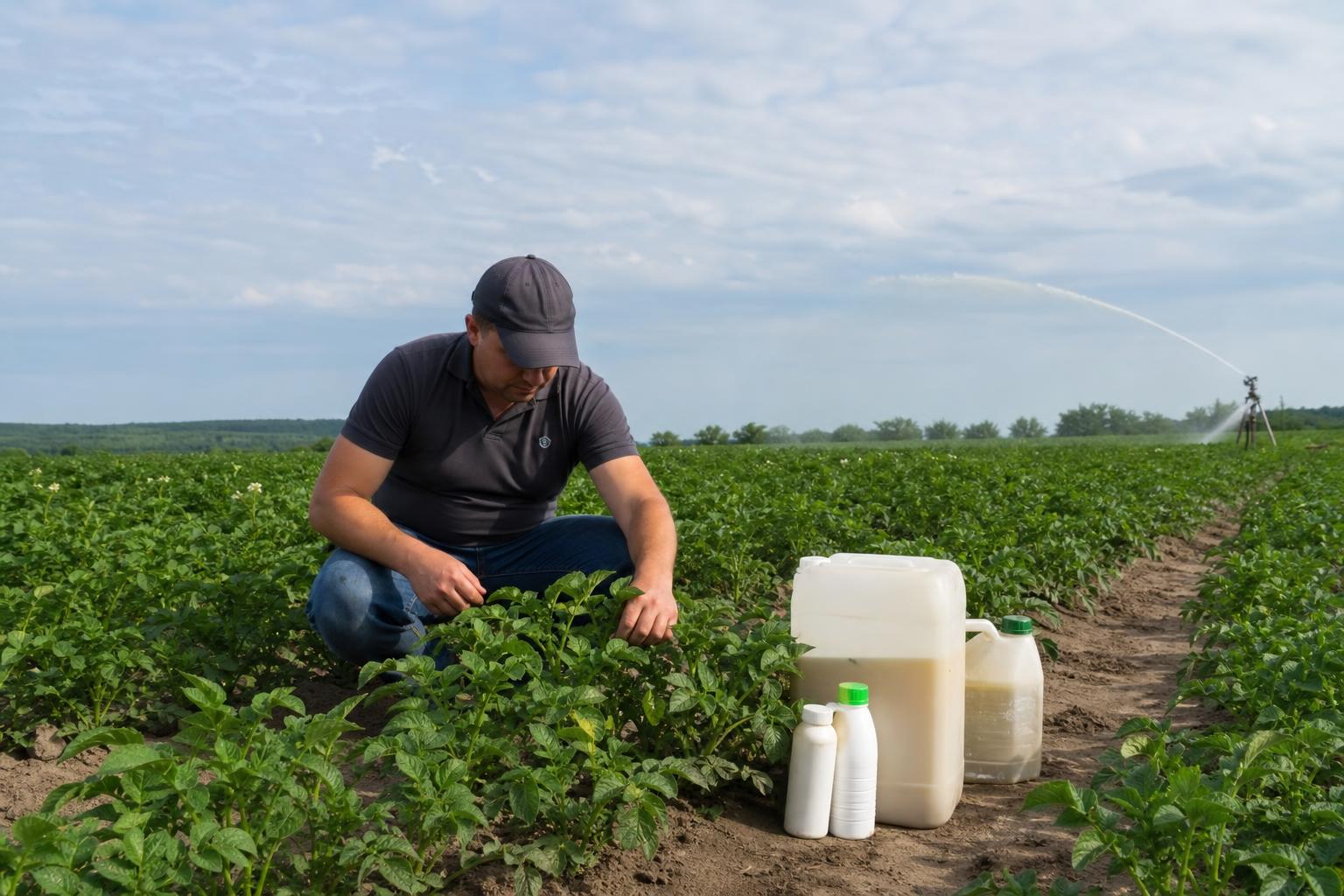
Potatoes remain one of the most widely consumed crops in Ukraine: according to a study by KSE in partnership with the Ukrainian Association of Potato Producers, 98% of Ukrainians consume potatoes and potato products. The average consumption of fresh potatoes is estimated at 68 kg per person per year.
For producers, this signals the importance of maintaining crop quality, while for crop protection product suppliers, it highlights the need to tailor offerings to the potato segment. This is especially relevant for farms transitioning to irrigation, storage, and processing, as errors in crop protection quickly affect tuber marketability.
Potato demand supports the need for quality protection
New consumption research shows a lower level than previously often cited estimates, but potatoes still remain a mass-demand product. On a monthly basis, the average consumption is 5.7 kg per person.
Consumption varies by settlement type: it is higher in rural areas than in cities. This is important for the local seed potato market, crop protection products, and services for small and medium-sized producers working for the fresh market.
For plant protection, it becomes crucial not just to “close the season” with a basic set of products, but to ensure consistent quality of the batch: weed cleanliness, disease control during active vegetation, and reducing the risk of losses before storage.
Irrigation increases the margin for error in crop protection systems
The example of the “Adelaide” farm, which relocated from Kherson region to Zhytomyr region, demonstrates that intensive potato cultivation technology is once again a practical direction for producers. The farm irrigates about 750 hectares of potatoes using water from accumulation channels via a pumping station and sprinkler systems.
According to reports, due to irrigation, potato yields have more than doubled. The irrigation needs are determined using electronic tensiometers that measure soil moisture at depths of 20 and 40 cm.
For the crop protection market, this means that buyers will more often seek not just individual products but integrated solutions for intensive fields. For irrigated fields, it is important for producers to synchronize treatments with crop development stages, weather conditions, soil moisture, and the actual phytosanitary status of the crops.
What buyers and sellers should consider on AgroPost
- Crop protection buyers should pre-define needs by blocks: herbicide protection, fungicide treatments, insecticide control, and desiccation if included in the technology.
- Sellers should describe not only the active ingredient but also the crop, application stage, packaging, stock residues, and the possibility of quick delivery to potato-growing regions.
- Potato producers using irrigation should plan protection based on field monitoring, weather, and agronomist recommendations, not just calendar timing.
- Farms preparing for storage need to focus on tuber marketability and absence of issues that could manifest after harvest.
Key conclusions for the crop protection market
The potato segment remains significant for the domestic market, even if actual consumption is lower than previous estimates. Mass consumption supports demand for stable quality products.
Irrigation and intensive technologies can increase yields but also make protection systems more demanding in terms of precision. For suppliers, this presents an opportunity to offer solutions tailored to specific cultivation technologies rather than generic product sets.
Implications for the market: In the “Plant Protection” category on AgroPost, the most practical focus for potato growers will be proven herbicides, fungicides, and other crop protection products with clear application instructions. Buyers will seek quick availability and clear consultation, while sellers will benefit from precise positioning of products for potatoes, irrigation, and storage.
Comments
No comments yetNo comments yet - be the first.