
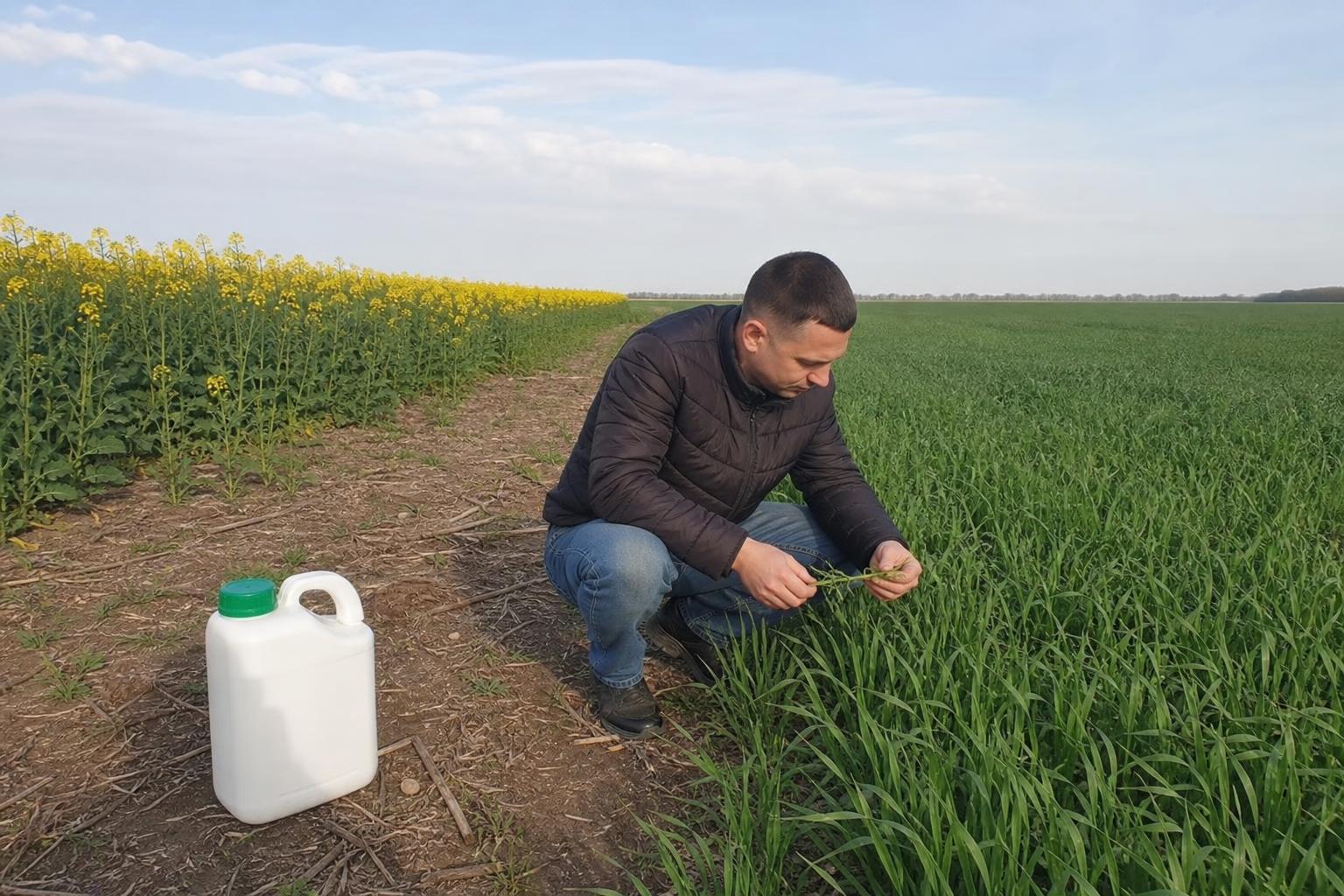
After harvesting early crops, the plant protection market enters a practical phase: farmers assess seasonal mistakes, address winter crop needs, and review treatment schemes considering weather risks.
One illustrative example of the season is the early harvest results at "Astarta." The company completed harvesting on 54,000 hectares and reported approximately 256,000 tons of yield, including over 210,000 tons of wheat and 43,000 tons of winter rapeseed. The average yield for winter wheat across the holding was 5.4 t/ha, and for winter rapeseed — 3.1 t/ha.
What seasonal risks are important for crop protection
The season for winter crops was uneven: challenges included excessive moisture during sowing, winter frosts, a prolonged spring, disease development on winter rapeseed, and heat in June during the critical grain filling period.
These factors do not create a universal protection scheme for all farms but clearly illustrate the logic of the season: decisions regarding crop protection products should be based not only on the calendar but also on the actual field conditions.
In such conditions, regular crop monitoring, flexible adjustment of technology, and timely availability of products are crucial — not after the optimal treatment window has passed.
Fungicide segment: rapeseed remains a crop requiring heightened attention
This year, winter rapeseed again confirmed its sensitivity to phytosanitary conditions. Reports of disease development on rapeseed indicate that in the upcoming season, farms should plan not only fungicide procurement but also crop monitoring systems in advance.
For AgroPost buyers, this serves as a practical guideline: when choosing a fungicide, it is necessary to verify the crop, application stage, active ingredient, shelf life, packaging, and storage conditions. For sellers — clearly specify these parameters in the listing to reduce clarification time and increase trust in the product.
Wheat also requires careful protection planning, especially if the field enters the season under stress conditions. It is important not only what to treat but also when to do it to maintain product efficacy.
What is currently important for crop protection buyers and sellers
During soil preparation and sowing of winter crops, the market typically focuses on starter solutions: seed treatments, herbicide protection, fungicide schemes, and products for operational response to field issues.
- Buyers should verify the registration of the product for the specific crop, active ingredient, application rate, manufacturing date, and packaging integrity.
- Sellers should indicate crop, application scope, packaging, remaining stock, payment terms, and logistics options.
- Farms should avoid delaying the purchase of critical products until treatment is already needed in the field.
- Distributors should differentiate offers for rapeseed and wheat, as buyers are looking not just for a "fungicide" but for solutions tailored to specific crops and growth stages.
Key conclusions for the crop protection market
The best results in early crops were achieved through adherence to technology, crop monitoring, and rapid agronomic decision-making. This confirms that in crop protection, the focus is shifting from one-time purchases to a managed system of actions throughout the season.
For AgroPost, this means a demand for well-described listings of crop protection products: buyers need quick understanding of which crop the product suits, packaging options, available stock, and whether delivery can be organized promptly.
Implications for the market: the season encourages farmers to plan crop protection more precisely. Crop protection product sellers who provide complete information about their products gain an advantage, while buyers can reduce the risk of delayed treatments and better prepare for the upcoming production cycle.
Comments
No comments yetNo comments yet - be the first.