
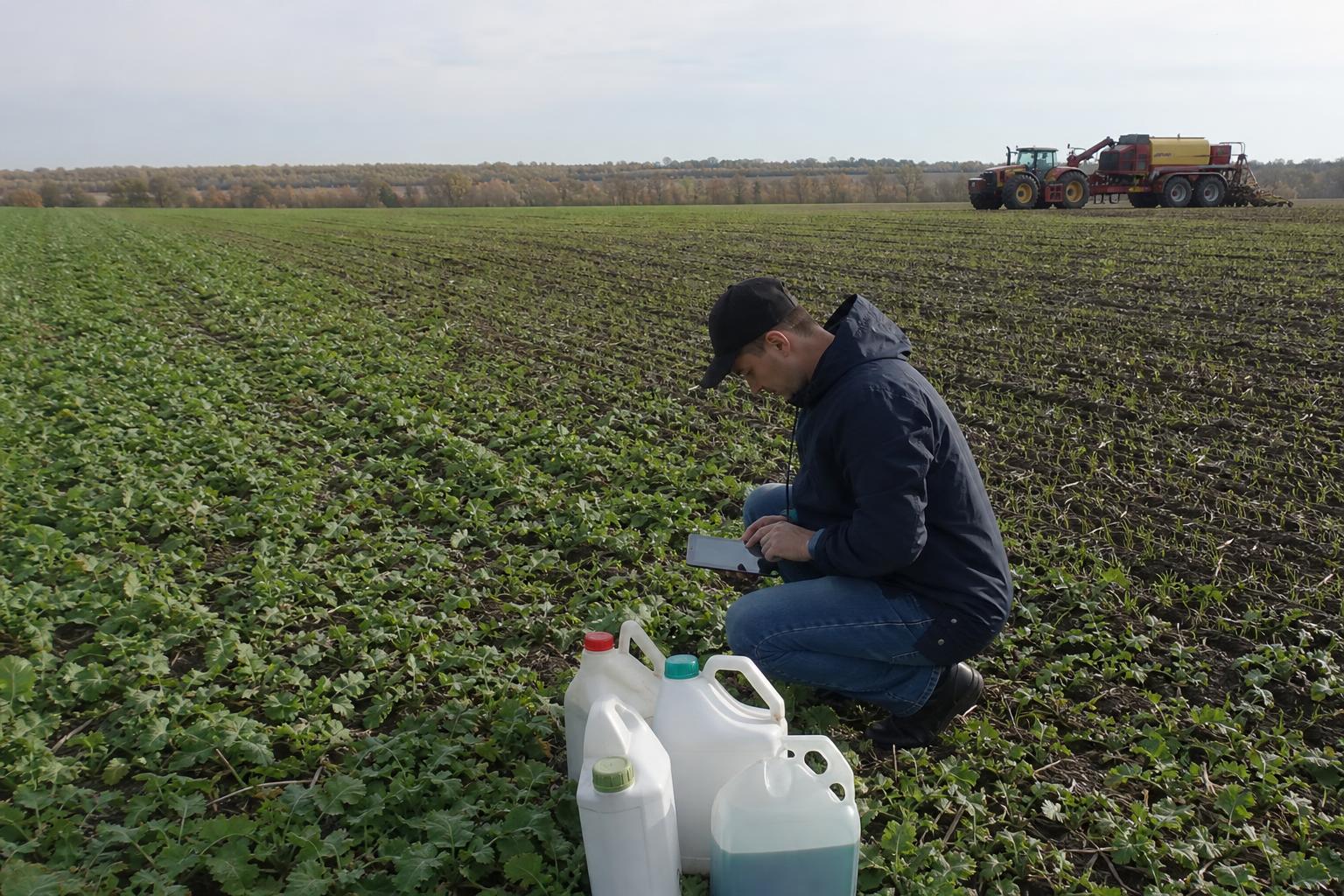
The Ukrainian agricultural sector is entering the autumn period with a noticeably revised planning approach. Decisions regarding crop rotation are now influenced not only by crop prices but also by the ability to export, process, or utilize harvests within the farm.
For the plant protection market, this is an important signal: the demand for pesticides increasingly depends on the specific business model of the producer. If a crop is grown for own feed, processing, or a stable sales channel, farmers are more carefully calculating the economics of each treatment.
Crop rotation becomes more practical: what this means for pesticides
One of the notable trends is the shift of some farms toward cultivating crops that can be used within their own production cycle. For example, Agroprodservis, which manages approximately 55,000 hectares, has announced a revision of crop rotation focusing on internal needs and processing.
According to the company, about 60% of the crops grown on its fields are processed into value-added products: compound feeds, meat products, and oilseed processing products. Additionally, winter barley areas have doubled, wheat is sown within the limits of internal consumption, and areas under rapeseed, soy, and sunflower have been expanded.
For pesticide suppliers, this means that universal seasonal offers are giving way to crop-specific solutions: separately for winter barley, rapeseed, soy, and sunflower. Buyers on AgroPost are increasingly searching not just for a "herbicide for the field," but for tailored schemes for specific crops, growth stages, and weed or disease risks.
Oilseeds remain in focus, but pricing requires precise budgeting
The rapeseed market is showing signs of correction. According to PUSK estimates, indicative prices in Ukraine have decreased: at processing plants — by 100–200 UAH/ton, and towards Danube ports — by 100–300 UAH/ton. At the western border, demand remains at 460–465 euros/ton, but sales are restrained by a shortage of available railcars.
Analysts also note that in the coming weeks, the Ukrainian market may face downward pressure from declining rapeseed quotations on Euronext. Meanwhile, demand from Europe remains stable, and some export volumes have already been contracted.
For rapeseed protection, this creates a more demanding financial environment. Producers are not abandoning technology but may compare prices for fungicides, insecticides, herbicides, and seed treatments more carefully. On the marketplace, this increases the importance of transparent descriptions of application norms, packaging, certification, and quick delivery.
Logistics impact not only harvest but also procurement
The active sunflower harvest has already increased demand for freight transportation. A shortage of grain carriers has been recorded in several regions, including Dnipropetrovsk, Odesa, Mykolaiv, Kirovohrad, Poltava, Cherkasy, Chernihiv, and Vinnytsia.
On short routes up to 300 km, freight rates have increased by 10–12% over the week, while on medium and long distances, the rise is mainly 3–6%. Additional pressure is caused by rising diesel fuel prices.
For pesticide buyers, this is a reminder that logistics costs can influence not only harvest sales but also procurement during peak periods. Farms should book necessary products in advance, especially for autumn protection of winter crops or spring season preparations.
Key takeaways for pesticide sellers and buyers
- Demand is shifting toward crop-specific packages. Farmers need solutions tailored for rapeseed, sunflower, soy, barley, and wheat, not just general categories of products.
- Product pricing must be justified by economics. Amid price corrections, buyers are more carefully calculating the payback of each treatment.
- Availability and delivery become competitive advantages. Logistics delays during the agro-season can sway buyer decisions in favor of sellers with stock on hand.
- Product descriptions should be practical. For AgroPost, important details include crop, spectrum of action, application stage, packaging, certification, and quality documents.
Implications for the market. The plant protection market in Ukraine is becoming more closely tied to the actual economics of farms: processing capacity, logistics, crop margins, and product availability. Pesticide sellers should tailor offers to specific crops and regions, while buyers should plan procurement early, comparing not only prices but also availability, delivery conditions, and technological appropriateness of products.
Comments
No comments yetNo comments yet - be the first.