
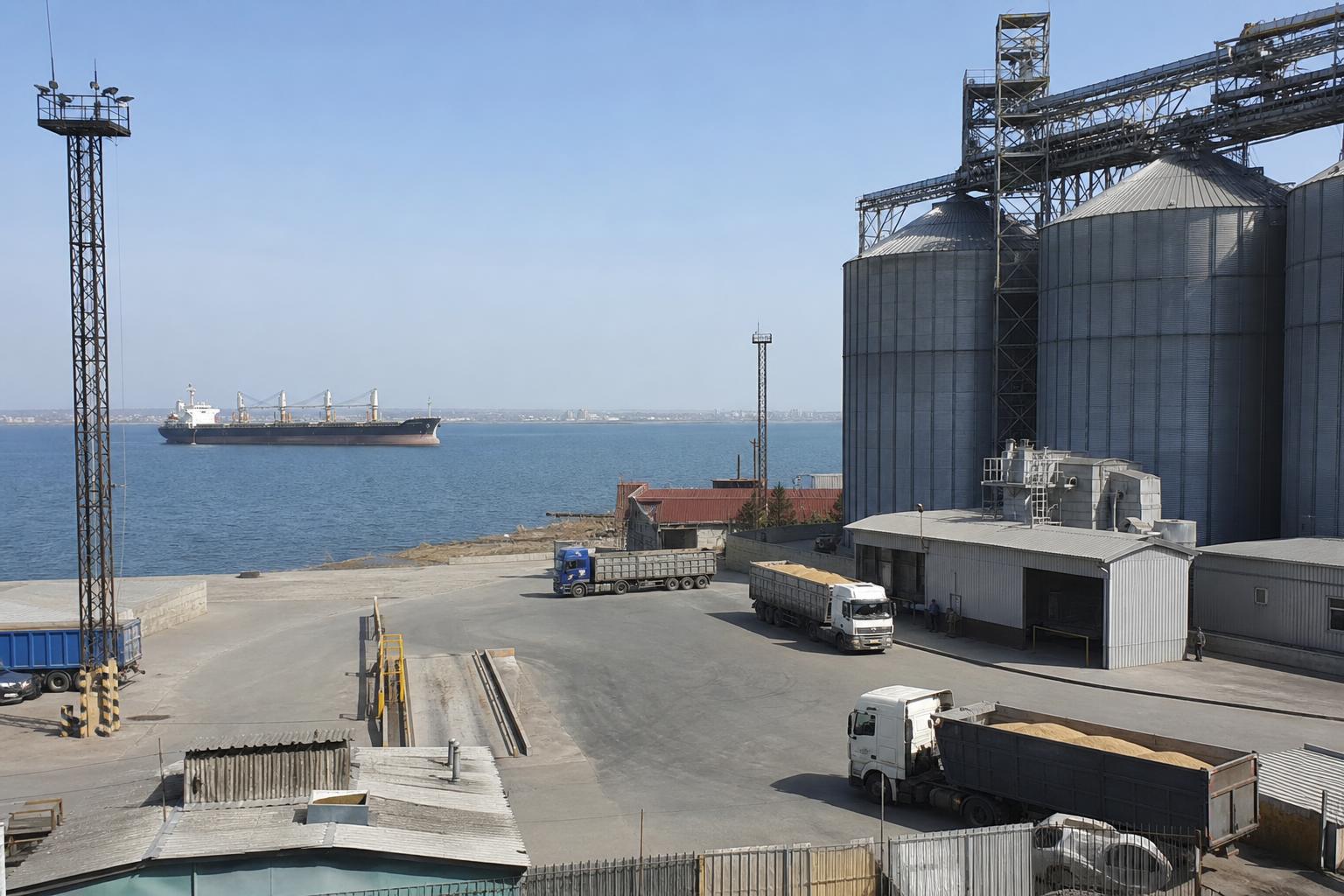
The Ukrainian grain market is entering a period of increased attention to maritime logistics. Against the backdrop of reports about threats to civilian crews in the Black Sea, market participants are reassessing not only grain prices but also the actual ability to deliver shipments to ports or alternative routes on time.
For agricultural producers, traders, elevators, and buyers, this is a practical issue: shipping risks can affect shipment schedules, documentation requirements, payment terms, and the willingness of parties to assume logistical responsibilities.
What is happening with the maritime route
According to reports from the Indian Seafarers' Union, 13 Indian sailors are onboard the vessel M.V. AMIR1 at the port of Chornomorsk, for whom the union is requesting evacuation due to threats of attacks near the vessel.
The Indian diplomatic authorities stated that they are monitoring the situation and are in contact with interested parties regarding crew safety. Separately, concerns were raised by India following an incident involving the commercial vessel MV OMORFI near Odessa, which had Indian sailors onboard.
The key signal for grain exports is not about a single vessel but a broader assessment of risks to the commercial fleet. If shipowners, insurers, or crews factor in higher risks, it becomes more challenging for the market to plan stable port loading schedules.
Why this matters for grain and elevators
Maritime ports remain a critical element of the export chain for Ukrainian grain. When security factors become the main topic, the importance of pre-booked logistics, transparent agreements between seller and buyer, and the readiness of elevators to quickly handle shipments for specific dispatches increases.
For elevators, this means paying closer attention to acceptance schedules, grain quality, speed of documentation, and communication with traders. For farmers, it involves not delaying the agreement of sale conditions, especially if the shipment is intended for export channels.
Domestic market buyers should consider that logistical constraints may influence seller behavior: some farms may wait for better basis, others may sell faster on accessible routes, and some may choose to store grain until the situation clarifies.
The factor of Russian exports also impacts the Black Sea
According to Bloomberg, Russian authorities are considering measures to protect grain ships, including arming bulkers, installing additional protective measures, and escorting vessels with military boats. These plans are linked to risks for navigation in the Sea of Azov and the Black Sea.
Reports also indicate that up to a quarter of Russia’s grain exports pass through the ports of the Sea of Azov, and commercial shipping there has effectively halted since July 10 due to attack risks. According to SovEcon, if restrictions persist, Russia could lose between 0.5 million and 1.5 million tons of grain exports monthly.
For Ukraine, this does not directly guarantee price changes but provides an important background for the global market. Grain buyers assess the availability of supply from different directions, and any complications in the Black Sea basin increase attention to supply reliability.
Practical conclusions for sellers and buyers
- Grain sellers should lock in not only the price but also the delivery basis, shipping deadlines, and responsibility for delays.
- Buyers should verify whether the seller has confirmed routes to elevators, ports, or internal storage facilities.
- Elevators need to coordinate acceptance and shipment schedules in advance to avoid accumulation of shipments without a clear destination.
- Traders should incorporate risks of changing freight and port conditions into negotiations, avoiding promising farmers unrealistic timelines.
What this means for the market
The Ukrainian grain market is once again operating in conditions where logistics can be as important as exchange or domestic price benchmarks. For AgroPost participants, this is a reason to more actively verify counterparties, clarify delivery routes, and set proposals with clear shipment conditions. In the near future, preference will go not only to those offering competitive prices but also to those able to confirm the execution of deals within specific logistical scenarios.
Comments
No comments yetNo comments yet - be the first.