
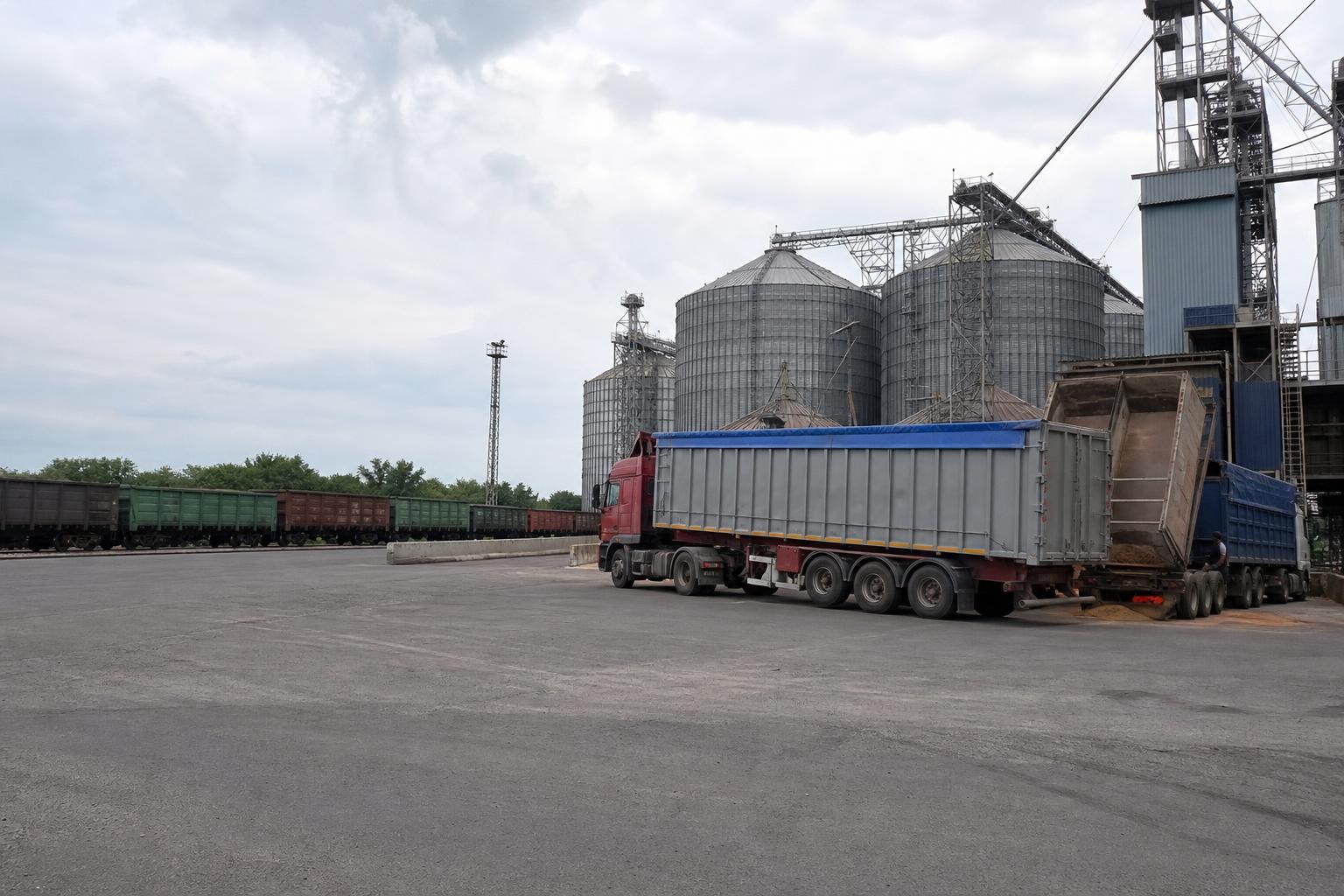
The grain market is increasingly paying attention to alternative export routes. Russia, according to industry media reports citing Bloomberg, is discussing with China the possibility of transit of grain through Chinese territory for further deliveries to Southeast Asian countries.
For Ukrainian grain exporters, this does not mean an immediate change in price benchmarks. But the process itself is significant: major exporters are seeking bypass routes when traditional Black Sea logistics face disruptions or heightened risks.
What exactly is Russia discussing
It involves utilizing the Far East route and possible transit through Chinese territory. After that, the grain is planned to be directed to Southeast Asian markets.
According to statements from the Russian side, the Far East was previously rarely a key direction for grain shipments. Now, it is considered as one of the options for diversification of exports.
The reason for seeking new solutions is linked to problems with Black Sea port infrastructure. At the same time, over 70% of Russian grain exports pass through the Black Sea basin, according to sources.
Which routes are already operational
Besides the potential Chinese transit, Russia uses the Baltic and Caspian Seas. Transit through Kazakhstan is also mentioned in reports.
It was separately noted that Kazakhstan does not plan to restrict transit of Russian products through its territory. This is an important detail for the market, as it shows that competition among exporters increasingly depends not only on harvest volumes but also on route accessibility.
USDA, in its September report, reportedly lowered the forecast for Russian wheat exports by 3 million tons — to 43 million tons. This adds context to logistical searches but does not, by itself, prove that new routes will quickly compensate for losses or restrictions in other directions.
What Ukrainian grain sellers should watch
The main practical takeaway for Ukrainian agribusiness is to monitor not only domestic prices but also logistical changes among competitors. If Russian exports are partially redirected to Asia, it could influence competition for buyers in certain regions.
At the same time, the new route is still at the discussion stage. Therefore, sellers should not base their pricing strategies solely on this factor. It is more practical to compare current procurement offers, delivery conditions, elevator costs, and transportation accessibility.
- For farmers: it is advisable to have several sales scenarios — from the elevator, from the farm, or for a specific logistics route.
- For elevators: storage and processing relevance increases when sellers wait for a better window for sales.
- For traders: it is important to monitor Asian demand and compare it with transportation costs from Ukraine.
What this means for the market
Russia’s search for new grain routes through China signals a broader restructuring of regional export logistics. For the Ukrainian market, key factors remain transparent pricing, transaction speed, grain quality, and the ability to flexibly choose sales channels via elevator, trader, or direct buyer.
Comments
No comments yetNo comments yet - be the first.