
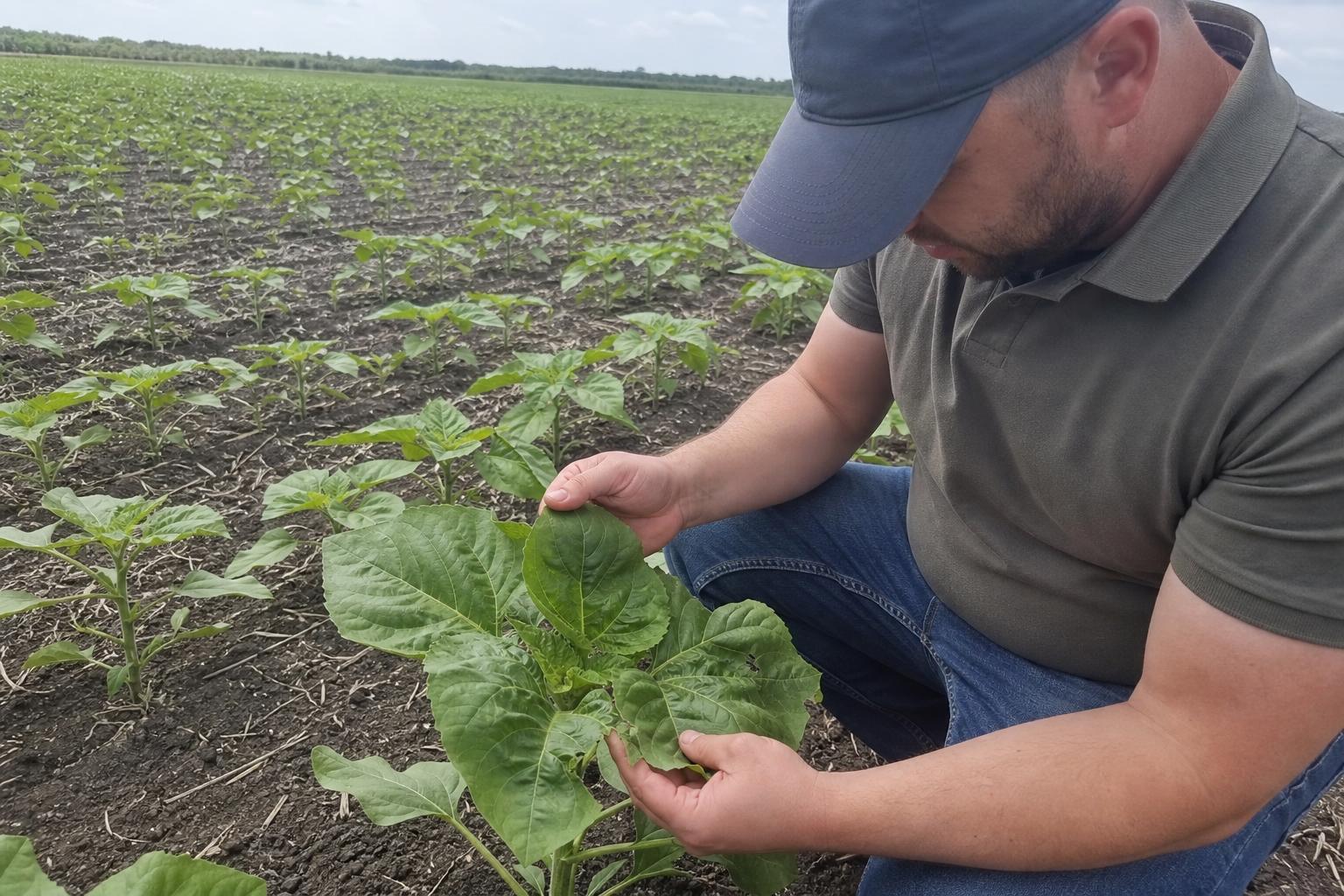
The occurrence of sunflower downy mildew this season has become one of the key risks in crop protection. According to experts from Ukravit, disease symptoms are already being recorded in almost all sunflower growing zones in Ukraine.
For the plant protection market, this means increased attention to integrated protection schemes: from high-quality seed treatment to timely fungicide applications during the growing season.
Why has the risk of downy mildew increased?
Favorable conditions for disease development have been created by moderate temperatures, temperature fluctuations, and high humidity during the early growth stages — from germination to the formation of four leaf pairs.
It is precisely during this period that young plants are most vulnerable. Affected crops may lag in growth, form dwarf plants, and develop heads with non-viable seeds.
According to Ukravit representatives, depending on the disease’s intensity, it can lead to a loss of up to 50% of the future sunflower yield.
Sources of infection: not only the current season
Primary infection with downy mildew is associated with the soil, where oospores of the pathogen survive. Secondary spread occurs from already infected plants.
An additional risk factor is sunflower volunteer plants and weeds, which can serve as reservoirs for the pathogen. Therefore, disease control is not limited to just fungicide treatments in the field.
For farmers, this underscores the importance of planning sunflower protection as a system: seed treatment, crop rotation, field cleanliness, monitoring, and timely application of products under favorable weather conditions.
What solutions might be in demand on the plant protection market?
In the fungicide segment for controlling downy mildew, Ukravit highlights active ingredients such as metalaxyl and cyazofamid. These solutions are used in schemes requiring systemic and curative action against the pathogen.
For plant protection product sellers on AgroPost, it is crucial to clearly specify the crop, target disease, active ingredients, formulation, application rate according to the label, and availability of batch documentation.
Buyers should match the product with the sunflower growth stage, the actual crop condition, and weather forecasts. If the disease has already manifested, preventive-only solutions may be insufficient.
Key conclusions for agricultural producers
- Downy mildew is already a field risk in most sunflower growing zones, according to Ukravit monitoring data.
- Early season weather conditions favored disease development: moisture, moderate temperatures, and temperature fluctuations.
- Protection should be comprehensive: seed treatment, volunteer and weed control, crop monitoring, and fungicide applications as needed.
- Interest in fungicides against sunflower diseases is increasing on the plant protection market, especially solutions based on metalaxyl and cyazofamid.
Implications for the market: in the near future, demand for sunflower fungicide protection may focus on products against downy mildew and related services — consultations, scheme selection, and rapid delivery of plant protection products to growing regions. For AgroPost sellers, this presents an opportunity to update offers, while buyers can quickly compare available solutions and avoid delays in crop protection.
Comments
No comments yetNo comments yet - be the first.