
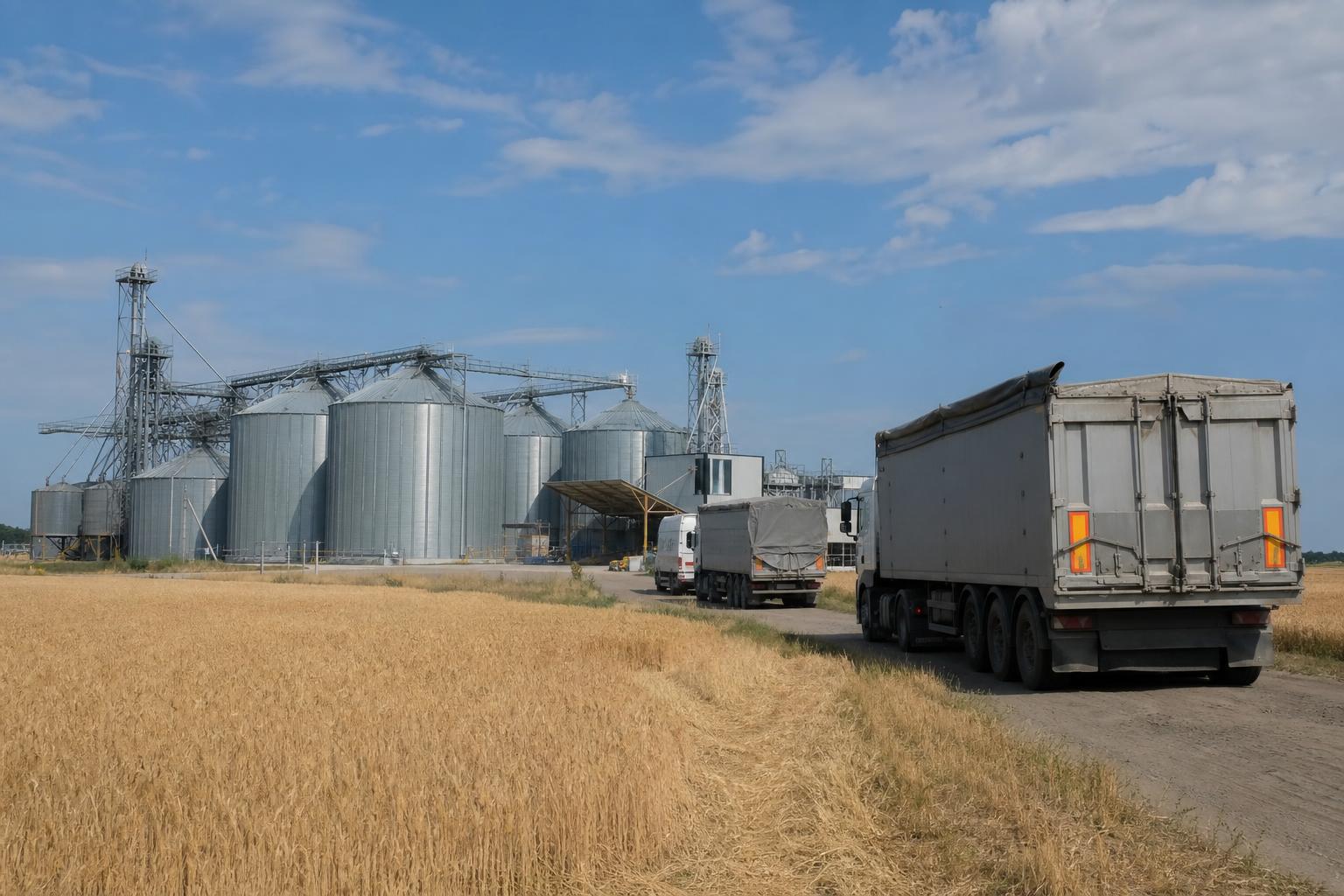
The Ukrainian wheat market is entering the harvest period with noticeably cautious demand. Buyers are not rushing to form large batches of old crop, while producers are more actively bringing remaining stocks to market ahead of the new season.
For grain sellers on AgroPost, this means increased competition in offers and a greater reliance on real-time information: wheat grade, delivery basis, readiness for shipment, and available storage space can directly influence buyer interest.
Port Prices: Market Prices Reflecting the New Harvest
According to market participants, wheat on DAP-port terms has decreased over the week. Feed wheat was valued at approximately $214/ton, Class 3 wheat at around $217/ton, and Class 2 wheat at about $218/ton.
The main pressure comes from the expected increase in supply following active harvesting. Buyers are increasingly focusing on the new crop, leading to more competitive pricing for old stocks amid tighter negotiations.
Export demand also provides limited support to the market. Some foreign buyers are waiting for clearer crop estimates in Northern Hemisphere countries, resulting in more cautious contract signing.
Factors Influencing Prices in the Coming Weeks
The key factors now are harvesting pace, actual yield, and quality of the new season's grain. If large volumes appear quickly on the market, buyers will have more leverage to push prices down.
At the same time, high-quality food wheat may gain a better negotiating position if part of the new harvest does not meet expectations. Sellers should promptly confirm the class, moisture content, grade, and other parameters of their batches.
- Sellers should update prices more frequently than during calm periods and clearly specify the delivery basis.
- Buyers should compare old and new crop offers considering logistics and shipment timelines.
- Elevators need to communicate available capacities, processing conditions, and acceptance schedules in advance.
Elevator Capacity: Storage Remains a Sensitive Issue
During the harvest, storage remains a critical concern for the grain market. Dnipro Agricultural Complex (DПЗКУ) reported losing control over 12 branches in temporarily occupied territories with a total storage capacity of 1.085 million tons.
The total storage capacity across all the company's branches, including those in occupied areas, amounts to 4.7 million tons. Significant damage to infrastructure and equipment at three branches has been reported, with one facility's infrastructure effectively destroyed.
This means that in certain regions, competition for quality storage, drying, and rapid shipment may remain high. Elevators with backup power, stable logistics, and transparent tariffs will have an advantage during peak grain inflow.
How to Work with Offers on AgroPost
During periods of price volatility, announcements should be as specific as possible. For wheat, it is advisable to specify grade, volume, storage location, basis, options for self-pickup or delivery, and current laboratory parameters.
Buyers should consider not only the price per ton but also the overall economics of the deal: distance to elevator or port, processing costs, payment terms, and risks of shipment delays.
Implications for the market: The upcoming period for wheat will be characterized by quick decision-making and accurate data. Sellers who confirm quality and logistics readiness will have better chances to close deals without excessive discounts, while buyers will be able to choose between old and new harvests under more favorable conditions.
Comments
No comments yetNo comments yet - be the first.