
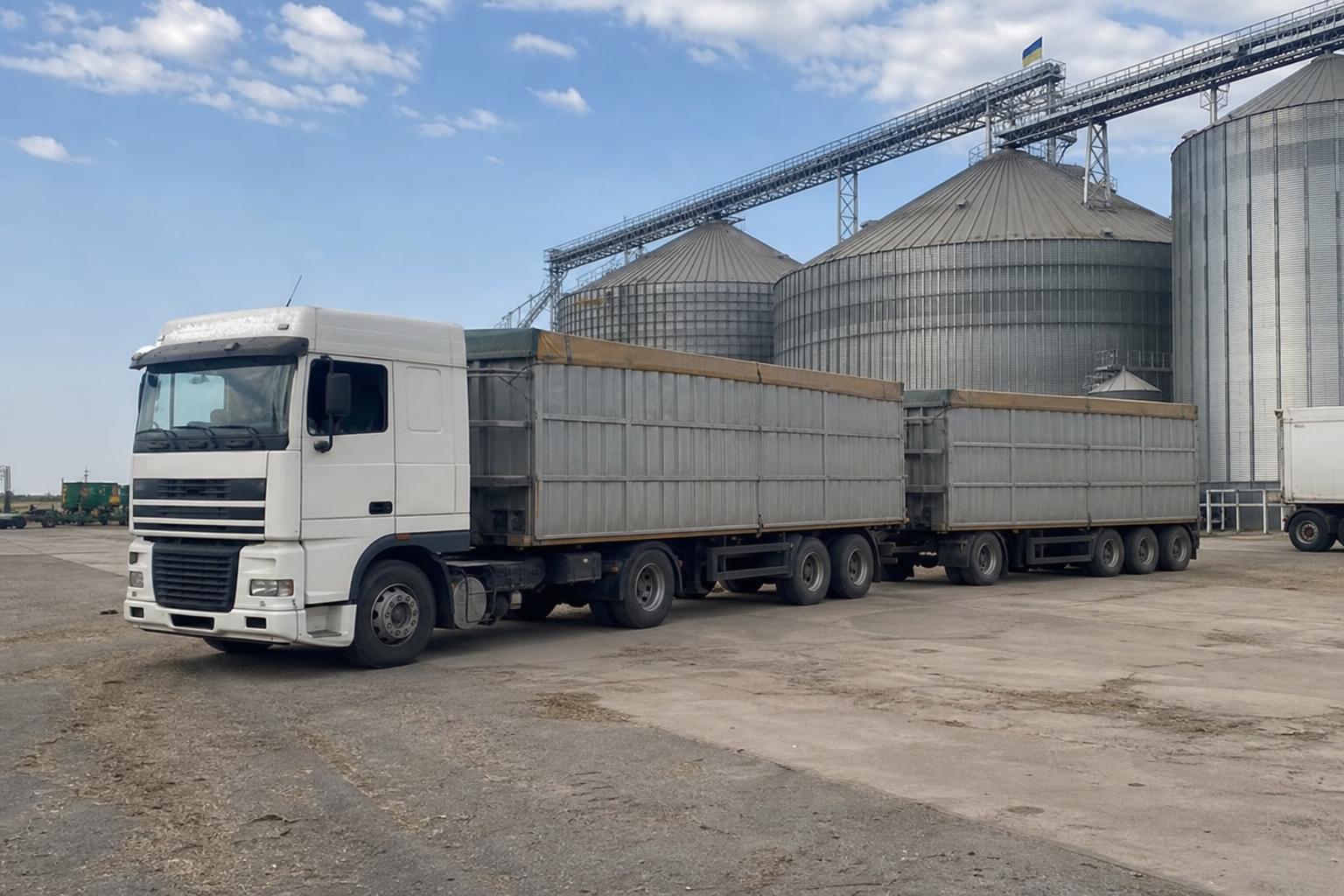
The beginning of the harvest season quickly shifted the balance in the grain transportation market. Currently, the main demand is driven by farms needing to swiftly deliver the new harvest from the field to the nearest elevator or processing point.
For grain sellers, this means that logistics once again become a key factor influencing prices. Even if demand for grain remains stable, higher costs for short-distance trips can impact the net revenue of agricultural producers.
Short and medium routes have become the most active
At the start of the harvest campaign, the majority of orders are not for long export routes, but for local and regional transportation. This is typical for the harvest period when grain is mass-moved from fields to elevators.
Market reports indicate that compared to the previous week, tariffs for grain transportation increased by an average of 3–17%. On some routes, growth reached up to 22%.
Short and medium routes respond the fastest: transportation is needed immediately, and the number of available grain trucks is limited.
Where rates are increasing most noticeably
Among regions with the most significant price increases, Dnipropetrovsk region stands out. The activation of new harvest shipments has intensified competition for trucks there.
High rates remain within Odesa region. Routes from Mykolaiv and Kherson regions toward Odesa are also expensive.
Meanwhile, on longer routes, the situation differs. For routes of 601–700 km, an average decrease in tariffs of 3% was recorded, and shipments over 700 km were infrequent.
Factors driving up transportation costs
The main factor is the seasonal surge in demand. When the new harvest enters the market simultaneously, farmers, traders, and elevators begin competing for available transport.
An additional factor is the shortage of drivers in freight transportation, which limits the rapid increase in supply even as demand for trips grows.
For elevators, this means the need for more precise scheduling of acceptance. For farmers, it’s advisable to book trucks in advance, especially if grain needs to be delivered during peak harvest days.
Key takeaways for grain sellers and buyers
- Local logistics are the first to become more expensive: short trips to elevators are now most sensitive to demand.
- Region matters: Dnipropetrovsk, Odesa, and routes from southern regions to Odesa remain tense.
- Long-distance routes show less pressure: tariffs on routes of 601–700 km have decreased, and over 700 km trips are few.
- Grain price should be considered together with delivery costs: tariff differences can alter the attractiveness of a deal.
What this means for the market: in the near future, Ukraine’s grain market will depend not only on buyer prices but also on the availability of trucks for short-distance routes. At AgroPost, sellers should immediately specify the basis, elevator, or shipment point, while buyers should clarify logistical conditions before finalizing the price agreement.
Comments
No comments yetNo comments yet - be the first.