
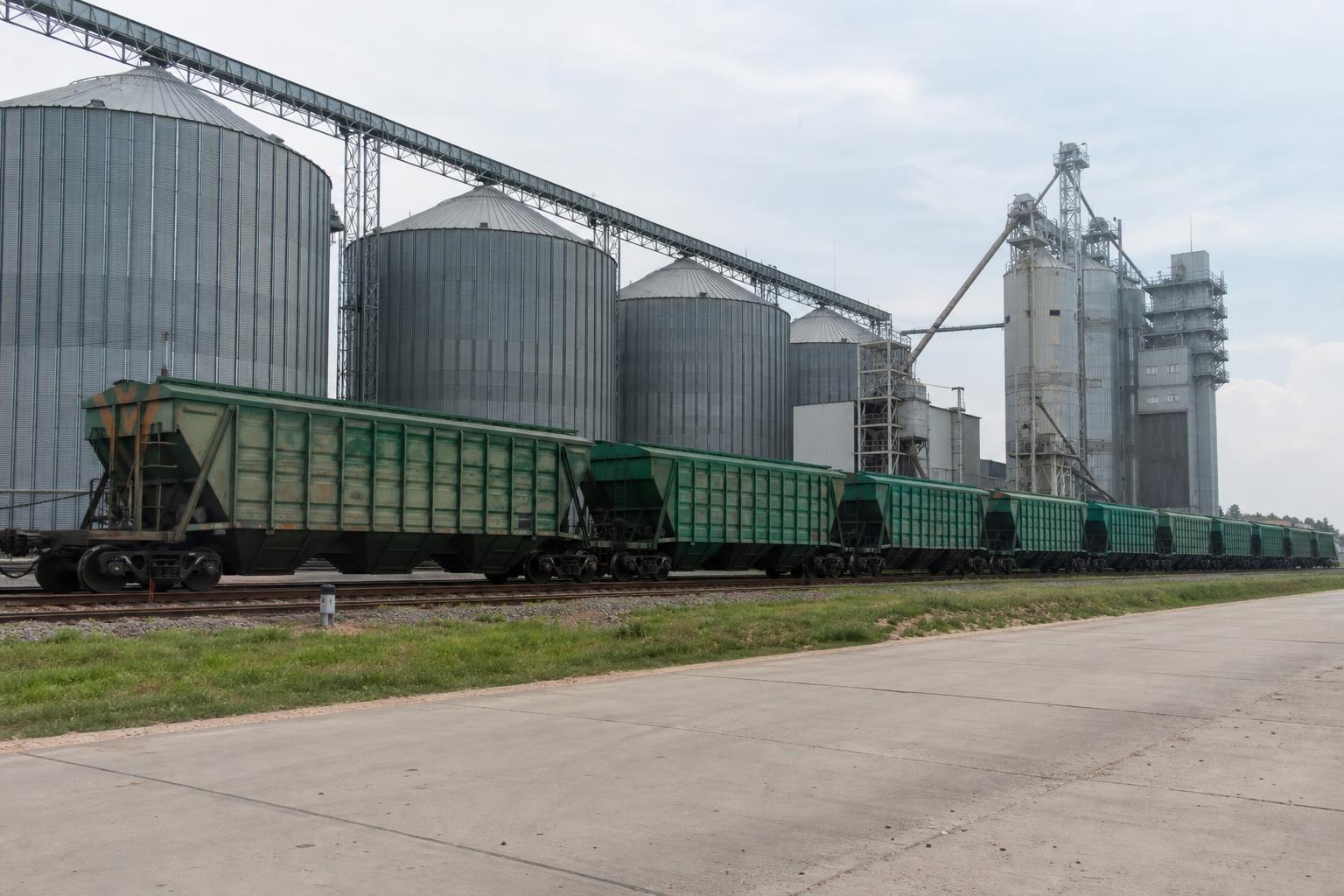
The Ukrainian grain market is entering a period where logistics may once again become a key factor influencing prices. According to Barva Invest, a 30% increase in Ukrzaliznytsia freight tariffs starting August 1 could raise grain transportation costs by $5–6 per ton.
For agricultural producers, traders, and elevators, this is not just a matter of freight rates. Additional costs could alter the attractiveness of selling on different basis levels, intensify competition for route shipments, and impact regional purchase prices.
Rail remains the primary channel to ports
According to data provided by Barva Invest, 92–95% of export grain cargoes are delivered to ports by rail. Therefore, any tariff increase quickly affects traders’ and buyers’ calculations.
The estimated cost of transporting grain from central and northwestern regions is currently around 1,500 UAH/ton. For route shipments from hub stations, a lower level is cited — about 1,200 UAH/ton.
This makes routing one of the main tools for reducing logistical load. For elevators with access to efficient railway infrastructure, this advantage can become a stronger bargaining point with grain suppliers.
An additional $5–6/ton may pressure farm gate prices
If port logistics become more expensive, buyers typically incorporate this into their export economics. In practice, part of this increase may be passed on as lower purchase prices on the domestic basis, especially in regions far from ports.
Barva Invest estimates that logistics costs could increase by 2.5–3% within the overall cost structure of corn. For crops with sensitive margins, this is an important factor to consider even before fixing a batch.
- Sellers should compare prices not only in hryvnias per ton but also by delivery basis, shipping terms, and responsibility for downtime.
- Elevators should proactively assess wagon availability, route schedules, and the timetable for accepting the new harvest.
- Buyers need to accurately calculate the difference between local purchase, elevator procurement, and delivery to the port.
Alternative routes do not yet resolve bottlenecks
After stabilization of the Ukrainian grain corridor, delivery to the ports of Greater Odessa appears more economically attractive than several land or Danube routes. According to Barva Invest, the route via Vadul-Siret crossing to Constanța may be $20/ton more expensive due to additional transshipment and transit costs.
Meanwhile, port infrastructure capacity remains limited compared to pre-war levels. Before the full-scale invasion, ports could handle up to 7 million tons of bulk cargo per month, whereas current combined capacity for road and rail transport is estimated at 4–5 million tons.
Some land and river channels do not fully compensate for this gap. Estimates suggest that exports through Danube ports amount to about 100,000 tons per month, road exports are also around 100,000 tons, and rail supplies to European markets reach 300–400 thousand tons monthly.
Road transport remains a niche solution
In theory, rising rail costs could make road transport more attractive for some regions. However, analysts estimate that the competitive radius of trucks has now narrowed to approximately 200 km from ports.
The cost of road logistics is affected by driver shortages, high operational expenses, and military risks. Therefore, for most large grain shipments, rail remains the primary option for delivery to export infrastructure.
Key takeaways for AgroPost participants
- Grain prices should factor in a potential additional logistical pressure of $5–6/ton.
- Route shipments and proximity to hub stations can strengthen elevator or seller positions.
- Comparison of offers should consider not only price per ton but also basis, distance to port, shipping schedule, and downtime risks.
- Land and Danube alternatives remain important but are not always cost-competitive for bulk grain shipments.
What this means for the market: In upcoming grain deals, logistical factors may have a greater impact on final margins than fluctuations of a few dollars in exchange or port indicators. Sellers on AgroPost should clearly specify location, volume, shipment routes, and preferred basis, while buyers should quickly recalculate economics considering potential railway cost increases.
Comments
No comments yetNo comments yet - be the first.