
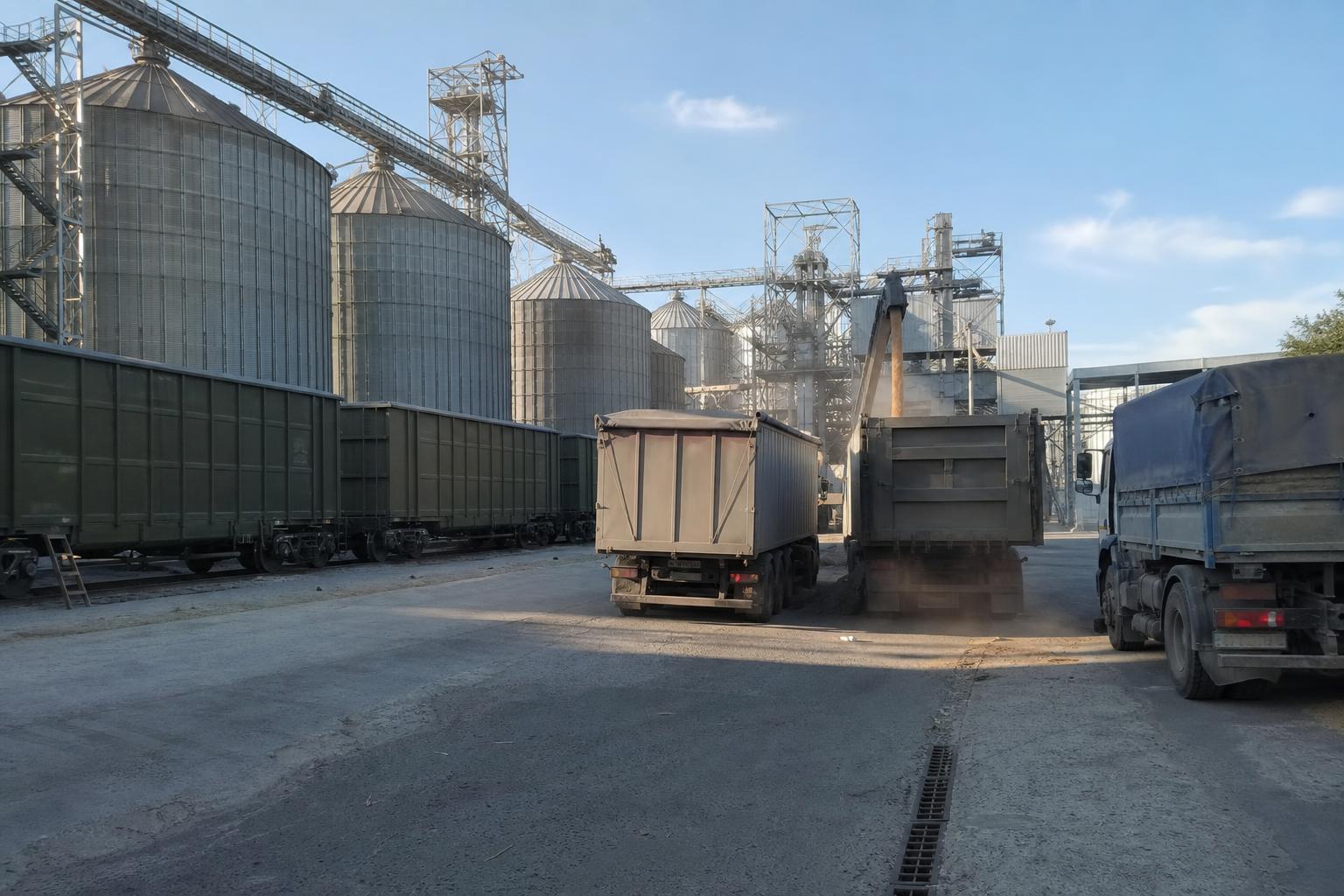
Ukrainian agricultural logistics experienced a significantly higher freight volume in September. According to data cited from UKAIB, agroproduct exports for the month totaled 3.04 million tons, representing a 41.5% increase compared to August.
The main share was formed by grains, oilseeds, vegetable oils, and meal — approximately 2.65 million tons, or 87.2% of total agricultural exports. For the transportation market, this signals sustained high demand for routes to ports, western crossings, elevators, and processing facilities.
Wheat Restores Load on Grain Logistics
Grain exports in September amounted to 1.49 million tons, a 50.4% increase from August. The primary growth was driven by wheat: shipments increased from 612.7 thousand tons to 1.09 million tons.
For logistics operators, this means increased competition for rolling stock, vehicles, and dispatch schedules. This is especially noticeable for farms and traders working within short delivery windows without their own storage infrastructure.
Corn deliveries remained nearly unchanged at 306.8 thousand tons. Barley increased by 16.9%, reaching 80.3 thousand tons. Thus, the September grain flow growth was uneven, with wheat bearing the main load.
Rapeseed and Rapeseed Oil Support Demand for Specialized Transportation
Oilseed exports in September totaled 494.5 thousand tons. The largest share was rapeseed — 428.7 thousand tons, a 46.5% increase compared to the previous month.
Separately, shipments of rapeseed oil rose to 154.5 thousand tons, a 61.9% increase from August. For carriers, this represents a different type of logistics demand than grain: specialized tankers, coordinated terminal slots, and strict control over transport cleanliness are required.
Soybean exports also increased, reaching 36.2 thousand tons, a 24.3% rise. However, these volumes are significantly lower than rapeseed, making the rapeseed segment more critical for planning seasonal loads.
Meal Creates Additional Freight Flows for Domestic and Export Routes
Oilseed meal exports in September increased by 83.4% — up to 343.4 thousand tons. The largest growth was in sunflower meal: 2.6 times, reaching 285.4 thousand tons.
This is important for logistics, as meal often competes for transport with grain and oilseed cargoes. When carriers work comprehensively with the agrosector, such volumes can help reduce empty runs between processing plants, elevators, and export destinations.
Soy meal, on the other hand, decreased by 24.9% — down to 58 thousand tons. This indicates that the freight market is heterogeneous: demand for transportation should be assessed not only by total exports but also by specific crops or processing products.
Key Conclusions for Sellers and Buyers of Logistics Services
- Wheat became the main driver of grain export growth in September.
- Rapeseed and rapeseed oil support demand for oilseed transportation and bulk cargoes.
- Meal adds significant volume to the logistics market, especially in the sunflower segment.
- Transport planning becomes critical for traders, farmers, and elevators working with fixed delivery schedules.
For AgroPost users, this is a practical signal to more actively compare carrier offers, book transport in advance, and clarify transshipment conditions. Grain and oilseed sellers should immediately specify the basis, batch volume, loading type, and preferred delivery route — this reduces the time needed to find a logistics solution.
What this means for the market: September's increase in agroexport emphasizes the role of logistics as a separate factor influencing transaction prices. For sellers, it is crucial not only to find buyers but also to ensure a predictable route. For carriers and freight forwarders, the growth in freight volume opens more opportunities but requires more precise planning of transport, schedules, and priority routes.
Comments
No comments yetNo comments yet - be the first.