
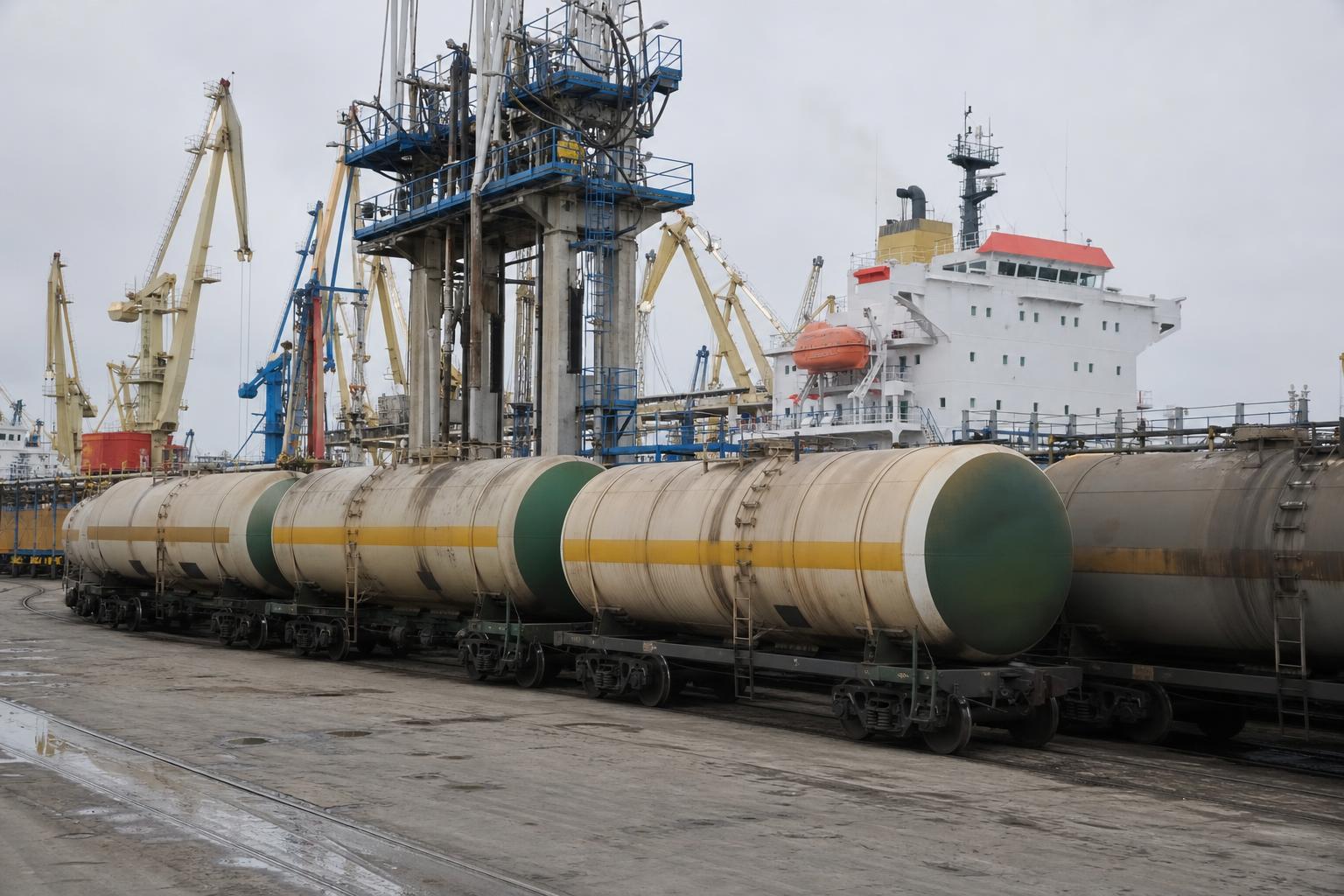
Delays in the export of vegetable oil may create risks of forced pauses at oil extraction plants. UkrOilProm has addressed the Ukrainian Railways and the Administration of Sea Ports of Ukraine with a call to coordinate rail and maritime logistics.
For producers and buyers, this issue involves not only delivery timelines: finished oil is more challenging to store long-term at the plant than grain at an elevator. Therefore, delays at one stage of transportation can impact shipment schedules and raw material intake.
Limited Storage Capacity for Oil
According to association head Stepan Kapsuk, plant tanks are designed to hold approximately 5–7 days of production. If finished products are not exported within this period, the enterprise may need to halt production lines and cease accepting raw materials.
This distinguishes oil logistics from grain transportation: tankers for liquid cargo and grain hoppers are not interchangeable. Consequently, delays in oil dispatch do not automatically exclude grain wagons from grain shipments.
Bottlenecks — Railway traction and port coordination
UkrOilProm points to a shortage of mainline locomotives, as well as delays caused by waiting for edible liquid tankers in the Black Sea. Additional time may be required for pilotage or for the vessel to be included in a convoy.
Among the association's proposals are a technological movement schedule and allocation of locomotive traction for routes with vegetable oil. It also expects timely pilotage and the docking of ready-to-operate tankers at liquid terminals from the port authorities.
Considerations for Shipment Planning
- Verify the readiness of all route components: availability of tankers, railway traction, terminal window, and vessel.
- Coordinate schedules in advance: limited storage reserves make delays particularly critical for continuous production.
- Differentiate between types of rolling stock: oil tankers are not interchangeable with grain wagons, so transportation needs should be planned separately.
Implications for the Market
For oil sellers, processors, and buyers, the reliability of the logistics schedule is becoming a key condition for fulfilling agreements. Until railway and port stages are synchronized, it is advisable to verify the readiness of transport and terminals separately when negotiating contracts, rather than relying solely on the product readiness date.
Comments
No comments yetNo comments yet - be the first.