
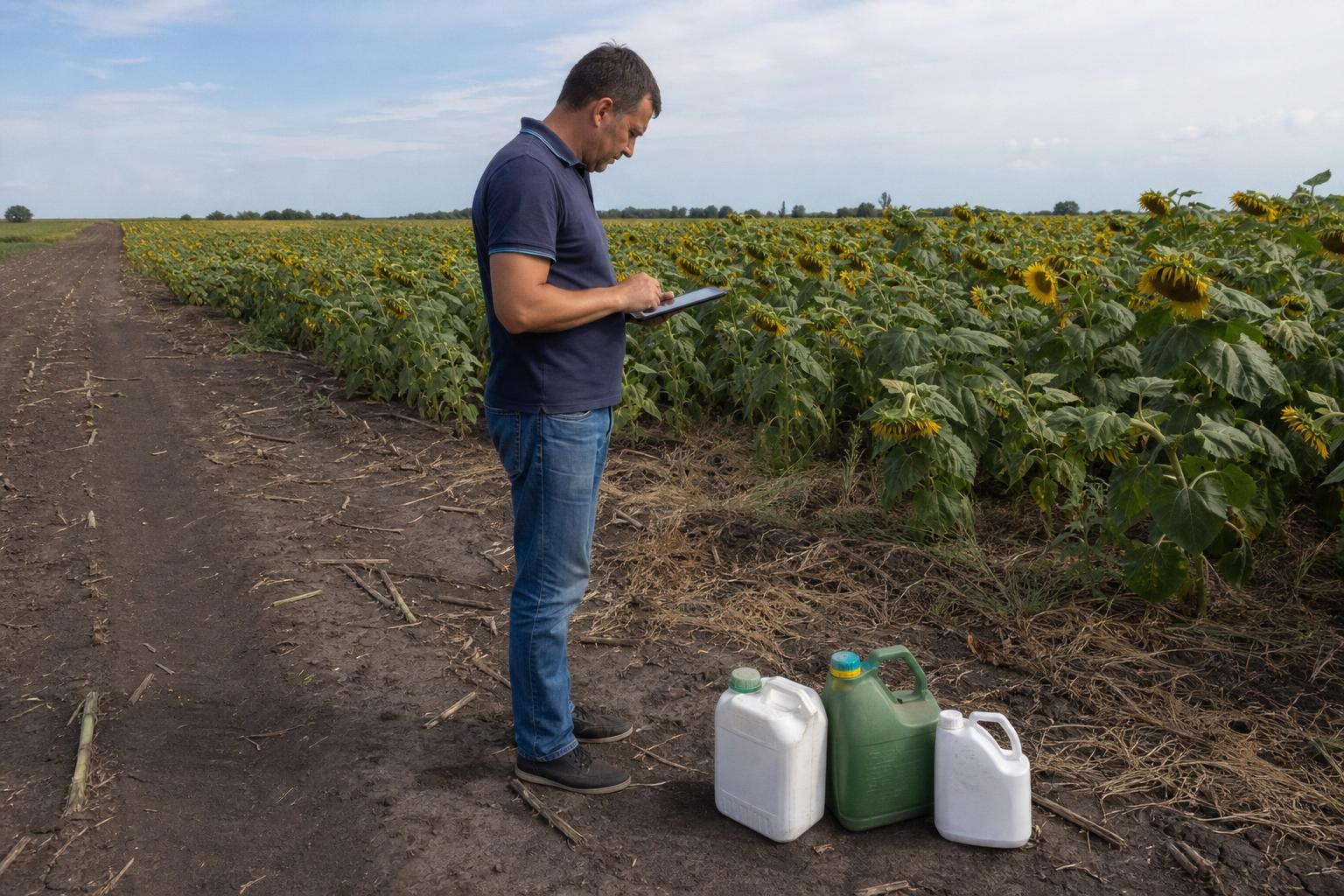
The Ukrainian sunflower market is entering a new season with noticeably increased export interest. According to market participants, traders have contracted approximately 30,000 tons of new harvest seeds within just one week for supplies to Turkey and Bulgaria.
For the plant protection segment, this is not an automatic signal to revise technologies but an important indicator for planning. If a farm focuses on selling seeds, the quality of the batch, uniformity of ripening, and control of issues in the crops become part of the commercial strategy.
Market backdrop for sunflower producers
From September to November, Ukrainian sunflower exports of the new harvest are estimated by brokers to reach around 200,000 tons. For comparison: from September to June of the current marketing year, Ukraine exported only 39,000 tons of sunflower seeds.
It is also noted that during this period, Turkey could potentially purchase about 120,000 tons, while Bulgaria and Romania might buy another 80,000 tons. Meanwhile, USDA forecasts Ukrainian sunflower exports in the new season at around 100,000 tons, compared to 40,000 tons in the previous season.
These estimates indicate that demand for seeds could be more active than last season, but scenarios vary. Therefore, producers should not rely on a single optimistic scenario but consider multiple sales models — export channels, domestic processing, or deferred sales.
Implications for purchasing plant protection products
Planning sunflower protection measures should remain tied to agronomic conditions in the field. Market prices and export forecasts can influence expected margins but do not replace monitoring of weeds, diseases, and crop status.
For AgroPost buyers, this means: it is advisable to check the availability of necessary products with suppliers in advance, compare offers for herbicides, fungicides, and related products, and clarify delivery terms. This is especially relevant for farms that cannot afford technological pauses during treatment periods.
For plant protection product sellers, key factors are not only a broad price list but also clear communication: which products are available, which are on order, which batches have documentation, and delivery conditions. During a season with high uncertainty, buyers respond more quickly to transparent and specific offers.
Quality of the batch is more important than price expectations
Market materials for sunflower also mention contracting prices: for supplies to Turkey, levels of $655–660/ton CIF Marmara are cited, and for Bulgaria — about $575/ton delivered to Varna. However, these benchmarks do not guarantee identical conditions for all batches.
For producers, this means that agronomic quality remains the basis for negotiation. Crop protection should work to preserve yield potential, not just fulfill technological requirements formally.
- For buyers of plant protection products: it is advisable to plan purchases based on actual field risks rather than rumors about future sunflower prices.
- For sellers of plant protection products: emphasize availability, quick shipment, and quality confirmation of products.
- For sunflower producers: it is prudent to compare protection costs with the actual sales channel they can logistics-wise fulfill.
Logistics remains a constraint for the market
Even amid active demand, the execution of export contracts depends on the availability of maritime logistics. Market participants note that some coaster ships are rerouting from the Black Sea region to ports in Northern Europe due to military risks.
This factor does not directly relate to the choice of herbicide or fungicide but affects the overall economics of cultivation. If sales may be delayed or routes changed, farms should have financial reserves and avoid building their entire technology on a single scenario of quick realization.
Implications for the market: Increased sunflower exports generate additional interest in quality harvests but do not eliminate cautious planning. On AgroPost, buyers should seek plant protection products with confirmed availability and clear logistics, while sellers should update offers to enable farmers to make quick decisions aligned with their crop protection strategies.
Comments
No comments yetNo comments yet - be the first.