
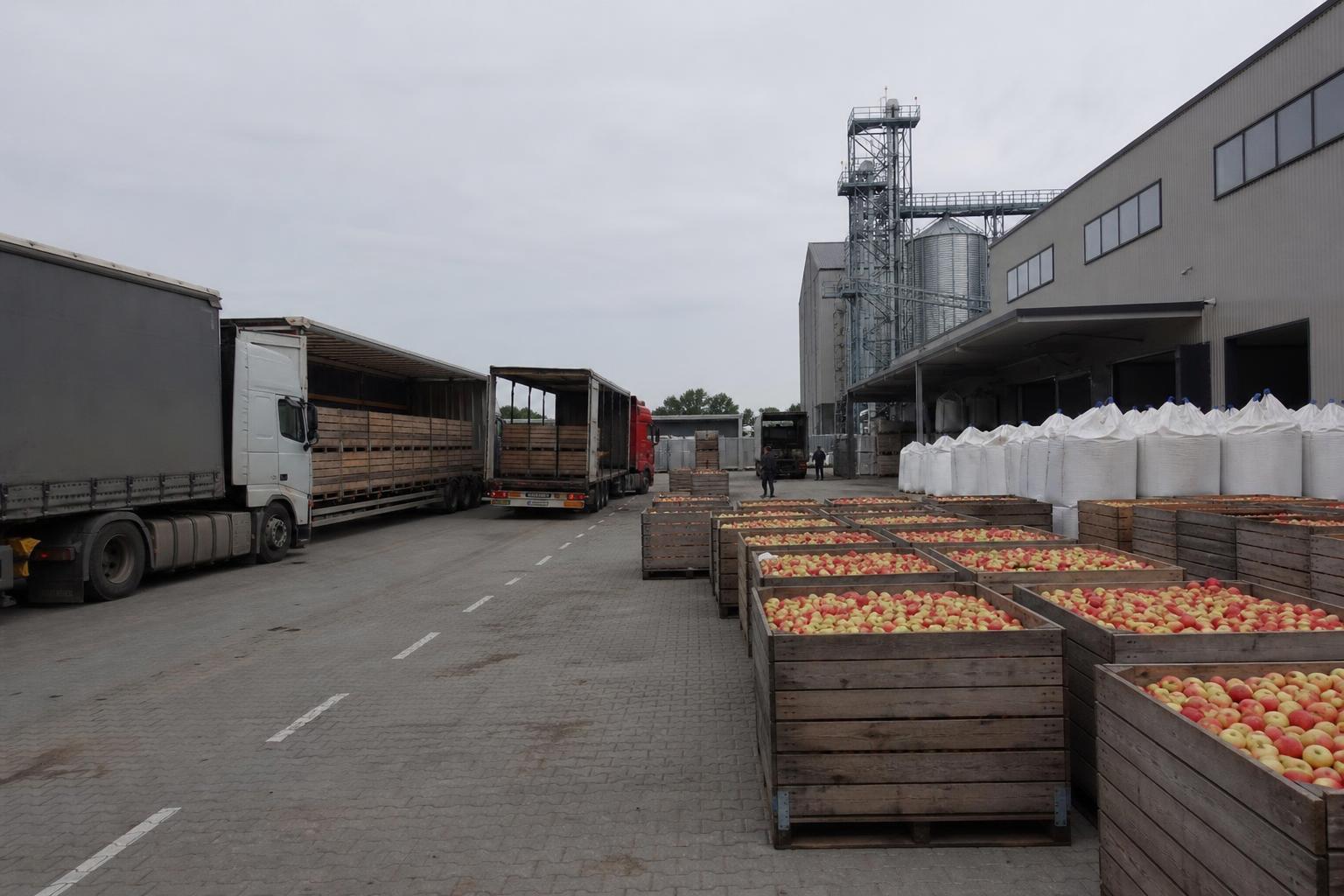
Ukrainian agricultural logistics enters August with a variety of cargo types: fruit and vegetable products require fast and reliable shipments, while oilseeds generate mass demand for transportation to processors, warehouses, and export destinations.
For AgroPost participants, this is an important signal: sellers should consider logistics costs in their product pricing in advance, while buyers and carriers need to plan transport availability, tariffs, and cargo requirements more carefully.
Apples: Smaller volumes but higher logistics requirements
In the 2025/26 marketing year, Ukrainian companies increased apple exports. According to data shared by USPA Fruit representative Volodymyr Hurzhii, from July 2025 to April 2026, over 22,000 tons of apples were shipped abroad. This is a 31% increase compared to the 2024/25 season, when exports totaled approximately 16,800 tons.
Imports of apples into Ukraine, on the other hand, decreased to about 5,500 tons from 18,200 tons in the previous season. Key supply destinations for Ukrainian apples include the United Arab Emirates, Saudi Arabia, Uzbekistan, Turkey, and Sweden.
While this volume is not mass-scale like grain or oilseeds, it is sensitive to timing, packaging, temperature control, and load quality. Mistakes during transportation can quickly lead to product appearance deterioration and price reductions for the batch.
Oilseeds: Residual stocks support domestic and export demand
The largest cargo base among the listed crops is sunflower. As of August 1, 2026, sunflower seed stocks in Ukraine were estimated at 947,000 tons. From September to June, 9.66 million tons were processed domestically, while seed exports amounted to 39,000 tons.
For soybeans, stocks at the beginning of August were estimated at 560,000 tons. The total resources for the season reached 5.379 million tons, with 2.65 million tons processed domestically and 2.169 million tons exported.
Rapeseed stocks at the start of August were estimated at 205,000 tons. During July-June, the crop's resources totaled 3.446 million tons, with 1.34 million tons processed domestically and 1.901 million tons exported. It was also noted that in July alone, Ukraine processed approximately 64,000 tons of rapeseed and exported about 20,000 tons of seed.
What to consider when ordering transportation
For oilseed sellers, it is crucial not to limit themselves to the purchase price at the elevator or plant. The agreement should account for distance, transport type, delivery schedule, moisture and cleanliness requirements, as well as potential delays at acceptance points.
For apple buyers, key considerations include not only price and variety but also the availability of a batch ready for shipment: packaging, sizing, documentation, the ability to quickly assemble a vehicle, and meet export customer requirements.
- For carriers: seasonal fruit batches can offer higher margins but require discipline regarding temperature and timing.
- For traders: oilseeds remain a primary source of regular cargo for domestic routes and export chains.
- For farmers: logistics should be calculated before placing offers to avoid margin loss after price agreement.
Tariff considerations: why pre-agree conditions
The volumes mentioned do not necessarily indicate a transport shortage but show that in August, different cargo types coexist in the market. Large oilseed batches compete for standard logistics, while fruit products demand high-quality transport and precise scheduling.
In such conditions, market participants should pre-agree on delivery basis, responsibility for delays, weighing procedures, freight payment terms, and documentation requirements. This is especially relevant for contracts where goods are sold with delivery to the buyer.
What this means for the market: Ukraine's agricultural logistics remains heterogeneous in cargo types and requirements. For AgroPost, this creates demand for precise announcements: specify crop or product, batch volume, destination, transport type, preferred shipment dates, and payment terms. The more specific the request, the faster sellers, buyers, and carriers can reach an agreement without losing time or margins.
Comments
No comments yetNo comments yet - be the first.