
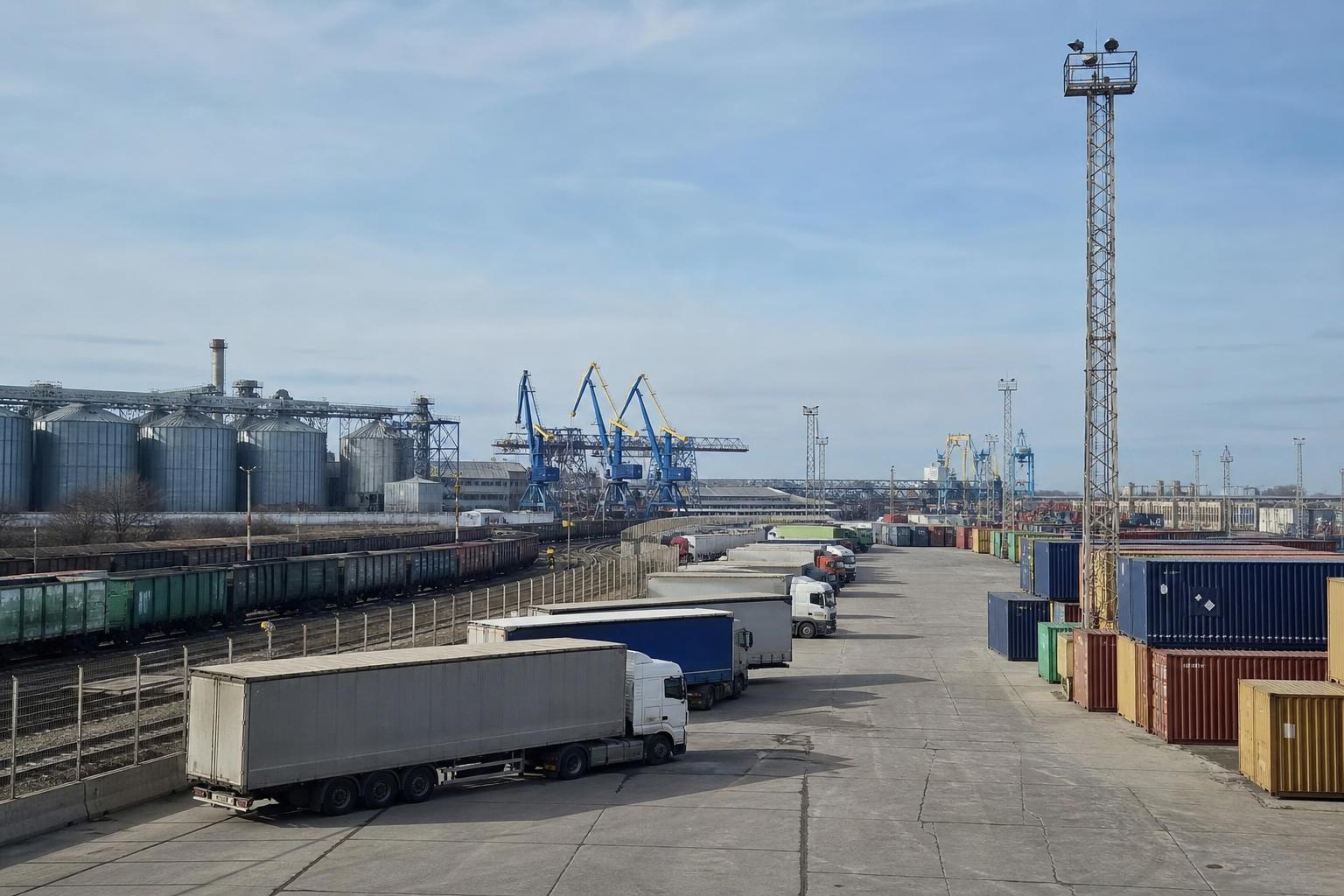
Ukrainian agricultural logistics is entering another period of heightened attention to risks and route costs. For grain, oilseed, processed products, and other export cargo sellers, this means the need to carefully calculate not only transportation tariffs but also the resilience of the entire supply chain.
Two signals are particularly important for the market now: the security situation in the Black Sea and changes in tariffs for container rail shipments to the Polish port of Gdańsk.
Black Sea: Security Risks Remain a Price Factor
On the night of September 23, according to the Ukrainian Sea Ports Authority (USPA), a cargo vessel flying the flag of Antigua and Barbuda was attacked in the Black Sea. A fire broke out on board, and the crew was evacuated by the Ukrainian Navy, after which the fire was extinguished.
As a result of the attack, the ship's captain, a Ukrainian sailor, was killed. USPA called the strike another attack on civilian shipping and emphasized the danger for people ensuring the operation of maritime routes.
For agricultural exports, this does not automatically mean a halt to maritime shipments but highlights the need for backup scenarios in port planning. Shippers should coordinate time windows, insurance conditions, documentation, and the possibility of rerouting cargo through alternative routes in advance.
Container Export to Gdańsk: Maersk Raises Rates
Maersk announced updates to tariffs for rail container shipments between Ukrainian terminals and the Gdańsk DCT terminal in Poland starting October 1, 2026. According to the published information, export rates will increase, while import rates will remain at current levels.
For 20-foot containers, export rates are quoted in the range of $1,600–2,100 depending on the departure terminal. For 40-foot containers, rates are $1,800–2,600.
The most notable increase is for routes from Ternopil and Kyiv: the rate for a 40-foot container rises from $1,800 to $2,200, and for a 20-foot container — from $1,800 to $2,000.
For Mostyska, the rate increases from $1,400 to $1,600 for a 20-foot container and from $1,500 to $1,800 for a 40-foot container. For Dnipro-Lisny, Zaporizhzhia, and Kharkiv, the rate for a 20-foot container rises from $1,950 to $2,100, and for a 40-foot container — from $2,300 to $2,600.
What Exporters of Agro-products Should Check
- Relevance of the rate. Before booking transportation, confirm the tariff with the operator or freight forwarder, as conditions may depend on the departure date, terminal, and container type.
- Route and time buffer. For maritime and rail chains, it is advisable to include a time reserve for inspection, transshipment, queues, or window changes.
- Economics of the batch. The increase in logistics rates is especially noticeable for cargo with lower margins, so sellers should recalculate the EXW/FCA/FOB price considering the new margin.
- Container vs. alternative options. If the product allows different shipping formats, it is advisable to compare container routes with road, rail, or combined options.
Practical Advice for Deals on AgroPost
Agro-product sellers should clearly specify in listings the basis of delivery, the dispatch point, readiness for containerization, and possible logistics routes. This reduces negotiation time and helps buyers quickly assess the full cost of the product with delivery.
Buyers seeking large export batches should immediately clarify packaging type, availability of rail terminals, loading times, and documentation. In a market where logistics change rapidly, those with several confirmed transportation scenarios will have an advantage.
What this means for the market: Ukrainian agricultural logistics remains operational but more expensive and complex to manage. The maritime sector requires additional attention to safety, and container exports through Gdańsk need updated calculations. The main task for sellers and buyers now is not to delay logistics planning until the final stages of the deal.
Comments
No comments yetNo comments yet - be the first.