
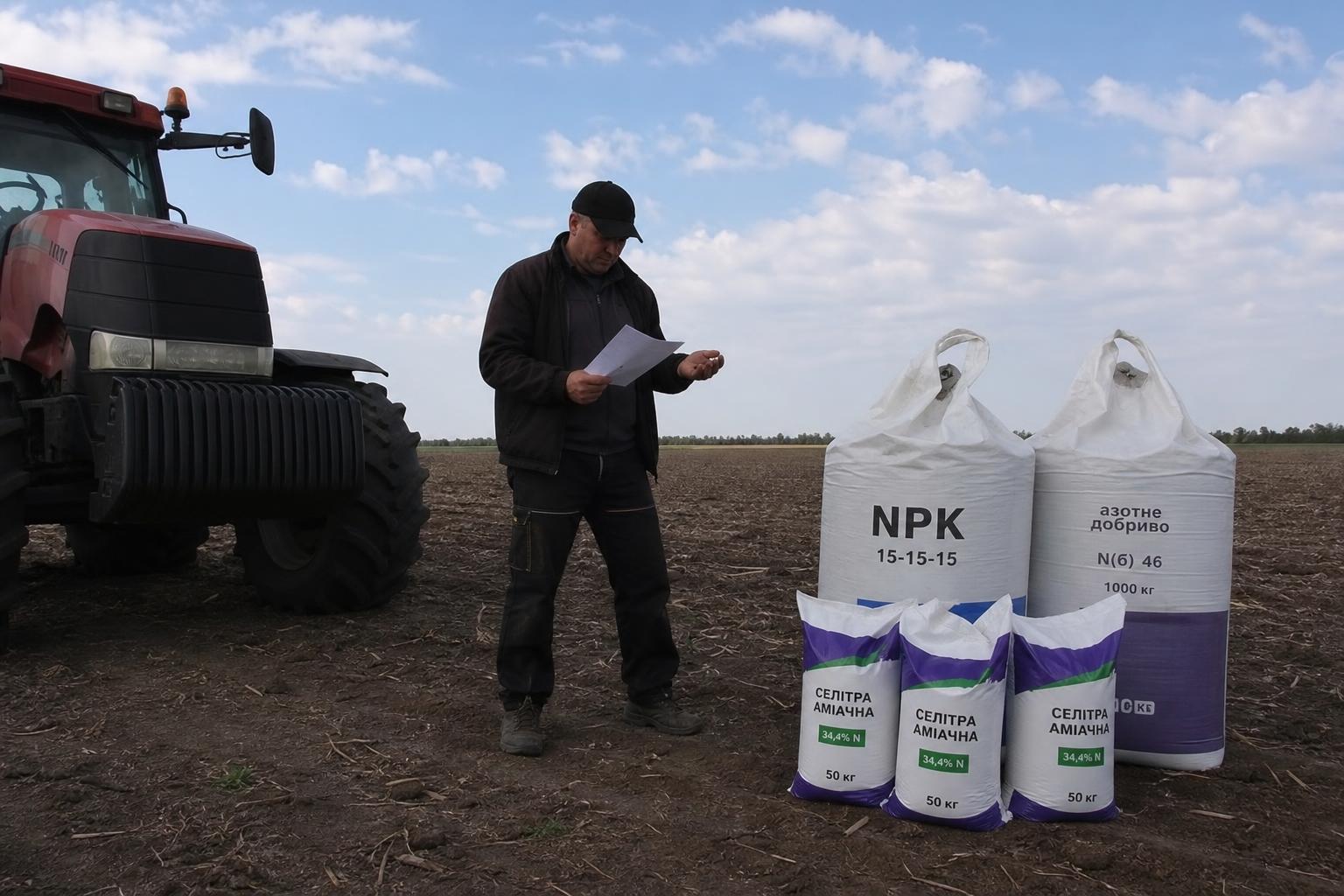
The Ukrainian fertilizer market is entering a period when demand increasingly depends not only on the planting calendar but also on the economics of specific crops. For buyers, this means more cautious planning of application rates, while sellers need to provide more precise information on availability, composition, and shipping conditions.
Available sources do not confirm current prices for nitrogen fertilizers, NPK, imports, or production. Therefore, this review focuses on market signals that may influence fertilizer buyers' behavior ahead of sowing campaigns.
Rapeseed Remains a Key Indicator for Nutrient Demand
According to analysts, in the 2025/26 season, Ukraine's rapeseed export share for the first time in nearly 20 years did not exceed 59–60%. Previously, about 85% of the total supply of this crop was directed to foreign markets on average.
This shift towards domestic processing is also significant for the fertilizer market. If farms see stable internal demand for oilseeds, they pay closer attention to cultivation technology, including starter fertilization, nitrogen top-dressing, and comprehensive NPK solutions.
At the same time, sources note that the rapeseed harvest in Ukraine has decreased to the lowest level in four years due to adverse weather, including spring frosts in 2025. This serves as a reminder to producers: even with a high crop role in crop rotation, fertilizer expenses should be linked to actual field conditions, moisture levels, and expected yields.
What Fertilizer Buyers Should Know on AgroPost
Buyers now require not general promises but specific information about the product. For nitrogen fertilizers and NPK, transparent details about product form, packaging, batch, shipment region, and delivery timelines are critical.
- For sowing it is advisable to clarify the availability of a batch in advance, not just the price in the listing.
- For NPK it is important to verify the declared formula and its suitability for the intended crop.
- For nitrogen fertilizers buyers should consider logistics to the farm and the possibility of prompt delivery during peak periods.
- For large batches it is advisable to coordinate the shipment schedule to avoid disrupting technological timelines.
What Sellers Should Keep in Mind
For fertilizer sellers, the main takeaway is that demand is becoming more rational. Farmers can compare not only price per ton but also the total cost of ensuring the field: delivery, minimum order quantity, delivery speed, and documentation quality.
Listings on AgroPost will be more practically valuable if they clearly specify fertilizer type, composition, form, available volume, region, payment terms, and delivery options. For seasonal products, these details are often more important than lengthy descriptions without commercial specifics.
If a seller offers multiple items—such as nitrogen fertilizers, NPK, and microfertilizers—it is better to separate proposals. This helps buyers find the needed product faster and makes listings more targeted to demand.
Key Conclusions for Market Participants
- Current open data from sources do not allow for an accurate assessment of fertilizer prices in Ukraine.
- The economics of rapeseed and domestic processing can influence interest in nutrient application for oilseed crops.
- Buyers increasingly evaluate not only price but also availability, logistics, and quality assurance.
- Sellers should make their listings as specific as possible: composition, batch, region, delivery, and documentation.
Implication for the market: The fertilizer market in Ukraine is moving towards more targeted and pragmatic procurement. On AgroPost, proposals that immediately show the actual product, clear delivery conditions, and alignment with sowing needs—rather than just the general name of the fertilizer—will stand out.
Comments
No comments yetNo comments yet - be the first.