
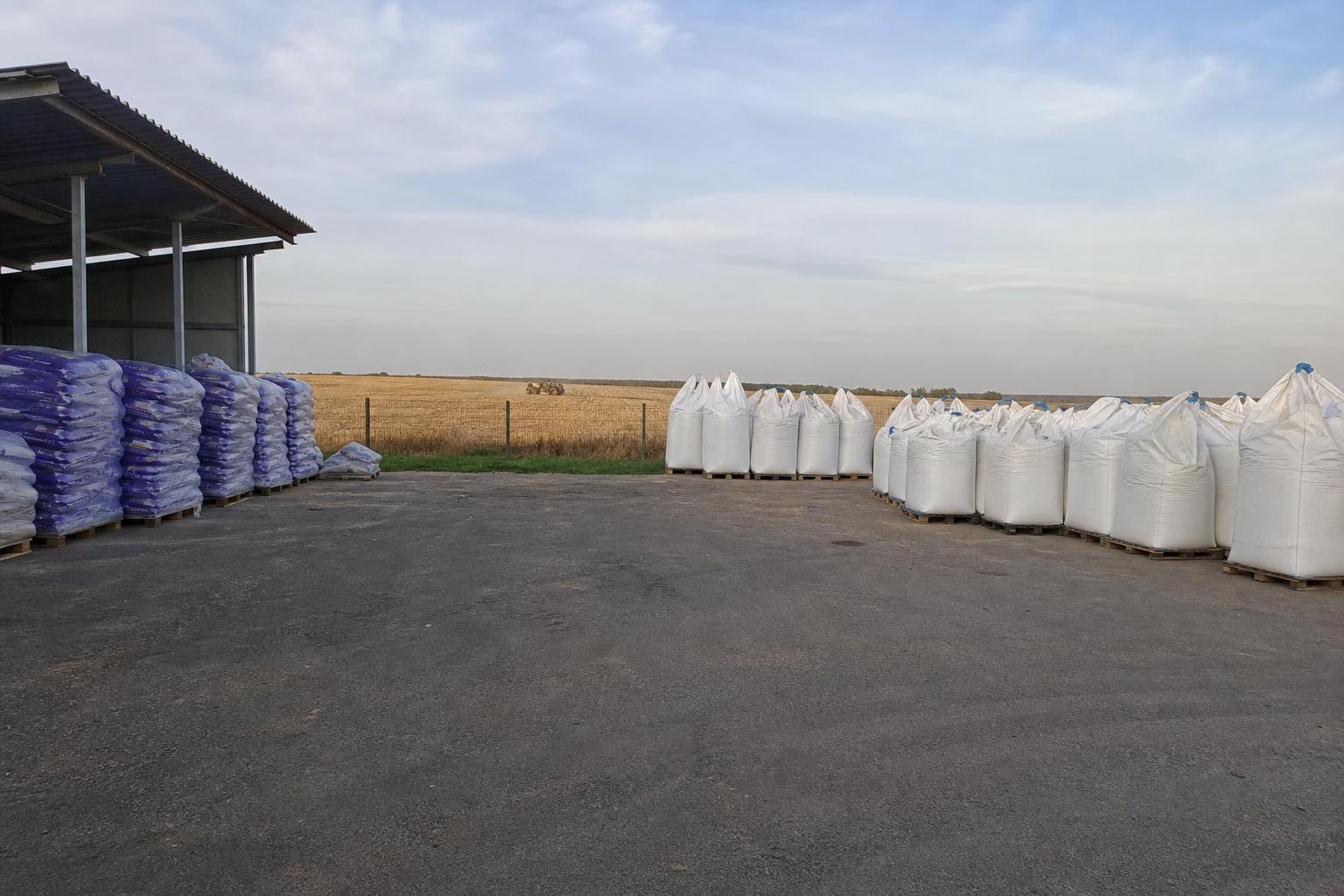
The Ukrainian fertilizer market is entering a period when demand is increasingly linked not to current applications but to field preparations after harvest and planning for the next sowing season. The start of early grain harvesting provides farms with initial practical data to review fertilization budgets.
According to regional reports, harvesting of winter barley has already begun in Lviv region and northern Odessa. While this is not a direct indicator of fertilizer prices, it is important for the procurement calendar: after early crops, farmers quickly move on to assessing soil conditions, moisture residuals, and the need for main fertilization.
Early grains set the pace for fertilizer planning
In Lviv, the harvest campaign started on July 1 with the threshing of early grains. In the region's agricultural enterprises, 2,800 hectares of winter barley have already been harvested, accounting for 18.2% of the respective areas, with a yield of 20,000 tons of grain.
The average yield at this stage is 72.5 c/ha, which is 2.4 c/ha higher than the average for winter barley last year. For the fertilizer market, such data are important not as a demand forecast but as a signal: farms are seeing the first results of the season and can plan expenses for the next cycle more accurately.
Grain logistics influence the agricultural chemistry procurement calendar
In northern Odessa, Tekom Agro Group elevators have begun accepting the 2026 harvest grain. The first batches of winter barley have arrived at facilities in the Podilsk district, including the Podilsk Grain Processing Plant and Chubivsky Flour Mill.
The company also notes that the winter barley has a gross weight of 670 g/l and good organoleptic qualities. For fertilizer sellers, this is a cue to monitor regions where harvests are already underway: after early crop collection, buyers more frequently inquire about the availability of nitrogen and complex products for main application and autumn sowing.
What to include in ads on AgroPost
During the transition from harvest to soil preparation, fertilizer buyers compare not only prices. Transparent supply conditions, documentation, and actual stock availability are also crucial.
- For nitrogen fertilizers: product form, active substance content, packaging or bulk, minimum batch size, shipping conditions.
- For NPK: formula, granulation, country or manufacturer origin, compatibility with planned crop and application method.
- For buyers: storage region, delivery terms, price with or without VAT, self-pickup options, certification availability.
- For sellers: current stock levels, product photos, clear contact details, and readiness to confirm batches quickly.
Key conclusions for market participants
- Regional public data confirm the start of early grain harvests but do not justify changes in fertilizer prices.
- After harvesting winter barley, farms may more actively assess their main fertilization needs for subsequent crops.
- Offers with clear formulation, composition, logistics, and documentation remain the most practical for trade.
- Buyers should compare not only the per-ton price but also the total delivery cost to the farm.
What this means for the market: in the near future, fertilizer trading in Ukraine will depend more on regional harvest calendars and farm financial planning than on one-time purchases. For AgroPost, this is a period when well-structured ads for nitrogen and NPK can more quickly find their buyers.
Comments
No comments yetNo comments yet - be the first.