
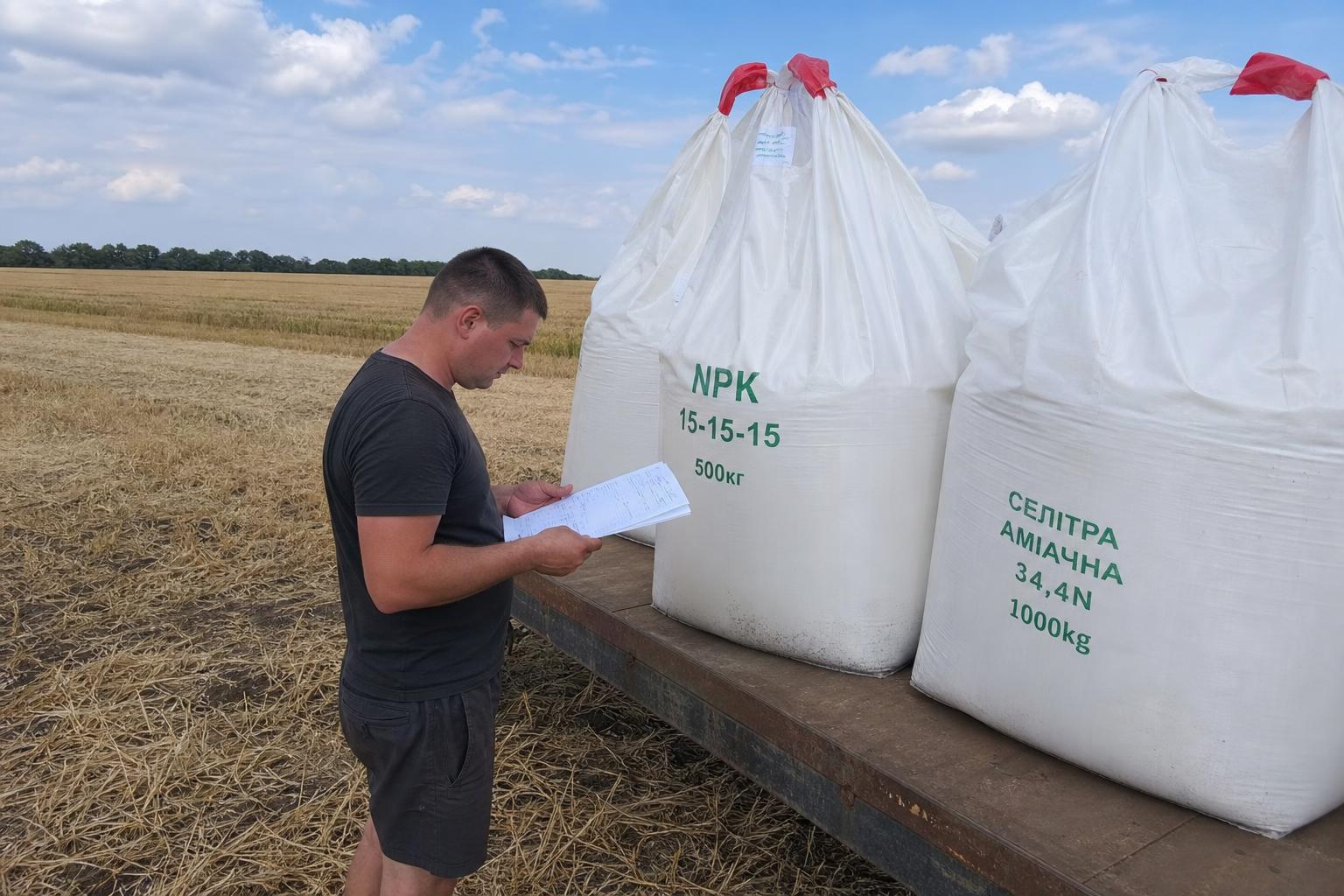
The southern regions of Ukraine are the first to enter the harvest phase: in the southern districts of Odessa region, harvesting of winter barley and overwintering peas has already begun. For the fertilizer market, this is not an immediate price indicator, but an important calendar signal: farms are gradually transitioning from spring fieldwork to assessing needs for the next cycle.
For AgroPost's buyers and sellers, the focus is on nitrogen fertilizers, NPK complexes, and agrochemicals for preparing fields after early crops. Activity will depend on crop structure, actual yields, working capital after grain sales, and local logistics.
Harvest as a Starting Point for Procurement Planning
According to reports from Odessa, regional farmers are expected to harvest grains and legumes from nearly 770,000 hectares. The largest share is winter and spring wheat — over 522,000 hectares. Barley covers nearly 176,000 hectares, peas about 74,400 hectares, and rapeseed over 175,000 hectares.
For fertilizer suppliers, this structure indicates a broad demand across several groups: nitrogen to restore nutrient balance, phosphorus-potassium solutions for main application, and NPK for winter crops. However, sources do not provide data on actual purchase prices or fertilizer stocks, so market conclusions should be drawn cautiously.
Grain Exports Affect the Liquidity of Agricultural Producers
As of June 19, Ukraine had exported nearly 36 million tons of grains and legumes in the 2025/26 marketing year. This is 4.1 million tons, or 10%, less than the same period last season.
Wheat exports amounted to 13.4 million tons, 14% below last year's level. Barley exports are around 1.5 million tons, a decrease of 35%. Corn exports reached 20.5 million tons, down 5% compared to the previous year.
For the fertilizer market, these figures are important as a backdrop for buyers' solvency. If farms receive revenue more slowly or plan grain sales cautiously, they may split fertilizer purchases, seek smaller batches, or more actively compare delivery conditions.
What Fertilizer Sellers Should Do on AgroPost
- Update stocks and packaging. Buyers need quick visibility of the availability of small, medium, and large batches of nitrogen and NPK fertilizers.
- Specify the shipment region clearly. For farmers during harvest, logistics are often as important as price.
- Show warehouse and product purpose. For NPK, specify the formula, crop, or application stage if confirmed by the specification.
- Avoid mixing different categories in one listing. Separate listings for UAN, nitrate, urea, ammonium sulfate, or complex fertilizers facilitate search.
What Buyers Should Pay Attention To
Buyers should compare their fertilizer needs with the actual field condition after harvest, soil analysis results, and crop rotation plans. Early crops open a window for field preparation, but decisions on application rates should be based on agronomic data, not just the calendar.
Before concluding a deal, it is advisable to clarify the availability of certificates, the actual batch weight, payment terms, shipment deadlines, and delivery responsibilities. During active fieldwork, these details reduce the risk of delays.
What this means for the market. The start of harvest in Odessa does not provide a direct answer regarding fertilizer prices but marks a transition to a new demand phase. Sellers should prepare transparent offers emphasizing availability and logistics, while buyers should proactively estimate needs for winter, post-harvest application, and autumn campaigns.
Comments
No comments yetNo comments yet - be the first.