
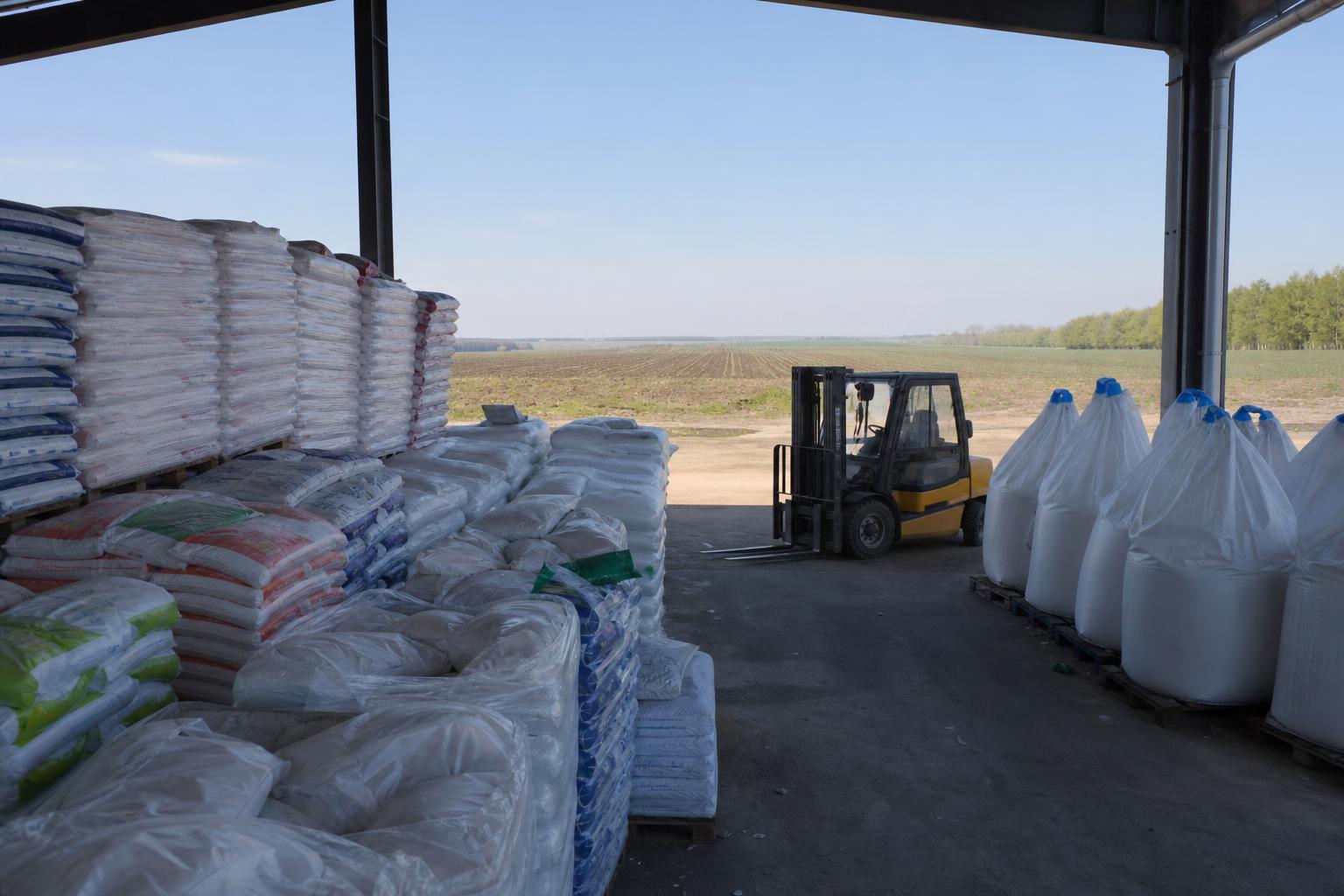
The Ukrainian fertilizer market is entering a period when purchasing decisions increasingly depend on the liquidity of agricultural producers, field work schedules, and expectations regarding crop prices. For the nitrogen fertilizers and NPK segment, this means not so much a sharp surge in demand, but rather the need for precise planning of batches tailored to specific crops and application timings.
Adjacent market signals show a mixed picture. On one hand, grain market prices in ports are declining, which may lead farmers to be more cautious with their expenses. On the other hand, investments in potato processing and irrigation development confirm ongoing demand for intensive technologies, where plant nutrition remains a critical cost component.
Nitrogen Fertilizers: Demand Depends on Post-Harvest Cash Flow
For buyers of nitrogen fertilizers, the main concern now is not only the price per ton but also the timing of procurement. After the start of harvest, some farms receive new crop mass but are not in a hurry to sell high-quality grain, waiting for better market conditions.
In such situations, purchases of urea, UAN, ammonium nitrate, or other nitrogen products may be spread over time. Buyers more often compare not just one offer but a complete package: stock availability, minimum order quantity, delivery terms, payment conditions, and the ability to quickly meet specific field needs.
For sellers on AgroPost, this signals the importance of transparency in listings. Product cards should immediately specify the fertilizer form, packaging, shipment region, available volume, and whether delivery to the farm is possible.
NPK and Complex Fertilizers: Demand Supported by Intensive Crop Technologies
Complex fertilizers remain vital for farms working with crops that have high nutritional requirements. This is especially true for vegetable and potato projects, where yield and product quality directly depend on balanced nutrient application.
A notable example is the development of the potato sector in Zhytomyr region: publicly available information reports a $38 million potato processing plant project, along with irrigation on 600 hectares and an annual production of about 29,000 tons of potatoes. Such projects generate demand not just for fertilizers but for predictable supply aligned with technological plans.
For the NPK market, this means demand may be more stable in niches where farmers focus on processing, contractual sales, or storage. In these segments, buyers more often consider how fertilization impacts the yield and quality of the final product rather than just the minimum price of the fertilizer.
What Fertilizer Buyers Need to Know on AgroPost
- Availability of the product. During short application windows, fast dispatch may be as important as price.
- Logistics. Buyers pay attention to the distance to the warehouse, delivery options, and realistic transportation times.
- Documentation and quality. For large batches, certificates, origin, and compliance with declared composition are crucial.
- Batch flexibility. Small and medium farms often need not full railcar volumes but clear offers tailored to specific areas.
How Sellers Can Prepare Listings
In fertilizers, buyers quickly filter out incomplete offers. If a listing lacks brand, warehouse, price, or shipment region, it will lose to competitors even if it offers a potentially better price.
The optimal format for AgroPost is a short product name, precise active ingredient content, available volume, packaging, payment, and logistics conditions. For NPK, it is advisable to specify recommended crops or typical application, without promising agronomic effects without soil analysis.
What this means for the market: demand for fertilizers in Ukraine remains linked to farmers’ cash flow and sowing structures. The best positions will be held by sellers who can quickly confirm nitrogen or NPK availability, offer clear delivery terms, and work with various volumes—from small batches to seasonal systemic procurement.
Comments
No comments yetNo comments yet - be the first.