
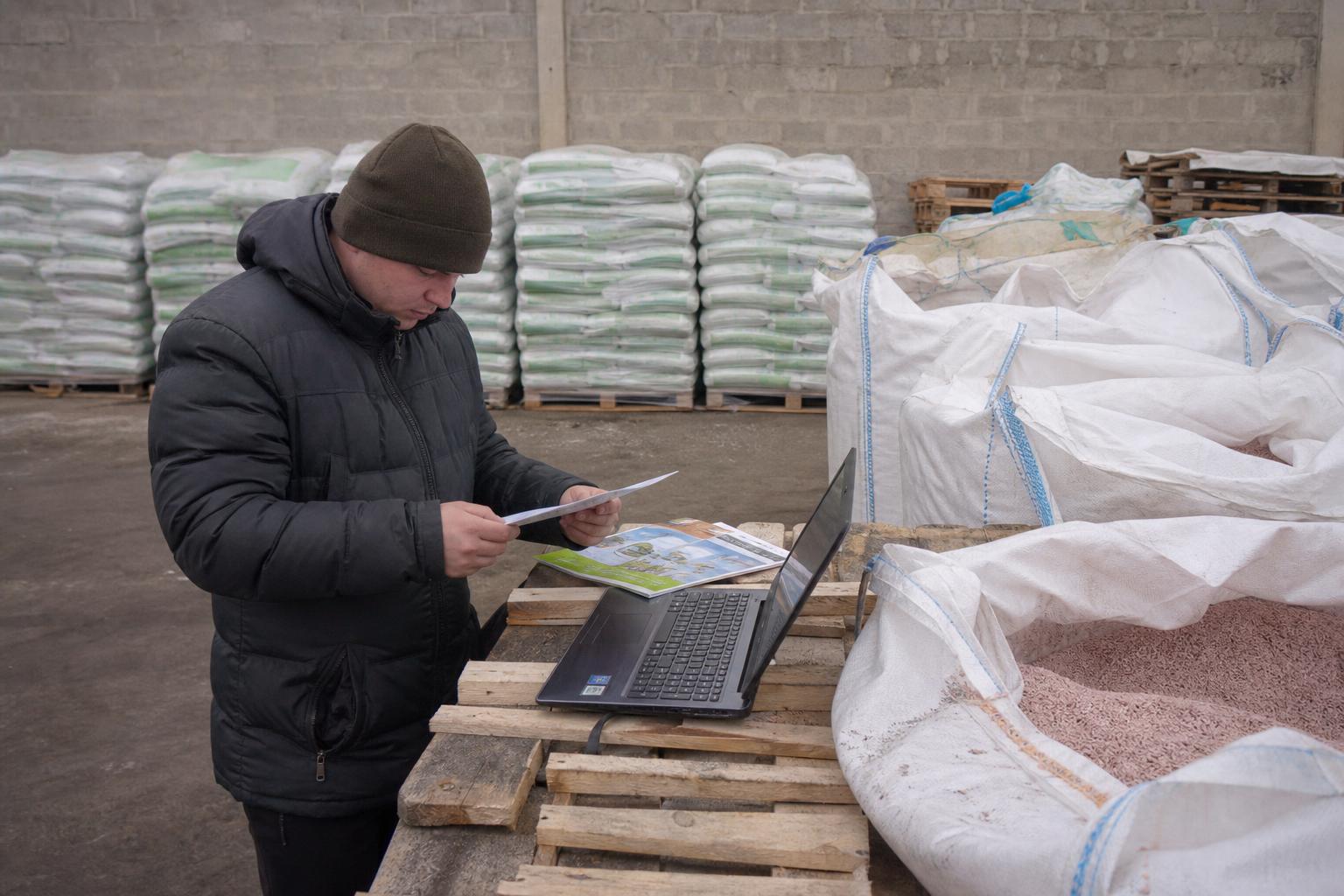
The Ukrainian fertilizer market is entering a period where purchasing decisions are increasingly influenced not only by the price of agrochemicals but also by the expected margin per crop. While there are no direct quotations for nitrogen, complex, or NPK fertilizers in the provided market reports, important signals are emerging from related agricultural sectors.
For sellers and buyers on AgroPost, this means one thing: fertilizer listings must be accurate, and negotiations should be tied to the actual needs of the farm, application timing, and delivery costs.
Grain Sector: Corn Sets Caution in Purchases
According to analysts from White Brokers, Ukrainian corn has decreased in price over the past week: the DAP port price has fallen to $217/ton, and on FCA terms at the western border — to €193/ton. The reasons include reduced buyer activity, competition from cheaper Latin American corn, and sales of remaining old crop stocks by Ukrainian farmers.
For the fertilizer segment, this is an important context, though not a direct price indicator. When grain revenue is under pressure, buyers tend to calculate not just the price per bag or ton but the full economics: active ingredient, application rate, logistics, payment deferrals, and the risk of downtime before field work.
Nitrogen and NPK: What to Clarify in Contracts
In the 'Fertilizers' category, the most practical proposals are those where the seller immediately specifies the product type, nutrient content, form, packaging, minimum batch size, and shipment region. For nitrogen fertilizers, delivery speed before application is critical; for NPK, compliance with the planned crop technology is essential.
Buyers should compare not only the initial price but also the final cost to the farm. Two seemingly identical offers can differ significantly due to delivery, packaging, batch availability, and quality documentation.
Special Fertilizers: Demand Depends on Crop Structure
The berry sector shows varying dynamics in cultivated areas. From 2023 to 2025, raspberry and blackberry areas in fruiting age increased from 4.5 thousand hectares to 4.9 thousand hectares, while currant areas grew from 3.1 thousand hectares to 3.2 thousand hectares. Meanwhile, strawberry and wild strawberry areas decreased from 6.9 thousand hectares to 6 thousand hectares, and blueberry and bilberry areas declined from 1.6 thousand hectares to 1.3 thousand hectares.
For sellers of water-soluble, microfertilizers, and specialized feeding schemes, this means a need for more precise segmentation of proposals. A generic description in an ad is less effective for niche buyers than a clear indication of the crop, application phase, and compatibility with the farm's technology.
What to Add to Listings on AgroPost
- Name and type of fertilizer: nitrogen, phosphorus, potassium, NPK, microfertilizer, water-soluble, or organo-mineral.
- Composition: main nutrient content and, if available, microelements.
- Form and packaging: granules, liquid, crystals, big-bag, bag, or container.
- Location: region, warehouse, or shipment conditions.
- Batch: available volume, minimum order, possibility of splitting.
- Documents: certificates, origin, manufacturing date, or expiration date, if applicable.
Implications for the market: Without confirmed fertilizer quotations, it is premature to draw conclusions about overall price trends. However, agricultural producers are already operating in an environment where grain market conditions compel more careful cost calculations. On AgroPost, the most successful sellers will be those providing transparent specifications and quick availability responses, while buyers will be those comparing proposals based on total application cost rather than just price per ton.
Comments
No comments yetNo comments yet - be the first.