
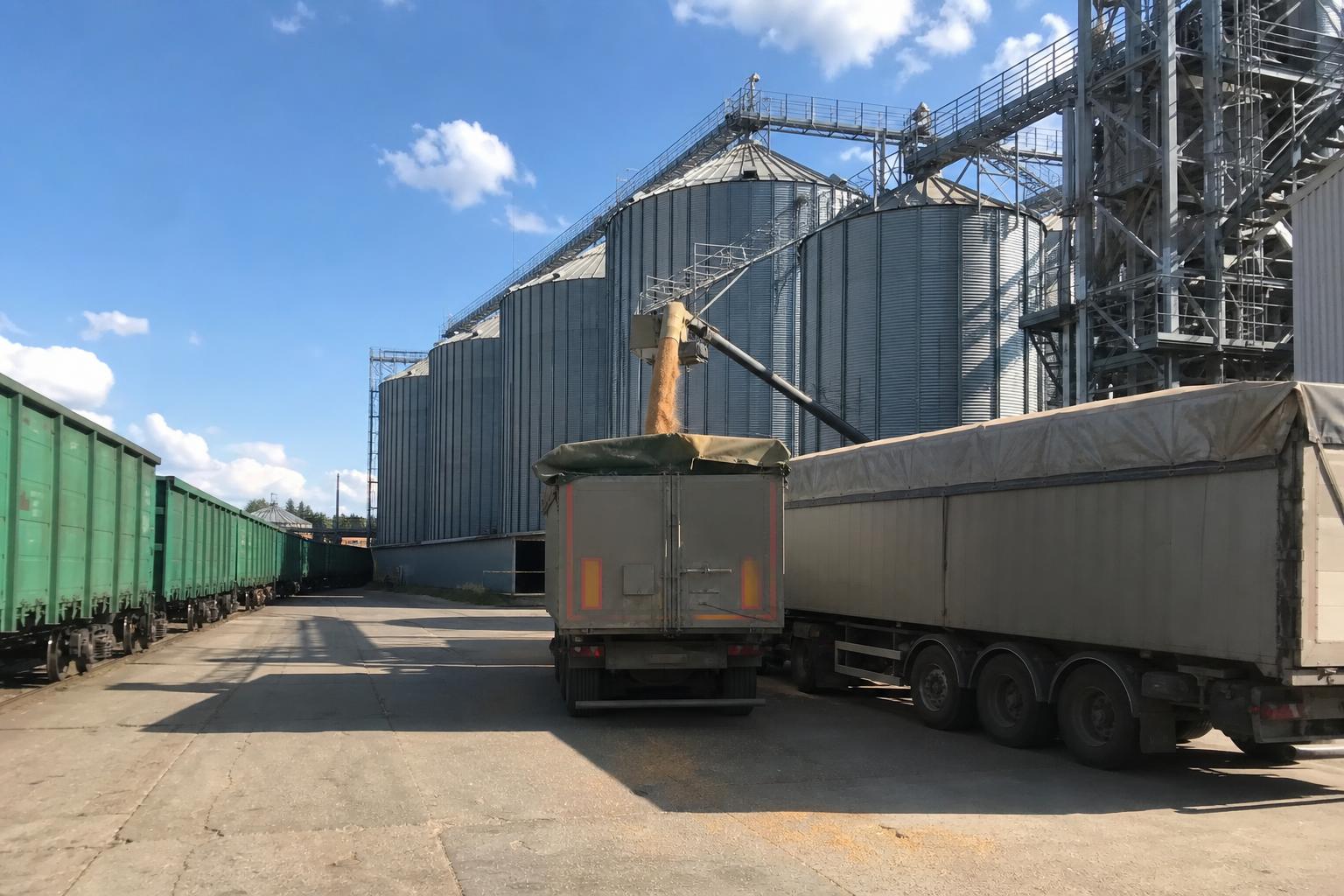
In the Ukrainian grain market, the main factor remains not only the volume of supply but also the ability to quickly export grain to the end buyer. After restrictions on the operation of Black Sea ports, the market is paying closer attention to rail transport, the Danube route, and routes through neighboring countries.
This has been most noticeable in the feed barley segment: according to market analysts, port prices have decreased by $30-38/t over the week. For AgroPost participants, this signals the importance of not only considering the grain price but also the actual costs of delivery, storage, and contract execution timelines.
Barley: Supply Pressures Prices, Buyers Are Cautious
The feed barley market continues to experience downward dynamics. One of the factors is increased grain supply after harvest, as well as uncertainty regarding port shipments due to military risks.
Domestic consumers, according to analysts, often operate on previously accumulated stocks and are not in a rush to actively purchase new batches. This strengthens buyers’ negotiating positions, especially where sellers need to quickly clear warehouses or elevators.
At the same time, farmers are not always ready to sell large volumes immediately. Some producers offer grain in smaller batches, awaiting logistical stabilization or better prices.
Price Benchmarks: Domestic Market and Ports
According to available market data, demand prices for feed barley on the domestic market ranged from 5,800 to 8,000 UAH/t during the week, on CPT terms. At Ukrainian ports, prices decreased to $130-150/ton CPT port.
For sellers, this means that advertised prices without reference to delivery basis can be misleading. The same volume of barley will have different economics depending on the distance to the elevator, availability of railcars, queue times at transshipment points, and delay risks.
Buyers should clarify moisture content, grade, contamination, conditions for self-pickup or delivery, and the seller’s willingness to work with small batches. During logistical turbulence, these parameters can be just as important as the initial price per ton.
Export Logistics: Railways Seek Additional Routes
Ukrzaliznytsia is negotiating with neighboring countries to expand transit routes for Ukrainian grain. In practice, this means attempting to reduce dependence on a single direction and support exports amid unstable maritime port operations.
Some grain is already being directed through Danube ports, such as Constanța in Romania, as well as routes via Slovakia and Hungary. However, these channels cannot fully replace the volume handled by major seaports.
According to estimates voiced by the relevant ministry, even with the Danube route, railway logistics can provide only about one-third of the capacity of Black Sea ports. The maximum transportation volume supported with international partners is around 1 million tons of grain per month.
Elevators and Storage: Growing Risks of Grain Accumulation
If port exports from the Greater Odessa region are not restored sufficiently, the market may quickly face a shortage of free storage capacities. The Ministry of Agrarian Policy warns of the risk of capacity exhaustion as early as early November.
This increases the importance for elevators to plan intake, drying, processing, and dispatching carefully. For farmers, it means the need to pre-book storage space, compare tariffs, and evaluate whether it is more profitable to sell now or hold grain in anticipation of better market conditions.
In such conditions, AgroPost recommends clearly indicating the batch location, laboratory analysis availability, options for loading by truck or rail, and preferred payment terms in advertisements. This reduces negotiation time and helps buyers quickly assess the real margin of the deal.
Key Conclusions for Market Participants
- Feed barley prices are under pressure due to increased supply and weaker activity from some buyers.
- Port basis has become more risky, so agreements should consider not only price but also the likelihood of delays.
- Alternative routes are developing, but their capacity remains limited compared to sea ports.
- Elevator capacities may become a critical resource if export channels remain constrained.
What this means for the market: Ukraine’s grain sector is entering a period where logistics directly influence deal prices. Sellers should actively showcase quality, storage location, and shipping conditions in ads, while buyers should compare offers considering delivery, timelines, and delay risks. In the near future, participants who quickly confirm volumes, have access to elevators, and can flexibly work with multiple routes will have an advantage.
Comments
No comments yetNo comments yet - be the first.