
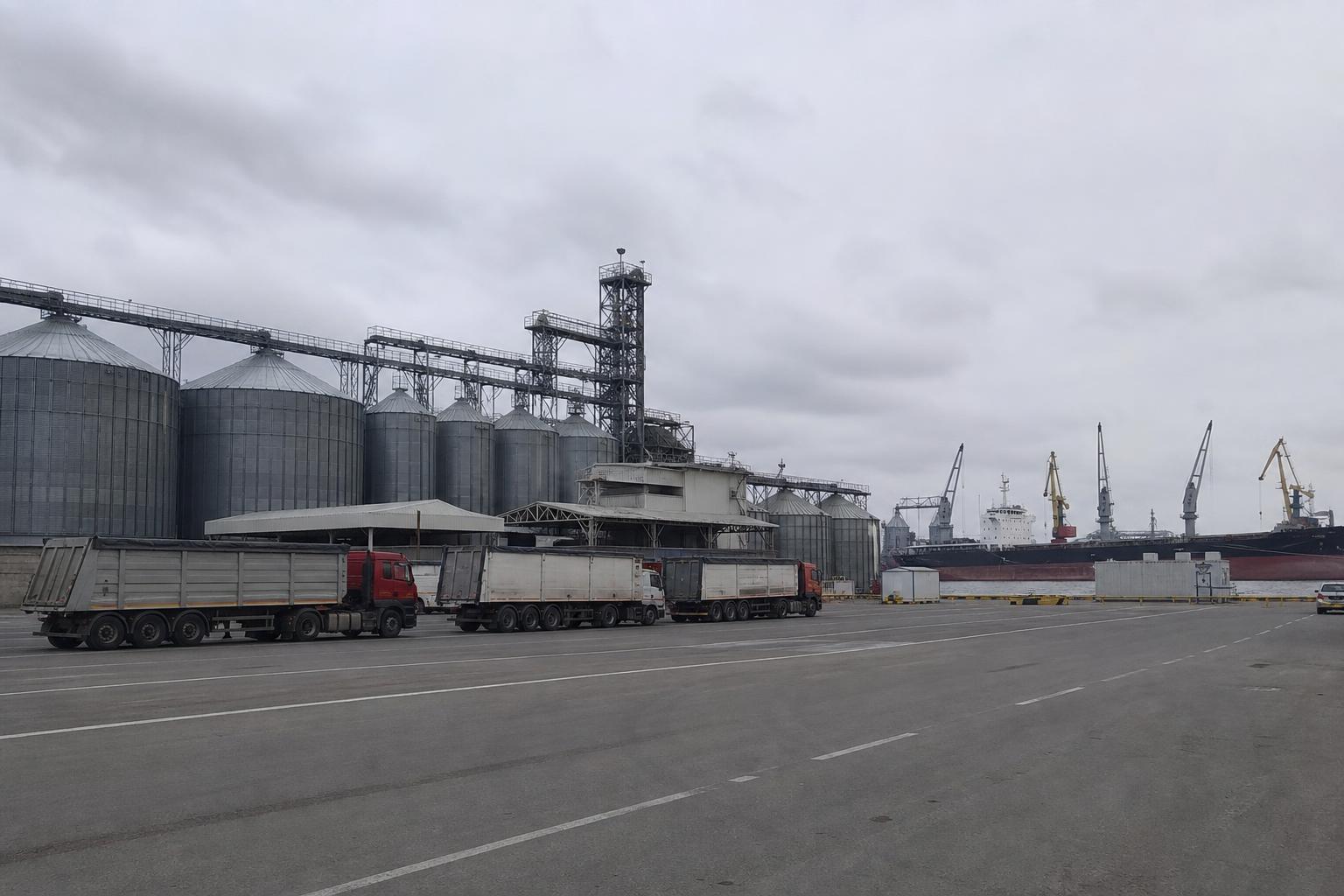
The Ukrainian grain market enters August with increased attention to the Black Sea region. According to Reuters, at the end of July, a large grain export terminal in the Russian port of Taman on the Kerch Strait was damaged.
For Ukrainian sellers, traders, and elevators, this primarily signals the need to pay closer attention to logistics and contract fulfillment risks. The fact of infrastructure damage to a competitor does not automatically imply a revision of purchase prices in Ukraine but may influence market participants' expectations regarding the availability of Black Sea routes.
What is known about the incident in Taman
According to Reuters, one of the large grain export terminals in the port of Taman was damaged. The facility is located in the Krasnodar Krai of Russia and operates in the Black and Azov Seas.
The report states that the terminal is controlled by the company "Demetra," with a capacity of 5 million tons of grain. The company declined to comment.
For the market, it is important not only the damage itself but also that the incident concerns port infrastructure in a region directly linked to international grain trade.
Why this is important for Ukrainian grain sellers
Ukrainian grain competes in foreign markets not only on price but also on delivery reliability. If buyers perceive higher risks in the Black Sea basin, they pay closer attention to shipment timelines, insurance, payment terms, and alternative routes.
For farmers, this means that when selling wheat, corn, or barley, it is advisable to clarify not only the basis and price but also the actual export channel: port, railway, road logistics, or a combined scheme.
For traders and domestic buyers, the importance of verified suppliers who can confirm the availability of grain, batch quality, and readiness to quickly ship from the elevator is increasing.
Elevators become a key link in the deal
During periods of logistical uncertainty, an elevator is not just a storage facility. It influences the speed of sale, the ability to form an export batch, and the quality of documentation.
Sellers should proactively clarify the availability of shipment by rail or road, acceptance schedules, the possibility of grain processing, and storage conditions. This helps avoid situations where a profitable price is lost due to logistical delays.
Buyers should pay attention to the storage location of the grain, the actual readiness of the batch, and laboratory test results. In a volatile market, quick quality confirmation often becomes an advantage in negotiations.
Key conclusions for AgroPost participants
- Grain sellers should specify crop type, volume, basis, storage location, and readiness for shipment in their ads.
- Buyers should verify batch quality and logistics promptly to avoid wasting time on unprepared offers.
- Elevators need to communicate available services: acceptance, cleaning, drying, storage, laboratory testing, and shipment.
- Traders should account for risks related to timelines and have alternative delivery options, especially for export contracts.
What this means for the market
The Ukrainian grain market remains dependent on logistics no less than on harvest volumes or global quotations. The best position in negotiations will be held by those sellers, buyers, and elevators that can quickly confirm the product, quality, route, and timing of the deal.
Comments
No comments yetNo comments yet - be the first.