
September for the Ukrainian grain market is marked by two practical issues: how to formalize export contracts under minimum export prices and where to safely store the harvest before sale.
For sellers on AgroPost, this means that the price in the advertisement is no longer the only factor in the deal. Buyers, traders, and elevators are increasingly evaluating the delivery basis, logistics availability, temporary storage options, and customs clearance risks.
Minimum Export Prices: What Has Changed for Traders
The Ministry of Agrarian Policy has received complaints from exporters about difficulties in executing foreign economic contracts. The reason is that in some cases, actual market prices have fallen below the minimum allowed export prices.
According to Minister of Agrarian Policy Taras Vysotskyi, it is currently impossible to quickly update the minimum price table due to existing procedures: such indicators are set monthly before the 10th. Therefore, exporters are advised to carefully review the Incoterms basis in contracts and use those delivery conditions where the minimum price is closest to the actual contractual price.
The Ministry has also circulated a draft document for approval, which proposes applying a reduction coefficient of 0.714 for calculating minimum export prices in October, November, and December. If approved, this should reduce the risk of situations where the regulatory price exceeds the market price.
Delivery Basis Becomes Part of the Price
For agricultural producers or intermediaries, this means that the same batch of grain can have different commercial attractiveness depending on delivery conditions. Negotiations should clearly specify who bears the costs and risks of logistics, customs clearance, transshipment, and delivery to the point of sale.
In practice, sellers should not limit themselves to the phrase “price per ton.” It is advisable to specify immediately in commercial offers the crop type, quality, volume, loading location, availability of transport or railway, and the preferred delivery basis.
Key conclusion: In September, for export-oriented grain batches, an error in the delivery basis can be just as critical as a few dollars difference in price.
Storage: Frontline Regions Require Additional Capacity
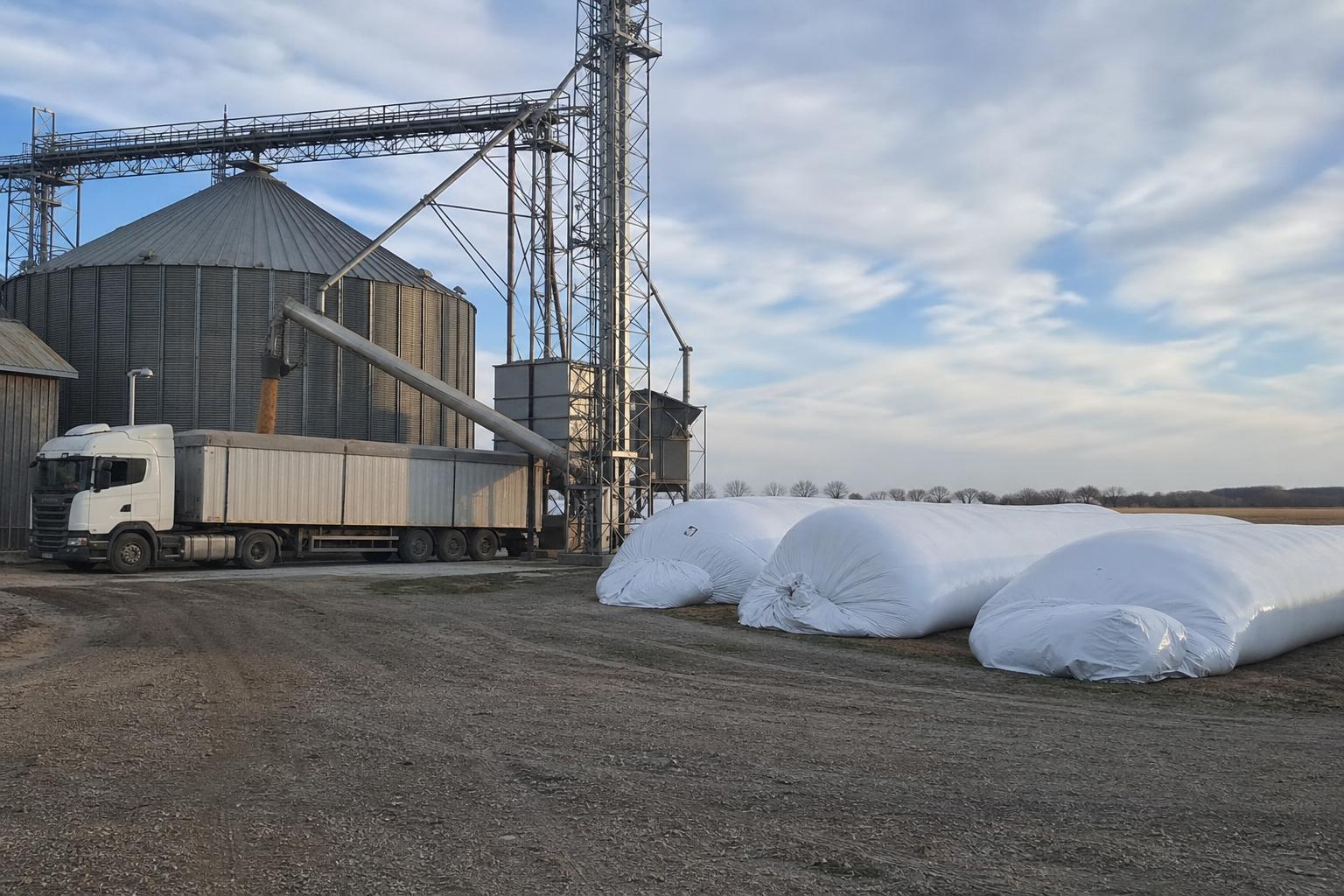
Additional pressure on the market is created by the storage situation in frontline regions. Farmers from nine such regions have submitted 2,319 applications for 13,881 polymer bags for temporary storage of the harvest.
One bag can hold about 200 tons of grain. The total declared need is approximately 2.8 million tons of cereals and oilseeds. Distribution is planned to begin after verification of the applications.
For farms with limited access to elevators or operating in areas with damaged infrastructure, bags can serve as a temporary solution. This does not replace full elevator logistics but allows avoiding forced immediate sale after harvest.
What Sellers and Buyers of Grain Should Consider
- Sellers: before placing a batch, clarify not only the price but also delivery conditions, loading location, and available storage options.
- Buyers: verify whether the declared price matches the actual basis and whether there will be difficulties with subsequent export clearance.
- Elevators: demand for operational storage may remain high in regions where storage facilities are damaged or overloaded.
- Traders: monitor decisions regarding minimum export prices for October-December and adjust contract templates accordingly.
Implication for the market: grain trading in Ukraine is becoming more dependent on operational details. A successful deal is no longer just about a competitive price but also about the correct choice of delivery basis, confirmed logistics, and a clear storage plan until sale or export.
Comments
No comments yetNo comments yet - be the first.