
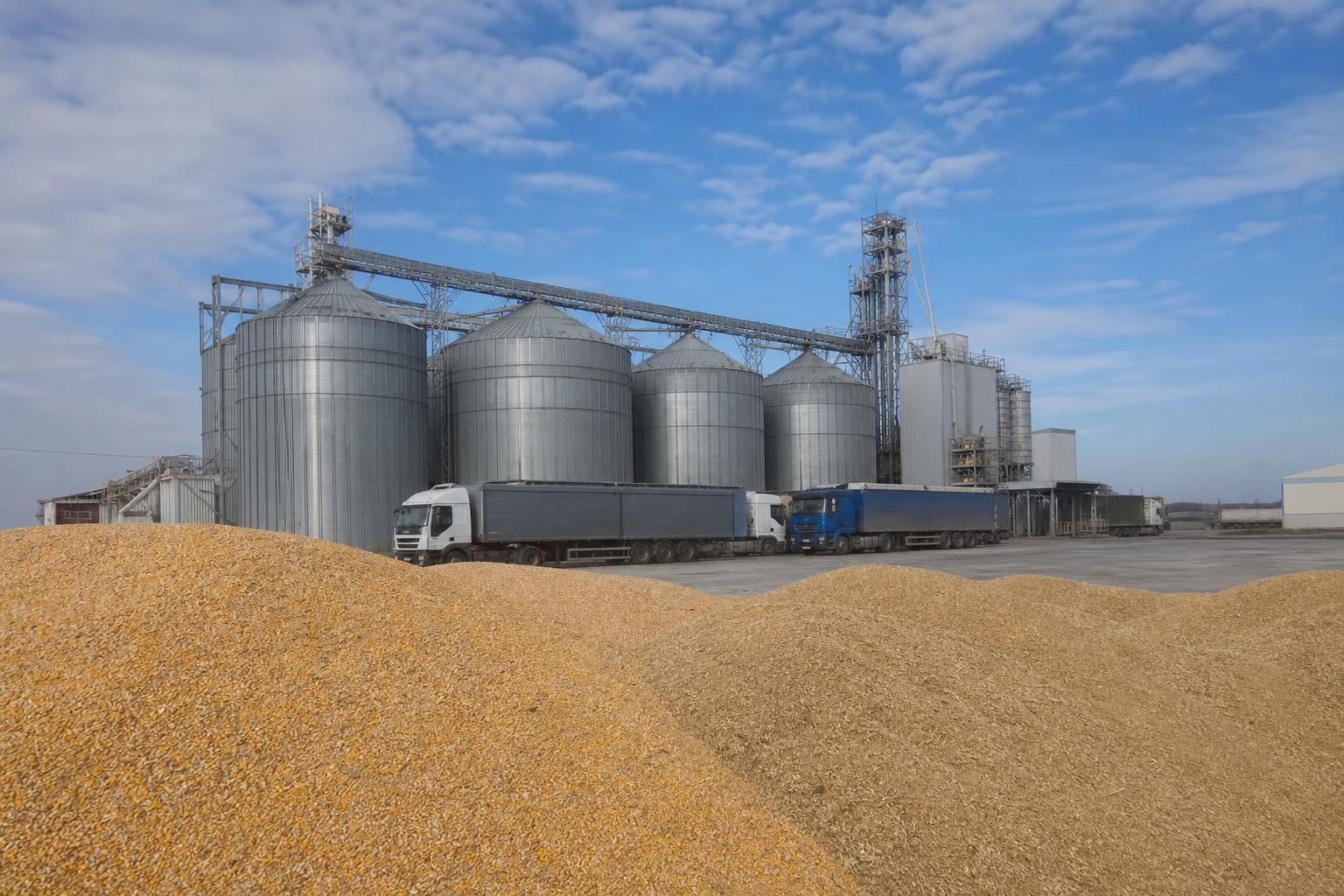
The Ukrainian grain market is entering an active season phase with noticeably larger stocks than last year. According to the State Statistics Service, as of July 1, reserves of grains and legumes amounted to 7.7 million tons — an increase of 3 million tons, or nearly 65%, compared to the same date last year.
For market participants, this is not just statistics. High reserves influence demand for elevator services, sales rates, farmers’ bargaining positions, and logistics costs, especially amid tensions in the Black and Azov Sea regions.
Grain Reserves: Where the Main Volume Is Concentrated
At the beginning of July, agricultural enterprises stored 4.7 million tons of grains and legumes. This is 34.2% more than last year.
An additional 3 million tons were held at storage and processing facilities. This figure is 2.6 times higher than the level on the same date last year.
This reserve structure indicates that elevators and processors already have a significant volume of grain in the system. New harvest batches will compete not only among themselves but also with previous period stocks.
Corn, Wheat, and Barley: Factors Pressuring Supply
The largest stocks are in corn — 3.9 million tons. This is 94.1% more than on July 1 last year.
Wheat stocks amounted to 2.3 million tons, up 36.7% from last year. Barley reserves reached 1.1 million tons, with a 77% increase year-over-year.
For sellers on AgroPost, this signals the need to carefully shape offers: specify crop type, grade, moisture content, protein level, storage location, and readiness for quick shipment. During high supply periods, buyers respond faster to lots with transparent parameters and clear logistics.
Black Sea Logistics: External Factor Influencing Ukrainian Prices
Internationally, attention is once again focused on maritime safety in the Black and Azov Sea region. Market reports indicate discussions in Russia about options for military escort or temporary equipping of grain ships in the Sea of Azov following vessel movement halts.
The Azov route accounts for approximately a quarter of Russia’s grain exports. If restrictions persist, Russian exports could lose between 0.5 million and 1.5 million tons of grain monthly.
For Ukraine, this does not automatically create an advantage but alters the negotiation landscape. Buyers are more attentive to alternative supply sources, and traders factor in insurance, freight, and port risks into prices.
Key Takeaways for Sellers and Buyers
- High supply in Ukraine. Large stocks of corn, wheat, and barley may suppress local price expectations among sellers.
- Elevator logistics become critical. Availability of storage space, processing speed, and shipment readiness can impact lot liquidity no less than the base price.
- Buyers gain a wider choice. Processors and traders can more actively compare batches by quality, region, and delivery terms.
- The external market remains volatile. Any disruptions in Black Sea logistics can quickly change importers’ and traders’ sentiment.
Implication for the market: Ukrainian grain producers should prepare for more selective demand and competition for efficient logistics. On AgroPost, listings with clear quality indicators, actual storage locations, readiness for verification, and transparent shipping conditions will have an advantage.
Comments
No comments yetNo comments yet - be the first.