
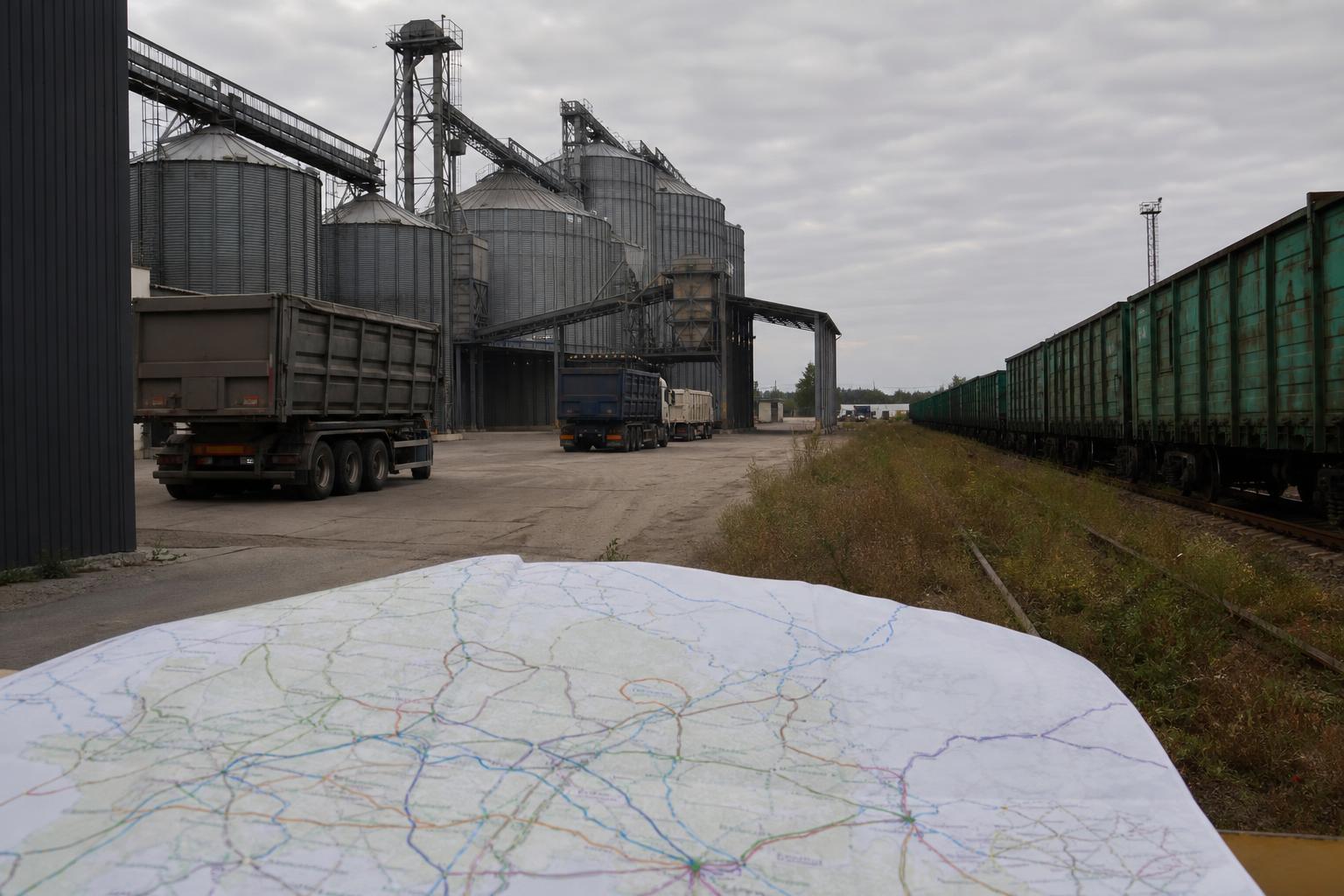
The Ukrainian grain market is entering a period where price is increasingly influenced by route choices, port queues, and transport availability. For sellers of wheat, corn, and barley, it is crucial to assess not only quotations but also the actual possibility of exporting a batch within the required timeframe.
Recent market signals indicate that competition for logistical capacities may intensify. This applies to both port routes and road transport to the EU border.
Competition for Export Logistics: Grain versus Other Agroloads
The All-Ukrainian Agrarian Council has opposed giving priority to meal and cake exports amid limited logistical capacities. This debate is significant for the grain market, as any preference for a specific cargo group could alter transportation access for other crops.
According to the Ministry of Agrarian Policy, in September, exports of key agricultural products totaled 2.17 million tons. Of this volume, 992.2 thousand tons were shipped through Danube ports. This underscores the role of alternative port logistics but also highlights its limitations during peak periods.
The Ukrainian Grain Association estimates the potential priority export volume for meal and cake at 380–390 thousand tons per month. Combined with the proposed sunflower oil quota of 400 thousand tons, the association assesses that this could occupy about 36% of available export capacities.
For grain sellers, this means: contracts should specify delivery deadlines, layover conditions, responsibility for logistical delays, and risk transfer points more carefully.
Black Sea: Security Factors Return to Freight and Schedules
Following reports of attacks on two civilian vessels in Bulgaria’s exclusive economic zone, market participants are once again paying attention to shipping risks in the western Black Sea. Ukrainian authorities stated that the attack involved combined drone strikes from sea and air units.
One consequence for the grain sector is more cautious planning of maritime routes and a possible increase in insurance, freight surcharges, and contingency logistics scenarios. While this does not directly impact all grain contracts automatically, traders are already factoring in risks during negotiations.
For elevators working with port shipments, it is important to maintain flexible accumulation schedules. Vessel delays or route changes can quickly affect storage capacity and internal grain movement needs.
Road Routes to the EU: M-09 Restrictions Extended
Temporary restrictions on trucks and international buses on the M-09 Ternopil – Lviv – Rava-Ruska route have been extended until November 10, 2026. The reason is ongoing road repairs, including stormwater drainage, pavement, bridge work, and transport interchange improvements.
This route is vital for transportation to the EU border. Even with detour schemes for heavy-duty transport, agribusinesses should allocate additional time for shipments, clarify routes with carriers, and verify current conditions before dispatching.
For small grain batches sold directly from farms or elevators on self-pickup terms, such restrictions may influence price negotiations. Buyers will consider route costs, travel time, and delay risks.
Key Conclusions for Grain Sellers and Buyers
- Logistics remains part of the price. The difference between elevator prices and port or border prices can change faster than basic quotations.
- Transport priorities should be monitored. If certain cargoes gain preference in export infrastructure, grain batches may compete for limited capacities.
- Maritime risks should be included in contracts. For large shipments, conditions for postponements, force majeure, insurance, and layovers are important.
- Road routes to the EU require verification before shipment. Detours and repairs can impact actual delivery costs.
Implications for the Market
For Ukraine’s grain market, in the coming weeks, the key advantage will not only be the availability of quality grain but also the ability to quickly confirm logistics. At AgroPost, sellers should specify storage location, available volume, dispatch basis, and possible loading times, while buyers should immediately clarify routes and transport conditions. This reduces the risk of deal disruptions and helps more accurately price the batch on the market.
Comments
No comments yetNo comments yet - be the first.