
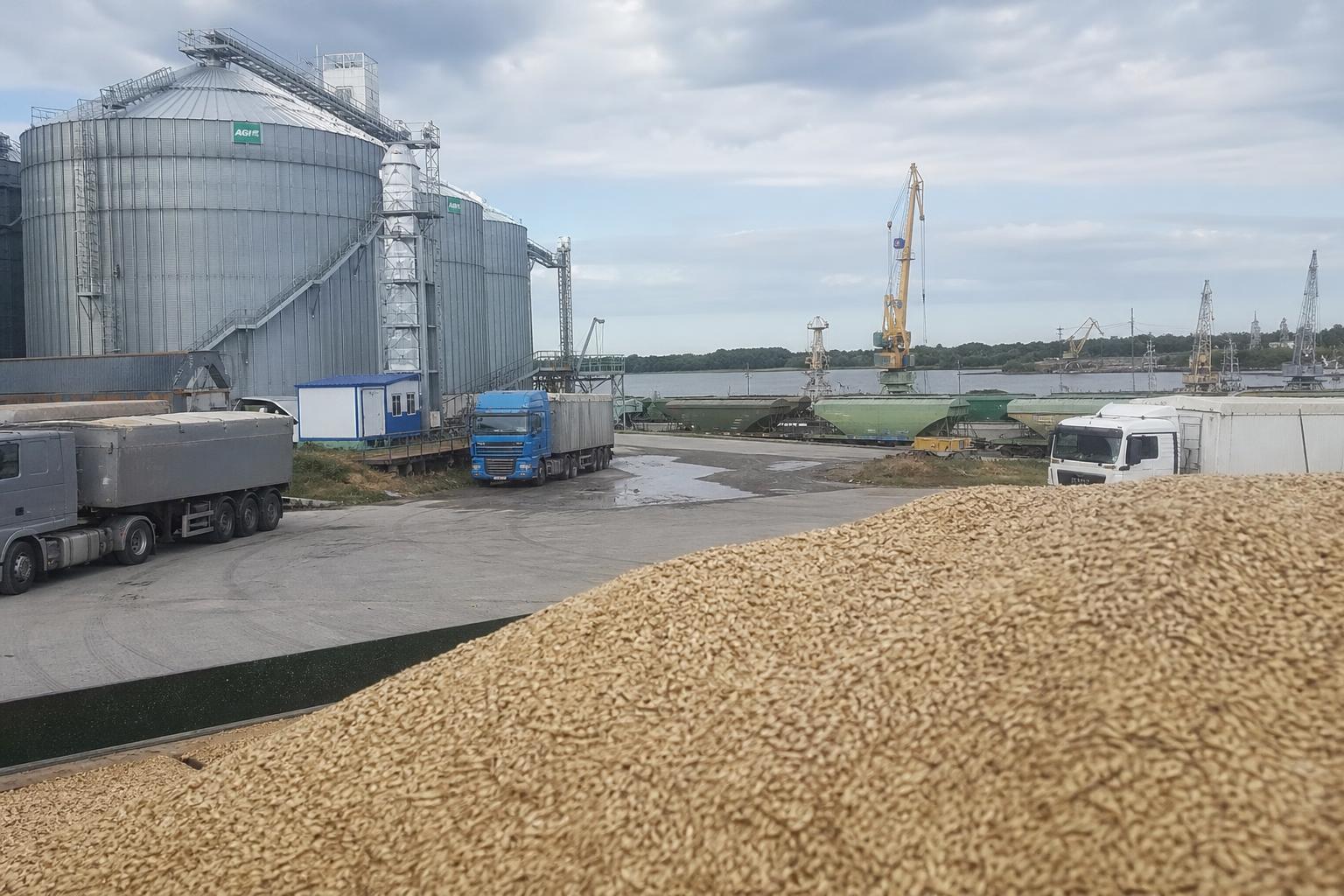
The Ukrainian grain market enters October with mixed signals for sellers. The weakest link at the moment appears to be feed barley: export activity is almost nonexistent, and importers are purchasing very selectively.
For agricultural producers, traders, and elevators, two topics remain key: grain prices at ports and logistics availability. These factors determine whether it is worth selling batches now or holding grain in anticipation of increased demand.
Barley Under Pressure: Buyers Are Not Rushing
According to market analysts, exports of Ukrainian feed barley are currently almost absent. Demand from importers is assessed as highly episodic, which has already affected purchase prices.
As of October 7, prices for feed barley at Ukrainian Danube ports decreased by an average of $2/ton — to $140–148/ton CPT port. In hryvnia equivalent, most offers ranged between 6,600 and 7,600 UAH/ton CPT port, approximately 200 UAH/ton lower than at the end of the previous week.
Interestingly, the decline in Ukraine occurs against the backdrop of more expensive barley in Western Europe and stable prices in Romania. However, for Ukrainian sellers, the decisive factor remains not only the global market conditions but also the actual demand in specific supply directions.
Freight and Risks Remain in Grain Pricing
Ukrainian barley is pressured not only by weak demand. Security issues on export routes, as well as tensions in the Middle East, support high risk premiums for shipping.
This means that even if a buyer is present, logistics costs can remain high. For elevators and traders, this underscores the importance of precise planning: it is crucial to coordinate batches, shipment deadlines, and grain quality parameters well before the cargo is actively moved.
Practical advice for sellers: in the barley segment, it is now critically important to compare not only the base price but also delivery terms, transportation costs to the port, and risk of delays.
Romanian Route: Potential for Increased Transportation
Ukraine and Romania have agreed to support the daily transfer of six train pairs to the Constanța port. The Romanian side also plans to accelerate repairs of port and railway infrastructure to eventually increase capacity to 10 train pairs per day.
Separately, the parties are discussing the use of Galați and Brăila ports for Ukrainian cargo. For the grain market, this is important as an additional routing option, especially during peak periods on traditional export channels.
Another area of negotiation is the operation of the Sulina Canal. Ukraine expects to allow at least 10 ships to enter and 10 to exit daily. Night navigation for ships entering the canal before dark is also being considered, provided safety requirements are met.
Financing and Shipowner Protection: Potential Supply Chain Impacts
The government has approved changes that simplify access for farmers to loans backed by state portfolio guarantees. Until September 1, 2027, producers will be able to apply for such loans even if they have overdue debt of up to 60 days within the previous 120 days, provided it is repaid before obtaining a new loan.
This could be important for farms needing working capital for storage, processing, or logistics of grain. The changes also affect agricultural producers and companies involved in dairy processing, flour, and bread manufacturing.
The government also plans to compensate shipowners up to 80% of damages in case of vessel damage due to military actions, if such risk is not covered by insurance. For grain logistics, this signals an attempt to reduce operational risks for ships in Ukrainian ports.
Key Market Participants’ Conclusions
- Barley: Weak demand from importers, almost no export activity, prices in Danube ports have declined.
- Elevators: Carefully assess demand for specific crops before accumulating large batches.
- Logistics: The Romanian route may gain greater capacity, but some decisions still depend on infrastructure repairs and dispatching.
- Finance: Updated state guarantee conditions can support farmers in need of working capital.
Implications for the Market
In the near future, grain sellers should operate based on actual demand rather than expectations of a quick export recovery. For barley, the key will be the emergence of stable orders from importers, and for the entire grain sector — the actual expansion of logistics capabilities through Romania and the reduction of shipping risks.
Comments
No comments yetNo comments yet - be the first.