
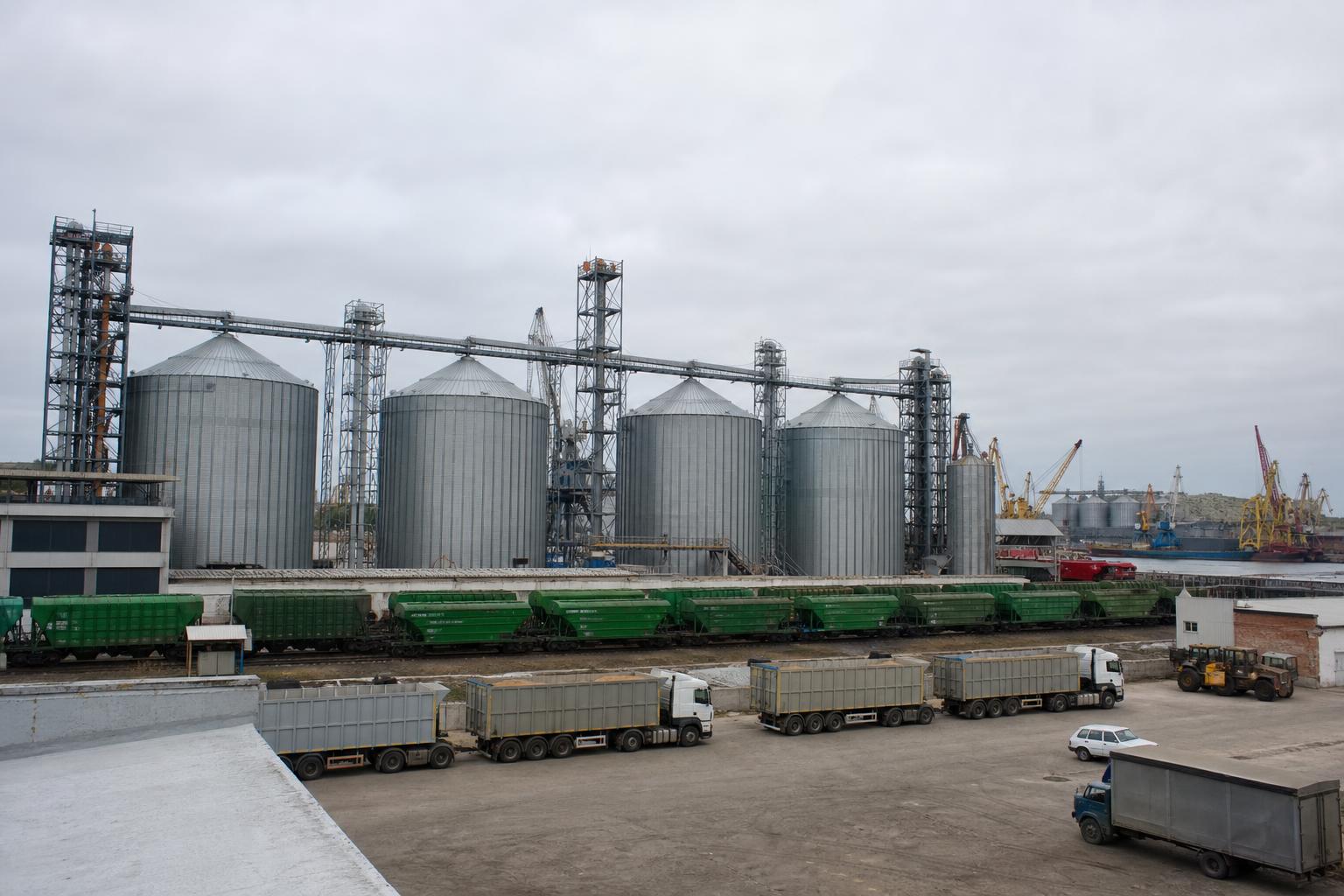
The Ukrainian grain market is entering a period when port basis prices are no longer the sole reference point for sellers. Security risks around the port and logistical infrastructure of Odesa directly influence shipment planning, contract execution timelines, and market participants’ readiness to store grain at elevators.
For agricultural producers and traders, the main question now is not only "at what price to sell," but also "where, when, and with what logistical risks to deliver." Therefore, proposals on AgroPost should be formulated with clear indication of basis, available volume, quality of the batch, and shipment options.
Port Factor: Market More Carefully Assesses Risks
One of the notable signals for agricultural logistics is the suspension of Allseeds' operations in the Odesa region. The company explained the decision by worsening security conditions and increased missile and drone attacks on the port and logistical infrastructure of the region.
Although Allseeds primarily operates in the segment of vegetable oils and meals, the reason for the shutdown is significant for all agro-export. If major operators assess risks to personnel, assets, and logistics as too high, the grain sector also incorporates additional caution into its decisions.
For grain sellers, this means that port basis prices may require quick reassessment. Even with a buyer available, it is necessary to consider possible delays, schedule changes, insurance, and transportation risks.
Elevators Become Negotiation Tools, Not Just Storage Facilities
In such conditions, elevator infrastructure again takes center stage in the market. Having storage space allows farmers not to sell grain hastily but to wait for a more favorable logistical window or better basis.
At the same time, the mere fact of storage does not guarantee a better price. Costs for processing, drying, storage, transshipment, and delivery to the final buyer remain crucial. Therefore, grain sale announcements should immediately specify whether the batch is already stored at an elevator, whether auto or rail shipment is available, and what quality parameters are confirmed.
Buyers prefer proposals with transparent logistics: specific elevator or shipment region, clear volume, grain class, moisture content, natural weight, and the ability to quickly process documents.
Alternative Routes: High Price Does Not Always Mean Profit
The market also discusses a wheat price level in Polish ports around $250 per ton. However, for Ukrainian sellers, this price is not an automatic indicator of a profitable deal if transportation costs consume most of the potential margin.
The practical conclusion for agribusiness is simple: compare not the price in a foreign port, but the net result after delivery, transshipment, downtime, documentation, and contract risks. Sometimes, a local buyer or internal basis with quick payment can be competitive with a more complex export route.
Key guideline for sellers: calculate not the "price on the board," but the net revenue after logistics and related expenses.
What Sellers and Buyers Should Do on AgroPost
- Grain sellers should update their listings with actual storage location and possible shipment basis.
- Elevators should separately communicate available services: acceptance, processing, storage, auto or rail shipment.
- Buyers should clarify not only the price but also the readiness of the batch for shipment, quality documents, and delivery timeframes.
- Traders should develop scenarios in case of port schedule changes or switch to alternative routes.
The most liquid proposals for quick deals are those where the seller immediately indicates quality, volume, storage location, and readiness for specific logistics formats. This reduces negotiation time and minimizes the risk of deal failure.
What this means for the market: Ukraine’s grain sector operates in conditions where logistical flexibility becomes just as important as price. Port risks reinforce the role of elevators, internal bases, and precise margin calculations. For AgroPost participants, this signals the need to make listings as specific as possible: those who confirm quality, volume, and route faster will have better chances to close deals.
Comments
No comments yetNo comments yet - be the first.