
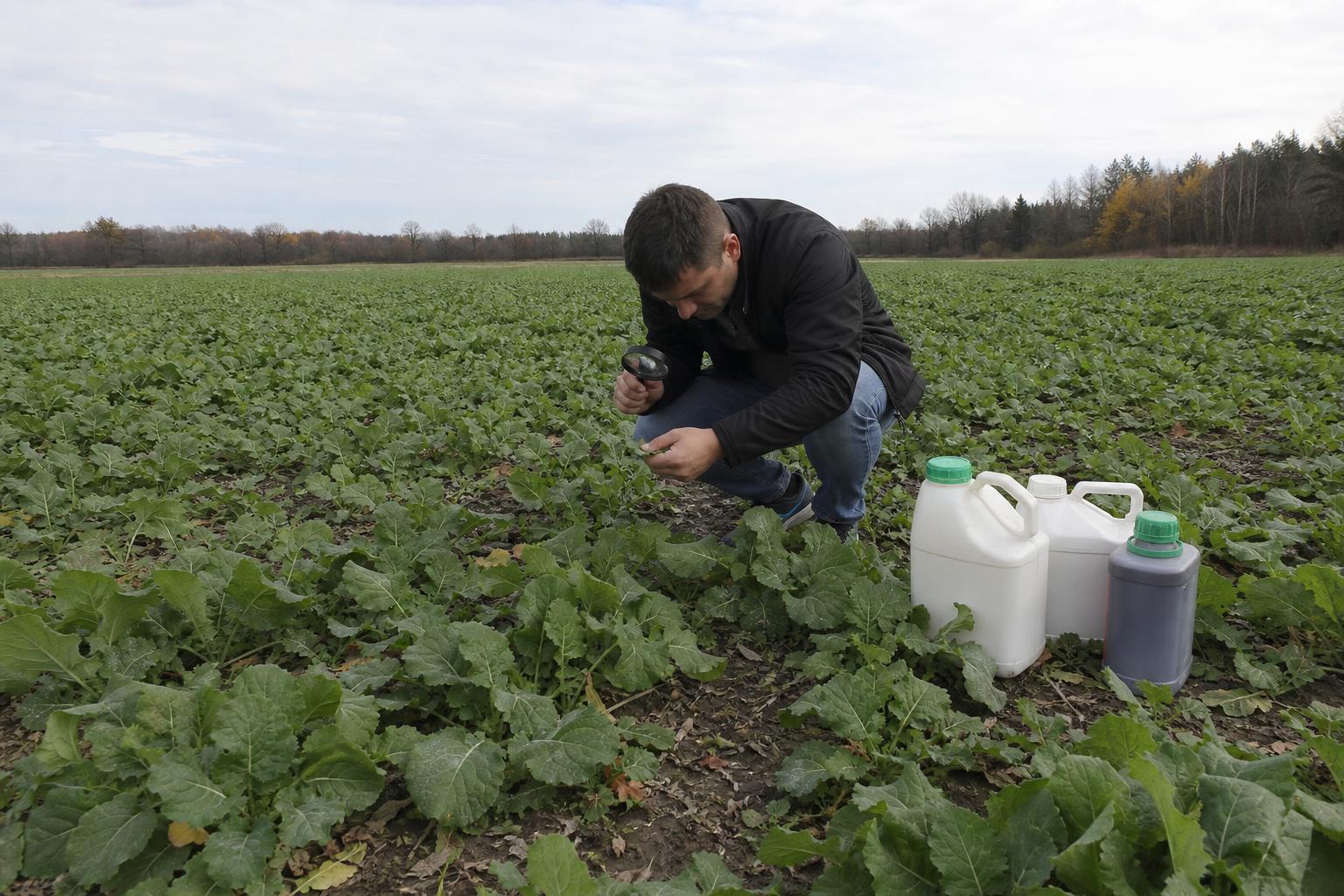
Autumn protection of winter rapeseed is once again in the spotlight of the Ukrainian agrarian market. Industry reports indicate that crops are being attacked by whiteflies, thrips, and moths. This is not a reason for farmers to rush into decisions but a signal to enhance monitoring and plan pesticide purchases based on actual field conditions.
For suppliers on AgroPost, this situation means a seasonal increase in interest in solutions against rapeseed pests. At the same time, buyers are paying closer attention not only to price but also to product availability, delivery timelines, registration relevance, and suitability for specific crops.
Which pests are currently in focus
Among the pests reported in the context of winter rapeseed are whiteflies, thrips, and moths. These are different groups of harmful organisms, so a universal protection approach may be risky.
Before selecting a product, agronomists should clarify which pest dominates on a particular field. Visual inspections, population counts, and assessment of the crop's development stage help avoid unnecessary costs and incorrect application of pesticides.
What to check before buying an insecticide
Buyers should start not with searching for the “cheapest” option but with basic parameters: crop, target pest, rapeseed growth stage, weather conditions, and application restrictions.
- Registration of the product. Verify whether the product is approved for use on winter rapeseed in Ukraine.
- Target action. Clarify which pests the manufacturer claims the product to be effective against.
- Originality and documentation. For pesticides, certificates, labeling, and transparent origin are important.
- Logistics. The autumn treatment window may be short, so availability in stock is often as important as price.
- Compatibility in tank mixes. Do not combine products without checking the label and consulting a specialist.
How pesticide sellers can prepare ads on AgroPost
During the peak season for rapeseed protection, ads that provide immediate practical information attract more buyers. For pesticides, it is not enough to specify only the name and price.
In the product listing, it is advisable to separately specify the crop, target pests, packaging, stock availability, shipment region, and delivery conditions. If the product has temperature restrictions, growth stage limitations, or compatibility considerations, it’s best to mention these upfront.
An additional advantage is prompt responses to inquiries. When a farm detects a pest in the field, the decision to purchase is often made quickly, and delays in communication can cost the seller a deal.
Key conclusions for buyers
- Do not purchase an insecticide solely based on the pest name from news reports — first verify your own crops.
- Compare offers not only by price but also by documentation, availability, and delivery speed.
- Avoid questionable residues and products without verified origin.
- Plan rapeseed protection based on actual field conditions, not general market anxiety.
What this means for the market. Reports of whiteflies, thrips, and moths on winter rapeseed may support demand for insecticidal solutions in the pesticides segment. For buyers, the main thing is not to rush into unjustified purchases, and for sellers — to provide as accurate information as possible about products, documentation, and stock. On AgroPost, this improves deal quality and helps quickly match real demand with relevant offers.
Comments
No comments yetNo comments yet - be the first.