
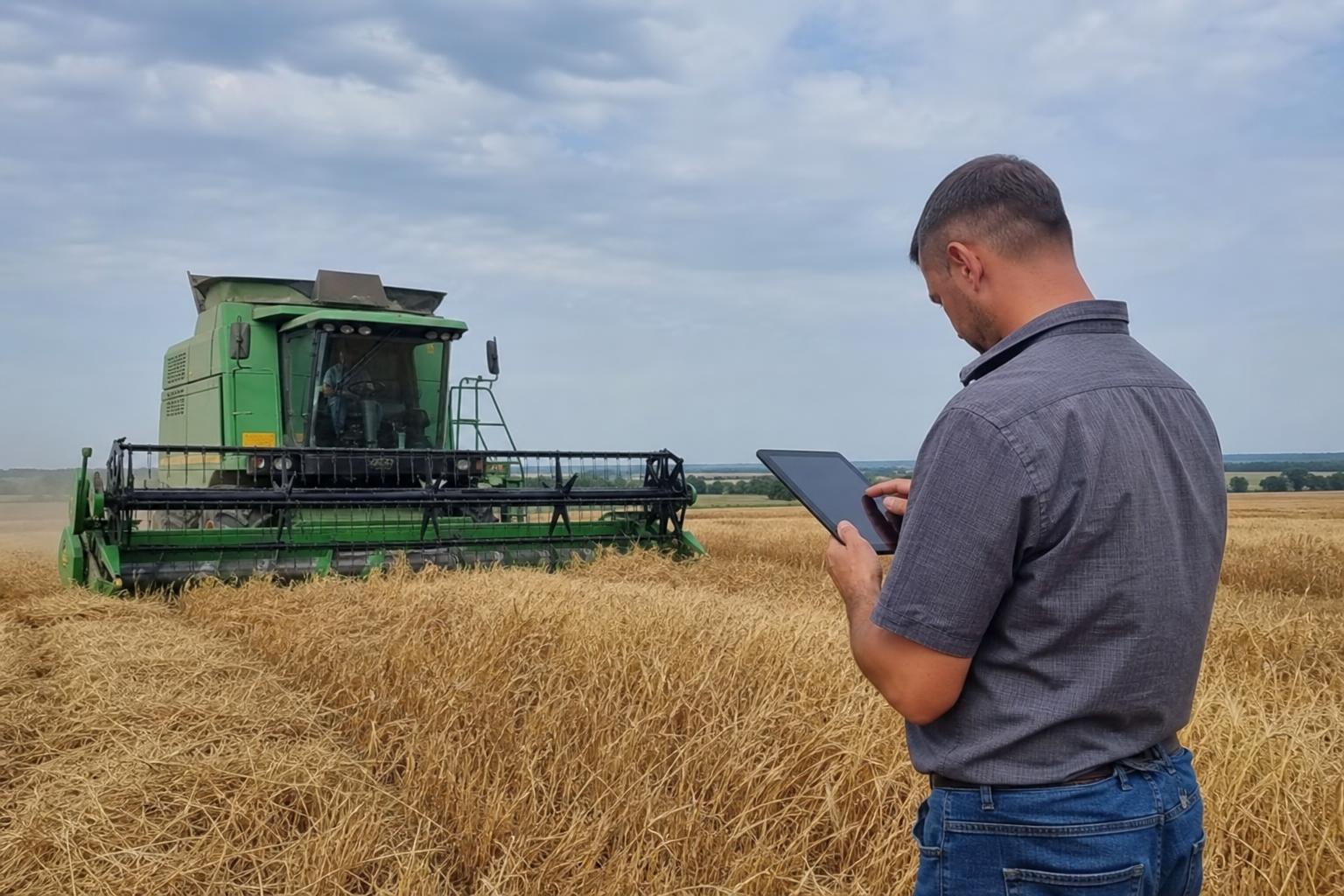
The start of harvest in the southern districts of Odesa region shifts the plant protection market into a new phase. Some farms are already completing seasonal work on winter barley and peas, while other crops still require careful monitoring of crop conditions and adherence to pesticide application regulations.
For sellers and buyers on AgroPost, this is a moment to verify the availability of products not only by active ingredient but also by crop, growth stage, waiting period, and remaining season. It is especially important not to confuse harvest needs with autumn protection planning.
Harvest in Odesa: which crops drive demand for protection products
According to regional reports, harvesting of winter barley and winter peas has commenced in the southern districts of Odesa region. The total area of cereals and legumes before harvest is reported to be nearly 770,000 hectares.
The largest share in the structure is occupied by winter and spring wheat — over 522,000 hectares. Barley covers nearly 176,000 hectares, peas about 74,400 hectares, and rapeseed exceeds 175,000 hectares.
For the pesticide market, this structure is important as an assortment guide. The focus remains on solutions for cereals, legumes, and rapeseed: herbicides, fungicides, insecticides, seed treatments, and auxiliary products, which farms purchase for the current or upcoming crop cycle.
What buyers should check before ordering pesticides
As some fields are already entering harvest, buyers should pay particular attention to the suitability of the product for specific tasks. The same product may be appropriate for one crop or growth stage but unsuitable for another.
- Crop and growth stage. Confirm whether the product is registered for wheat, barley, peas, rapeseed, or other crops planned for treatment.
- Waiting period. Critical before harvest to ensure product safety and compliance with grain buyers’ requirements.
- Compatibility. If tank mixing is planned, check manufacturer recommendations, not just the commercial name of the product.
- Documentation and batch. For online transactions, it is important to have proof of origin, expiration date, and container integrity.
On AgroPost, it is advisable for buyers to specify crop, region, preferred product form, packaging, and delivery timeframe in their inquiries. This reduces negotiation time and helps sellers offer relevant options without unnecessary clarifications.
What sellers of pesticides should update
The start of harvest does not mean a halt in pesticide trading. On the contrary, the market shifts toward more selective requests: some farms cover current needs, while others prepare for next crops and seasonal purchases.
Sellers should update product listings so that buyers immediately see key information: crop application, product type, active ingredient, packaging, availability, shipment region, and delivery conditions.
Special attention should be given to products for cereals and rapeseed, as these crops occupy significant areas in the Odesa region’s structure. For peas, it is important to accurately label products that are truly intended for that crop to avoid incorrect orders.
Export background and cautious spending
According to customs statistics, Ukraine’s grain and legume exports in the 2025/26 marketing year as of June 19 amounted to nearly 36 million tons, which is lower than the previous season’s figures. Specifically, 13.4 million tons of wheat, about 1.5 million tons of barley, and 20.5 million tons of corn have been exported.
For the pesticide market, this is not a direct demand indicator but an important background for negotiations. As producers become more attentive to margins, sellers need to clearly explain the practical value of products, and buyers should compare not only price per liter or kilogram but also application rates, spectrum of action, and risks of late application.
Implications for the market. The near-term demand in the plant protection category will be more closely tied to specific crops and application timings. Buyers should formulate precise requests based on field and growth stage, while sellers on AgroPost should maintain updated pesticide offers with transparent delivery conditions, documentation, and clear application instructions.
Comments
No comments yetNo comments yet - be the first.