
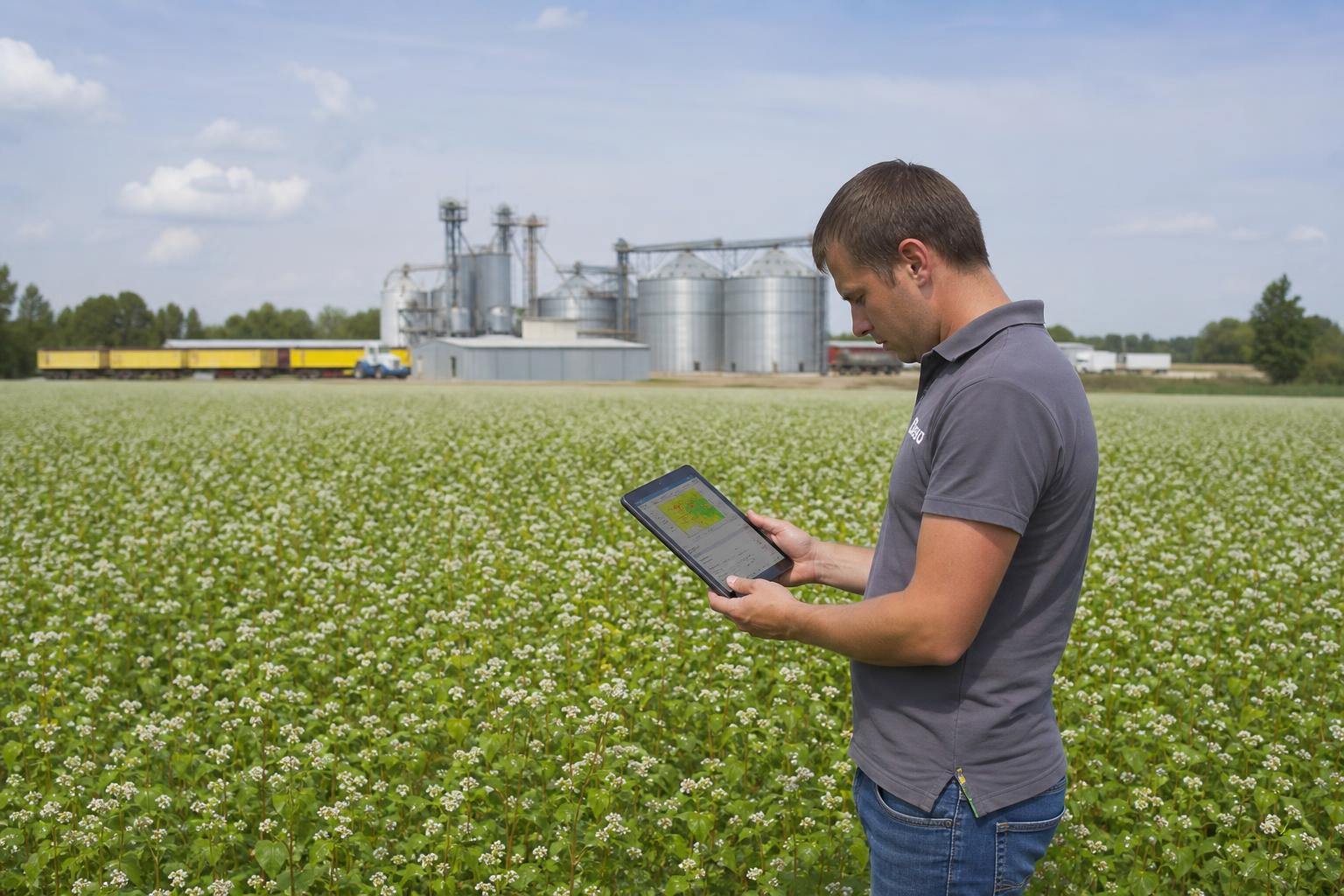
The crop protection market in Ukraine should be evaluated not only through the cost of herbicides, fungicides, or insecticides. For producers, it is crucial to understand how the chosen cultivation system will impact the marketability of the batch, buyer requirements, and further processing.
A notable case is organically grown buckwheat. According to experts from Olis, such raw material can be more challenging to process than buckwheat grown with chemical protection. This signals to farmers that decisions regarding crop protection products should be considered not only in the field but also in logistics and sales.
What the example of organic buckwheat revealed
During analysis of buckwheat by fraction composition, specialists compared raw materials from different countries. Buckwheat grown with the same technology using chemicals had a more predictable fractional structure: the first four fractions were complete, allowing stable loading of processing capacities.
In contrast, organic buckwheat, grown without chemical protection, was divided into a larger number of fractions, and the main equipment was underloaded when processing some fractions. Meanwhile, smaller machines for other fractions experienced excessive loads.
It was also noted that organic buckwheat arrived at processing facilities more contaminated. For the plant, this means a need for additional cleaning equipment or a change in technological scheme.
Why this matters for sellers and buyers of crop protection products
This example provides a practical argument for sellers of herbicides, fungicides, and other crop protection agents: buyers evaluate not only the price but also the impact of technology on batch quality. This is especially relevant for crops destined for grain processing.
For agricultural producers, choosing between organic, ecological, and traditional technology should be linked to the sales channel. If the buyer is a processor, they may pay attention not only to the origin of the grain but also to purity, homogeneity, fractions, and batch stability.
At AgroPost, this means that crop protection product listings should be as specific as possible: specify the crop, product type, purpose, application stage, and target problem in the field. Such information helps buyers quickly compare offers and avoid accidental purchases.
What farmers should consider before the season
- Define the sales channel before choosing the technology. If selling for processing, clarify requirements for batch purity and homogeneity in advance.
- Compare not only the price of crop protection products. A cheaper solution in the field may lead to additional cleaning, processing, or acceptance discounts.
- Account separately for organic models. Avoiding chemical protection may require different costs for technology, sorting, and grain preparation.
- Document the cultivation technology. It is important for buyers to understand whether the batch was grown using traditional, ecological, or organic schemes.
How to list crop protection proposals on AgroPost
Sellers of crop protection agents should avoid vague descriptions. Listings with specifics better meet the needs of farmers seeking solutions tailored to their crop and seasonal risks.
In proposal cards, it is advisable to specify the product type: herbicide, fungicide, insecticide, or seed treatment. It is also important to indicate the crop, spectrum of action, form, packaging, availability of documents, and region of shipment.
Buyers should clarify the compatibility of the product with their technology and future market plans. If the product is intended to be organic or ecological, requirements for application should be checked separately.
What this means for the market. Crop protection is becoming part of a broader quality chain: from the field to the processor. For traditional crop protection product manufacturers, the key advantage will be not just the availability of the product but a clear solution aligned with the crop and market quality. The main takeaway for farmers is simple: protection technology must be coordinated with the buyer and the form in which the harvest will be sold.
Comments
No comments yetNo comments yet - be the first.