
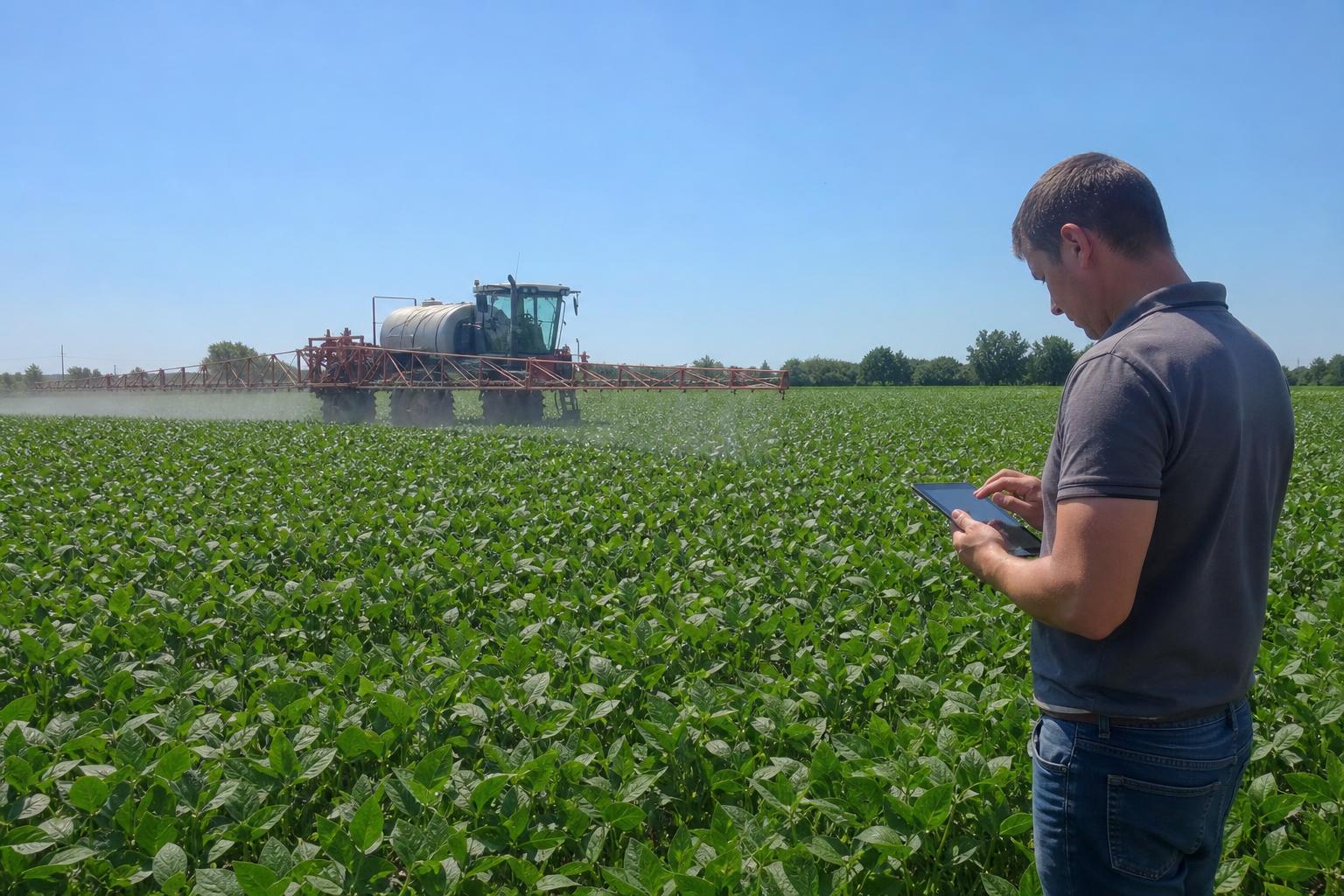
The Ukrainian plant protection market in 2026 remains tied not only to the structure of crops but also to farmers' physical access to fields. For agrochemical suppliers, this means more cautious planning of stockpiles, and for buyers — increased attention to delivery times and actual needs for specific crops.
A separate seasonal signal is cotton. Despite discussions about the crop's prospects, there has been no industrial shift to its cultivation in Ukraine so far, so demand for specialized solutions for this crop remains very limited.
Cotton: Currently Experimental Plots, Not a New Mass Market for Pesticides
As of June 1, 2026, 3.3 hectares of cotton were sown in Ukraine. The plantings are located in Mykolaiv, Odesa, and Kyiv regions and are of an experimental nature.
By comparison, in 2025, the cotton area was 5 hectares. Therefore, the actual basis for forming a separate large segment of herbicides, fungicides, or insecticides for cotton is currently absent.
The government provides a budget subsidy for cotton cultivation — 10,000 UAH/ha. The Ministry of Economy reported that this covers about 25% of the cultivation cost, and compensation can extend to an area of up to 10,000 hectares per recipient.
For suppliers of plant protection products, this is more of an indicator to monitor a niche crop rather than a reason to sharply increase purchases of specialized products. For manufacturers testing cotton, it is critical to work only with approved products and to clarify application regulations tailored to specific crops and varieties.
Slow Demining Affects Crop Protection Planning
Another factor for the agricultural season is the pace of humanitarian demining of agricultural lands. According to government data, by late spring 2026, five agreements covering 600 hectares with a total value of 38.4 million UAH had been completed.
The number of demining program orders in April and May remained at 125 agreements covering 24,900 hectares with a total value of 1.573 billion UAH. No new orders were added in May.
As of late spring, 27 contracts for 8,700 hectares were ongoing, and 37 auctions for demining 6,500 hectares with a possible value exceeding 760 million UAH had been announced. The 2026 budget allocates 2 billion UAH for humanitarian demining.
For plant protection, this has a practical implication: if a field is inaccessible or requires inspection, a farmer cannot timely assess weeds, diseases, or pests and plan treatments. Therefore, in affected regions, demand for plant protection products may be uneven and depend on actual land access.
What Buyers of Crop Protection Products Should Consider on AgroPost
- Plan purchases based on actual areas. Niche crops, including cotton, currently do not generate mass demand, so avoid excess procurement without confirmed planting plans.
- Verify product registration. For less common crops, it is especially important to check whether a specific herbicide, fungicide, or insecticide is permitted for use.
- Clarify logistics. In regions where field work depends on demining or security situations, it is better to agree on delivery times and the possibility of partial shipments in advance.
- Do not delay crop monitoring. Where access to the field is safe, early inspection helps avoid unnecessary purchases and select active substances based on actual problems.
What Sellers and Distributors Should Consider
Suppliers of plant protection products should distinguish between stable demand — for main field crops — and test demand, which arises around new or experimental crops. Currently, cotton belongs to the latter category.
On the marketplace, it is advisable to clearly specify the crop, spectrum of action, formulation, active ingredient, packaging, and application regulations. This reduces the risk of incorrect purchases, especially for farms working with new crops or with limited application windows.
What this means for the market: In 2026, the plant protection sector in Ukraine remains a market of precise planning. There is no mass demand for cotton yet, and in some regions, decisions on product procurement will depend on field access and actual fieldwork schedules. For AgroPost, this emphasizes the importance of transparent announcements, current stock levels, and quick communication between sellers and buyers.
Comments
No comments yetNo comments yet - be the first.