
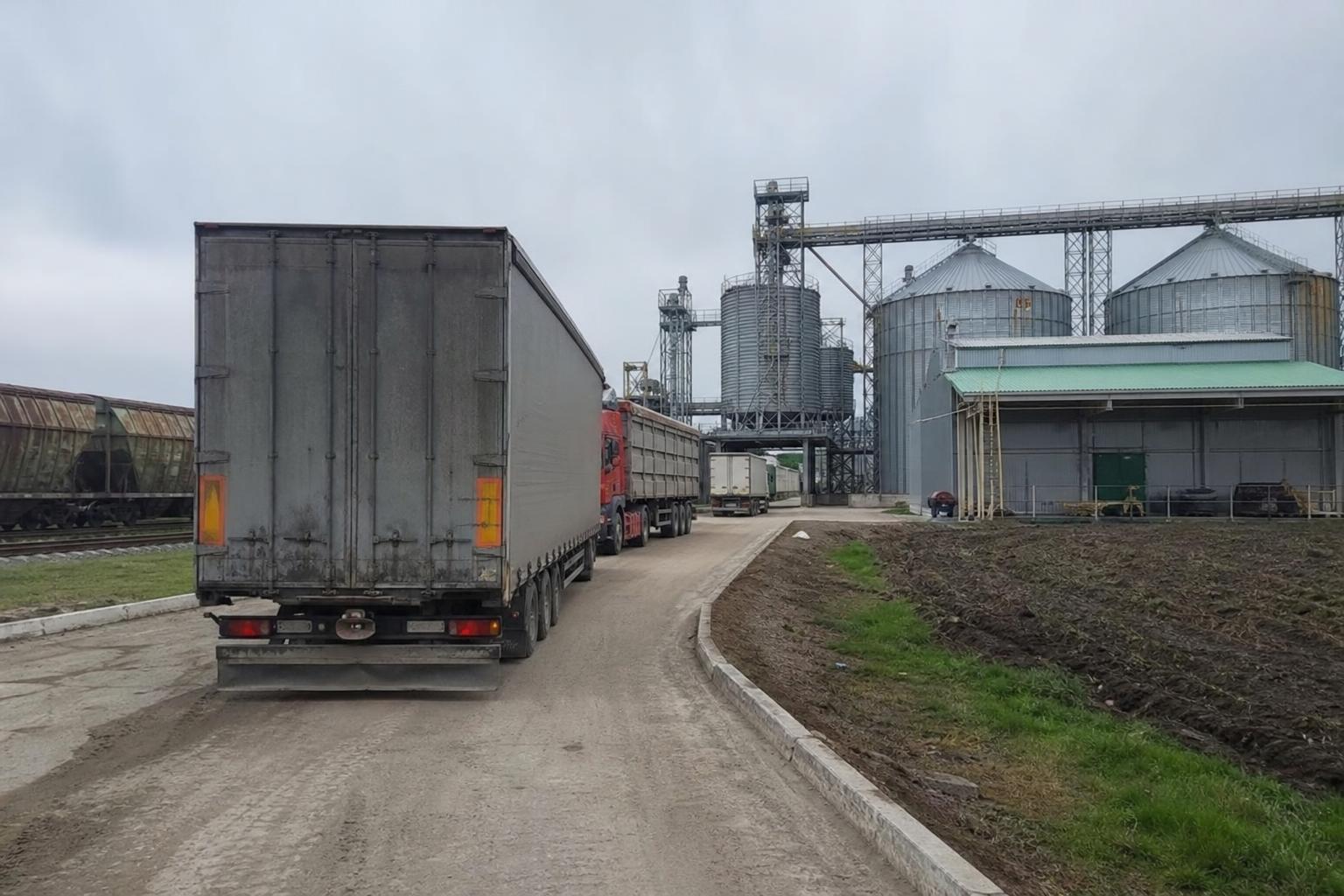
Agricultural logistics in Ukraine continues to be a primary factor in pricing for grains, oilseeds, and processing products. For sellers, it is crucial not only to find buyers but also to pre-calculate routes, transport accessibility, and potential shipping costs.
Recent market signals point to three practical focuses: the risk of increased export costs via the western border, the development of regional processing capacities, and the adaptation of agricultural producers to more complex logistics.
Western Border: Railcar Resources Become a Price Factor
For grain exports through western crossings, the availability of rolling stock, particularly European wagons, remains critical. Industry warnings indicate that a shortage could raise export costs via the western border.
This means that for agricultural producers, the sale price based on delivery terms may significantly differ from expectations if transport is not booked in advance. Buyers should also consider whether logistics are included in the commercial offer or if they will pose a separate risk after signing the contract.
A practical approach for sellers on AgroPost is to specify immediately the available shipment types: self-pickup, road, rail, elevator storage, or the possibility of combined routes. This reduces negotiation time and helps buyers quickly assess the overall economics of the purchase.
Regional Processing Changes the Logistics Map
In Ternopil region, at the Chortkiv-West industrial park, the installation of equipment for the first phase of an oil refining plant has been completed. The declared capacity of the first phase is 50 tons of refined oil per day, with production scheduled to start at the end of 2026.
The first phase includes refining and bottling facilities, with investments estimated at 25 million UAH. The second phase involves an additional 50 million UAH investment into a sunflower seed processing plant for oil production.
This is significant for logistics not only as an industrial project but also as an example of shifting cargo flows from raw material exports to the transportation of higher value-added products. If such enterprises operate steadily, regional demand for delivery of seeds, raw oil, packaging, and finished products may increase.
An additional logistical marker is the development of infrastructure within the industrial park itself. Reports mention work on water supply, electrical network expansion, and preparations for co-financing applications for constructing access roads and road junctions.
Agricultural Producers Reduce Dependence on Complex Logistics
Logistical constraints impact not only export sales but also production decisions. An example exists where an agro-company revised crop rotation plans due to logistical difficulties, focusing on crops that could be used for internal needs.
This approach does not mean abandoning the market but indicates a change in planning logic: farmers increasingly consider not only yield and purchase price but also delivery costs, storage accessibility, distance to processing facilities, and the stability of sales channels.
For buyers, this signals the need for more careful analysis of the region of origin. The same product can have a different final price depending on how conveniently it can be collected or transported to an elevator, processor, or border crossing.
Key Conclusions for Sellers and Buyers
- Transport must be planned before the deal. A shortage of certain wagon types or routes can alter the economics of sales after price agreement.
- Regional processing enhances domestic logistics. New plants can generate additional demand for local transportation of raw materials and finished products.
- Flexible shipment conditions increase sales chances. Offers with clearly specified logistics appear more convincing to buyers.
- Internal use of products becomes part of a crisis mitigation strategy. Some producers are reducing dependence on distant routes through in-house processing or internal needs.
What this means for the market: agricultural logistics in Ukraine is shifting from a simple delivery issue to a strategic sales factor. On AgroPost, sellers should specify shipment conditions in detail, while buyers should compare proposals not only by price per ton but also by the total route cost to the final destination.
Comments
No comments yetNo comments yet - be the first.