
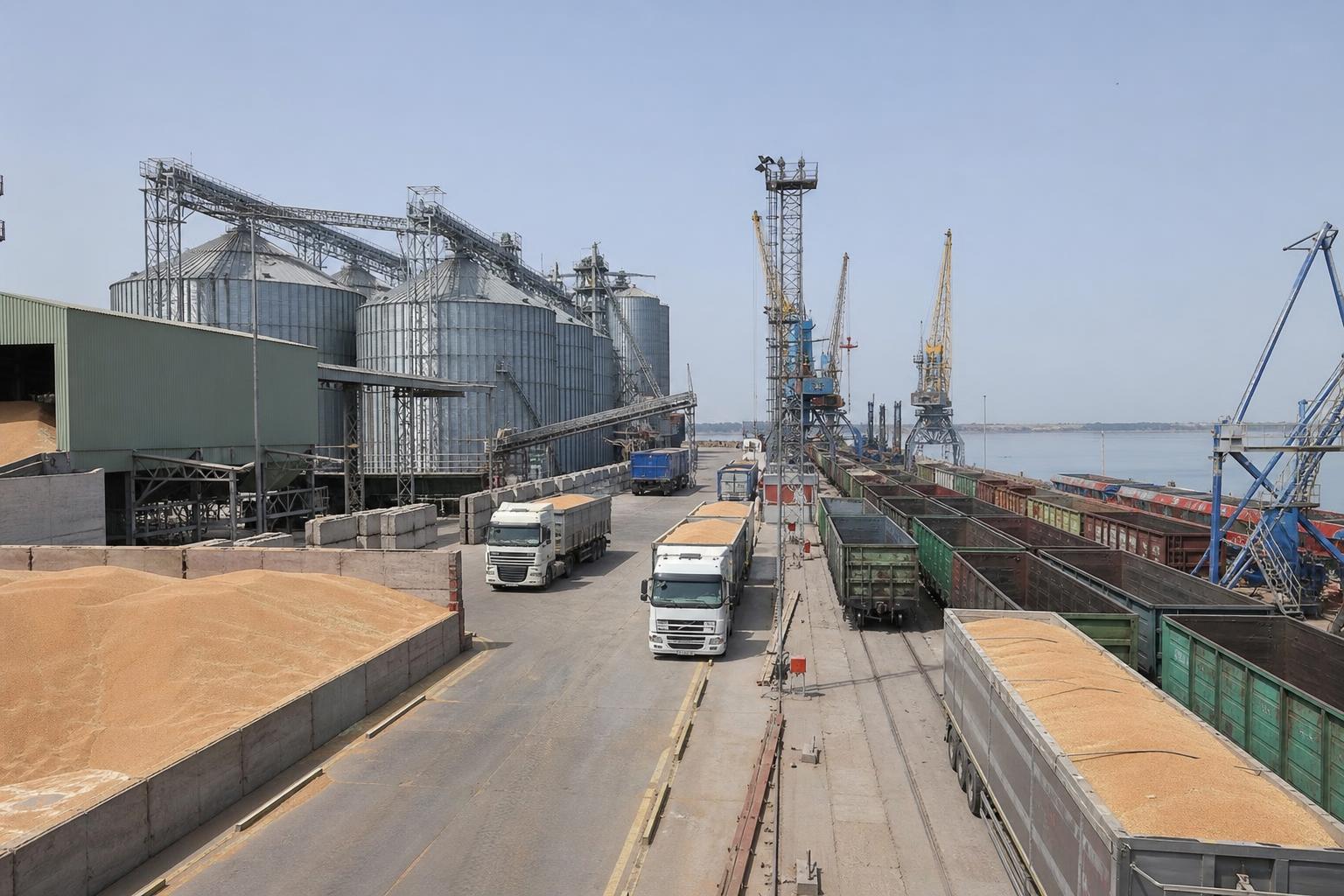
An important logistical signal has emerged in the Ukrainian grain market: Agromino plans to sell its port operator and warehouse facilities in Chornomorsk. According to the company, the goal of this step is to free up capital and focus on core business areas.
At the same time, the company does not announce an exit from the port of Chornomorsk. Agromino intends to continue processing its own cargoes there, which is significant for market participants assessing transshipment availability and the stability of export routes.
What exactly does Agromino plan to sell
The sale involves the port operator and warehouse infrastructure in Chornomorsk. These assets are related to cargo handling and storage in the port sector.
According to data shared by company representatives, since July 2025, Agromino's grain terminal in Chornomorsk has transshipped over 400,000 tons of cargo. This indicates to the market that the asset already has operational throughput and is not merely nominal infrastructure.
Why this is important for grain logistics
Port terminals and warehouse capacities remain critical elements of the export chain. For grain sellers, not only purchase price matters but also access to reception, storage, batch accumulation, and timely transshipment.
Changes in ownership or operational models of such assets can impact commercial terms for cargo handling. Currently, no information has been provided about the buyer, transaction value, or tariff changes, so market participants should avoid hasty conclusions.
What the company is focusing on
Agromino explains that the potential sale is motivated by a desire to direct resources toward core activities. These include crop production, livestock, storage, trading, and energy projects in Ukraine and the Czech Republic.
For the grain segment, the most relevant areas remain crop production, storage, and trading. This means the company is not removing the grain direction from its business model but is reconsidering the ownership structure of port infrastructure.
What sellers and buyers of grain should check
- Transshipment availability. It is advisable to clarify whether acceptance windows and conditions for working with grain batches are changing.
- Storage conditions. For sellers, it is important to agree in advance on storage terms, quality, processing, and documentation procedures.
- Supply contracts. Buyers and traders should verify whether contracts require updates to logistics routes.
- Alternative channels. During any corporate changes, it is useful to have backup options for elevators, ports, or internal logistics.
What this means for the market: the news does not indicate a halt in Agromino's operations in Chornomorsk but emphasizes the importance of port infrastructure as a separate market asset. For AgroPost users, this is a reason to more carefully compare grain offers considering delivery basis, access to elevators, and actual logistics to ports.
Comments
No comments yetNo comments yet - be the first.