
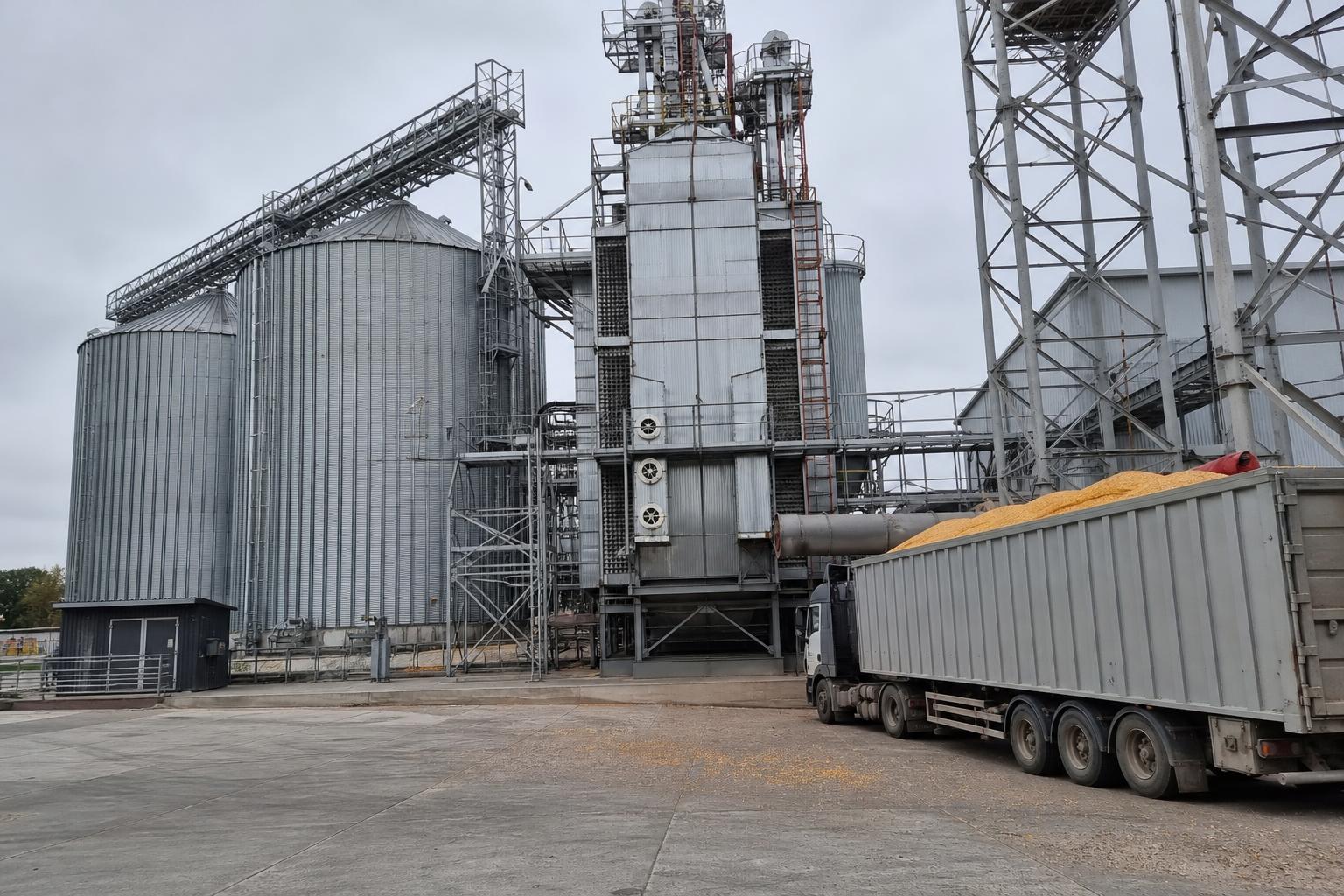
KMZ Industries has reported the installation of a grain dryer designed to dry 100 tonnes of corn per hour. According to the company’s CEO, Valeriia Kalashnyk, farms are buying equipment both to start drying their own grain and to expand existing capacity.
For grain sellers and elevators, investment decisions depend on more than rated capacity. It is important to compare that capacity with incoming corn volumes, drying needs and the availability of third-party services.
Industrial-scale capacity for drying corn
The installed unit has a stated capacity of 100 t/h for corn. The company described it as one of the largest dryers it has installed this year in terms of drying capacity.
This figure should be considered alongside the actual load and operating conditions of the facility. Before purchasing, buyers should clarify the conditions under which the capacity was measured and whether they match their grain and processing requirements.
Why farms are considering their own equipment
According to Valeriia Kalashnyk, owning a grain dryer allows farms to control grain quality and avoid paying third-party service providers. At the same time, the market offers units across a range of capacities, from small-scale to industrial.
For a farm, the key question is whether its own unit can deliver the required drying throughput during peak periods. For an elevator, it is important to match the dryer’s capacity with intake volumes and the available conveying and cleaning lines.
What to check before placing an order
- Confirm the crop and grain parameters for which the stated capacity applies.
- Compare the dryer’s throughput with intake volumes and the capacity of downstream conveying and storage systems.
- Request a complete list of the equipment included in the system and separately check whether cleaning and conveying equipment is needed.
- Compare the cost of in-house grain handling with the services available from third-party operators.
What this means for the market: the 100 t/h installation shows that equipment options range from large-scale industrial solutions to lower-capacity dryers. Buyers should assess not only stated capacity but also how well the equipment fits their grain flow and facility logistics.
Comments
No comments yetNo comments yet - be the first.