
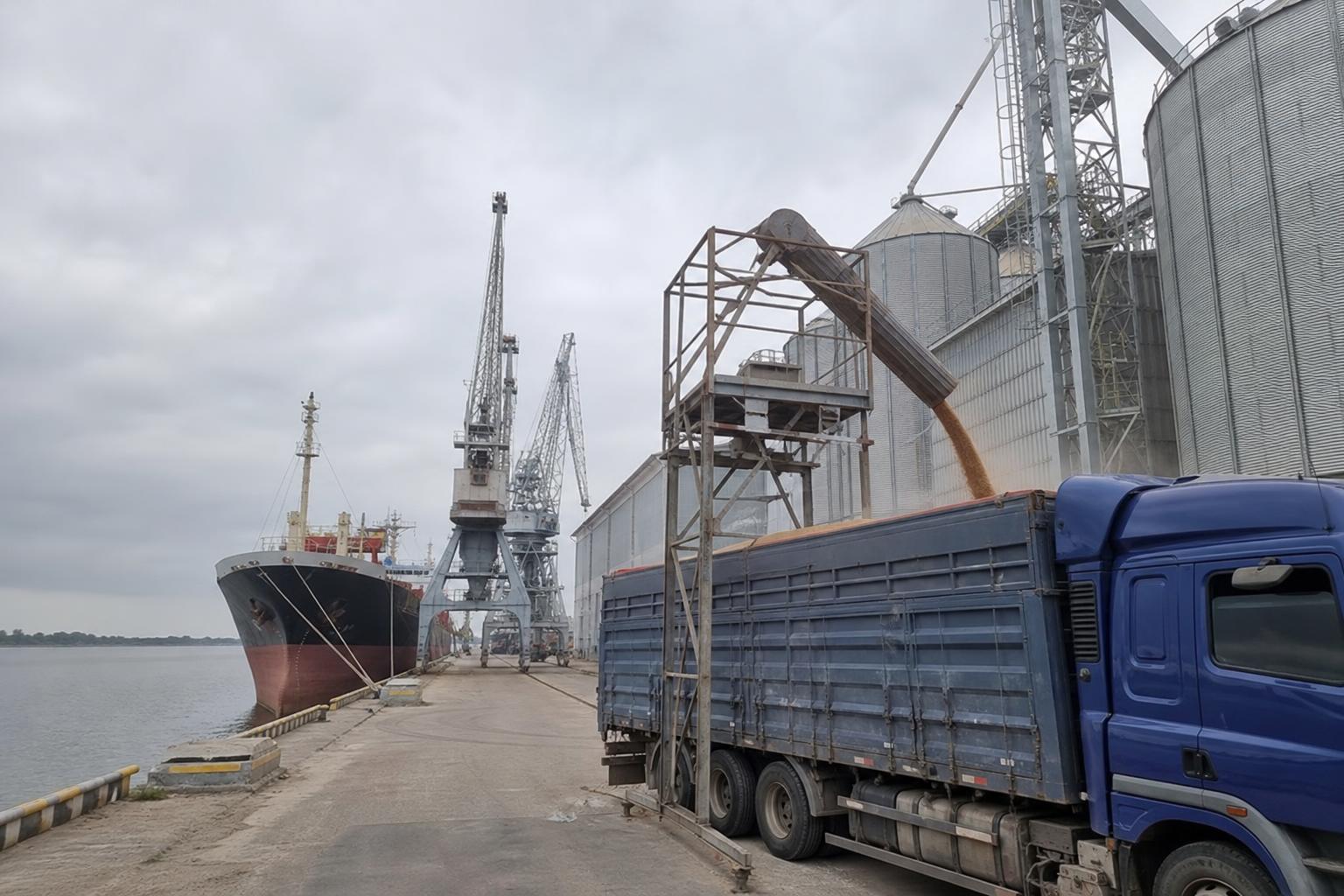
Ukraine’s grain market is sending two parallel signals: export logistics remain under pressure, while some sales destinations are seeing growth. This is reflected in the NBU’s outlook for seaport operations and data on barley shipments to the European Union.
For producers, traders and grain buyers, this means carefully assessing available routes, shipping timelines and storage costs.
Logistical constraints could delay grain exports
In its baseline scenario, published in the October 2026 Inflation Report, the National Bank of Ukraine forecasts a blockade of the Greater Odesa seaports until mid-2027. According to the NBU, alternative routes may not be sufficient to export this year’s harvest before the end of the marketing year.
Possible consequences include stock accumulation and additional storage costs. Agricultural exports totalled 1.8 million tonnes in August and rose to 2.7 million tonnes in September after shipments were redirected to alternative routes.
The NBU also expects agricultural exports to increase if maritime shipping resumes in the second half of 2027. However, the regulator says prolonged storage poses a risk of losses to some of the accumulated produce.
Ukrainian barley strengthens its position in the EU market
From 1 July to 25 October 2026, Ukraine exported 69.83 thousand tonnes of barley to the European Union, up from 18.96 thousand tonnes in the same period last year. Ukraine’s share of EU barley imports rose from 10.18% to 30.9%.
During this period, Ukraine became the EU’s largest barley supplier. Total EU imports of the crop reached 225.96 thousand tonnes, 21.3% more than a year earlier.
What grain sellers and buyers should consider
- Compare available routes and the full cost of delivery, not just the price of the grain.
- When planning sales with deferred shipment, factor in storage costs and the potential time needed to build up stocks.
- For barley, assess demand and buyer requirements in the EU market separately: export growth alone does not determine the price of a specific lot.
What this means for the market: logistics and storage remain key components of a grain deal, while rising barley exports to the EU highlight the importance of finding buyers for specific crops and destinations. On AgroPost, sellers should clearly specify the crop, volume and available shipping terms, while buyers should compare offers alongside logistics costs.
Comments
No comments yetNo comments yet - be the first.