
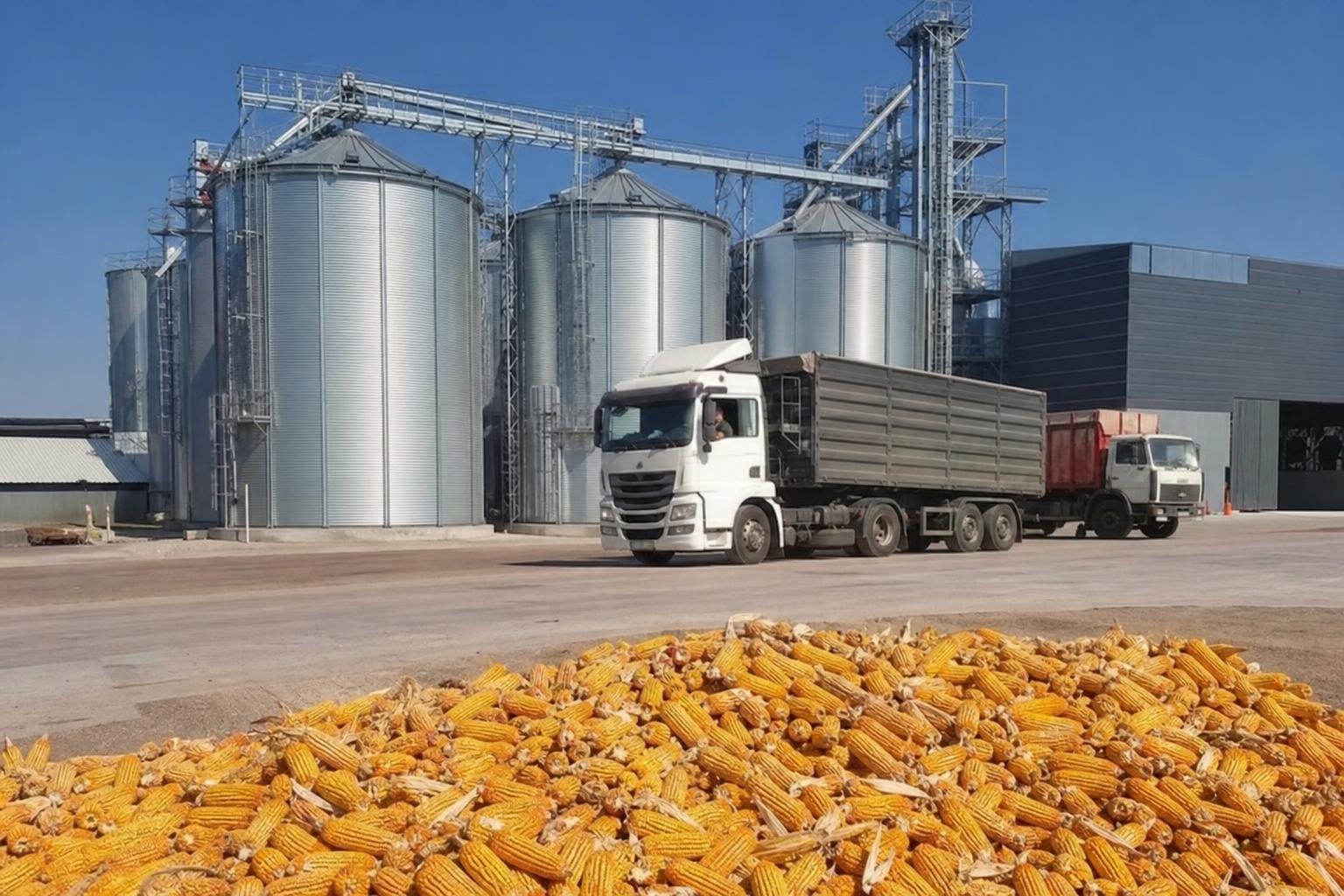
The Ukrainian grain market is entering a period where prices are shaped not only by the harvest but also by logistics access, competition in external markets, and confidence in storage infrastructure.
For sellers of corn and other grains, three key questions remain: Is there a buyer with a clear export route? Can the price cover logistics costs? How secure is storage at the elevator?
South America Intensifies Competition for Ukrainian Corn
The Buenos Aires Grain Exchange expects corn production in Argentina to increase in the 2026/27 season to 66 million tons, up from 64 million tons in the previous season. Total grain production in the country could reach 157.9 million tons if weather conditions and farmers’ decisions do not worsen the forecast.
This is an important signal for Ukraine: with active supply from Argentina, importers may negotiate more aggressively on price and delivery terms. This is especially relevant for corn, where buyers are quickly shifting to more stable supply routes.
At the same time, the wheat forecast in Argentina is lower: 23.4 million tons compared to 27.8 million tons in the previous season. While this does not eliminate competition with Ukraine, it indicates uneven pressure across different crops.
Logistics Remains the Main Price Factor
For Ukrainian grain, logistics often determines whether a deal is profitable. Restrictions on Black Sea infrastructure, increased load on alternative routes, and transport shortages influence the actual price received by sellers at farms or elevators.
Market assessments also highlight the risk of grain shortages from the Black Sea region in case of prolonged port restrictions. For buyers, this means the need to book shipments in advance, while sellers should not rely solely on exchange quotes without considering specific routes.
At AgroPost, sellers should immediately specify the delivery basis, available volume, shipment location, and options for auto, rail, or elevator self-pickup. This reduces negotiation time and minimizes the risk of unrealistic price expectations.
Elevator Risks: Storage Cost Is Not the Only Criterion
The situation around Volitsa-Agro has once again drawn market attention to grain storage safety. Public reports mention the disappearance of approximately 130–140 thousand tons of grain from the elevator, belonging to depositors. The company operated an elevator in Bilya Tserkva, but after debt issues, the bank recognized a borrower default.
This serves as a practical lesson for agricultural producers: before bringing grain for storage, it is essential to check not only tariffs but also the operator’s financial health, reputation, warehouse documents, insurance, and procedures for confirming remaining stocks.
Buyers also need to understand where the product physically resides and whether there is a risk of ownership disputes. Due to logistical instability, grain may stay longer at the elevator, making stock control part of commercial transaction security.
Key Takeaways for Grain Sellers and Buyers
- Corn remains under external pressure: the forecasted high harvest in Argentina increases competition in export markets.
- Logistics weigh as much as price: the same exchange price can yield different results depending on route and basis.
- Check the elevator before bringing grain: storage tariffs do not compensate for risks of losing control over the product.
- Market listings should be specific: crop type, quality, volume, location, basis, and available transport options increase the chances of a quick deal.
Implications for the Market
The Ukrainian grain sector will operate under strong competition from South America and high dependence on logistics. Participants who can confirm the product, route, elevator reliability, and readiness to fulfill agreements within agreed timelines will have an advantage over those relying solely on the highest or lowest price.
Comments
No comments yetNo comments yet - be the first.