
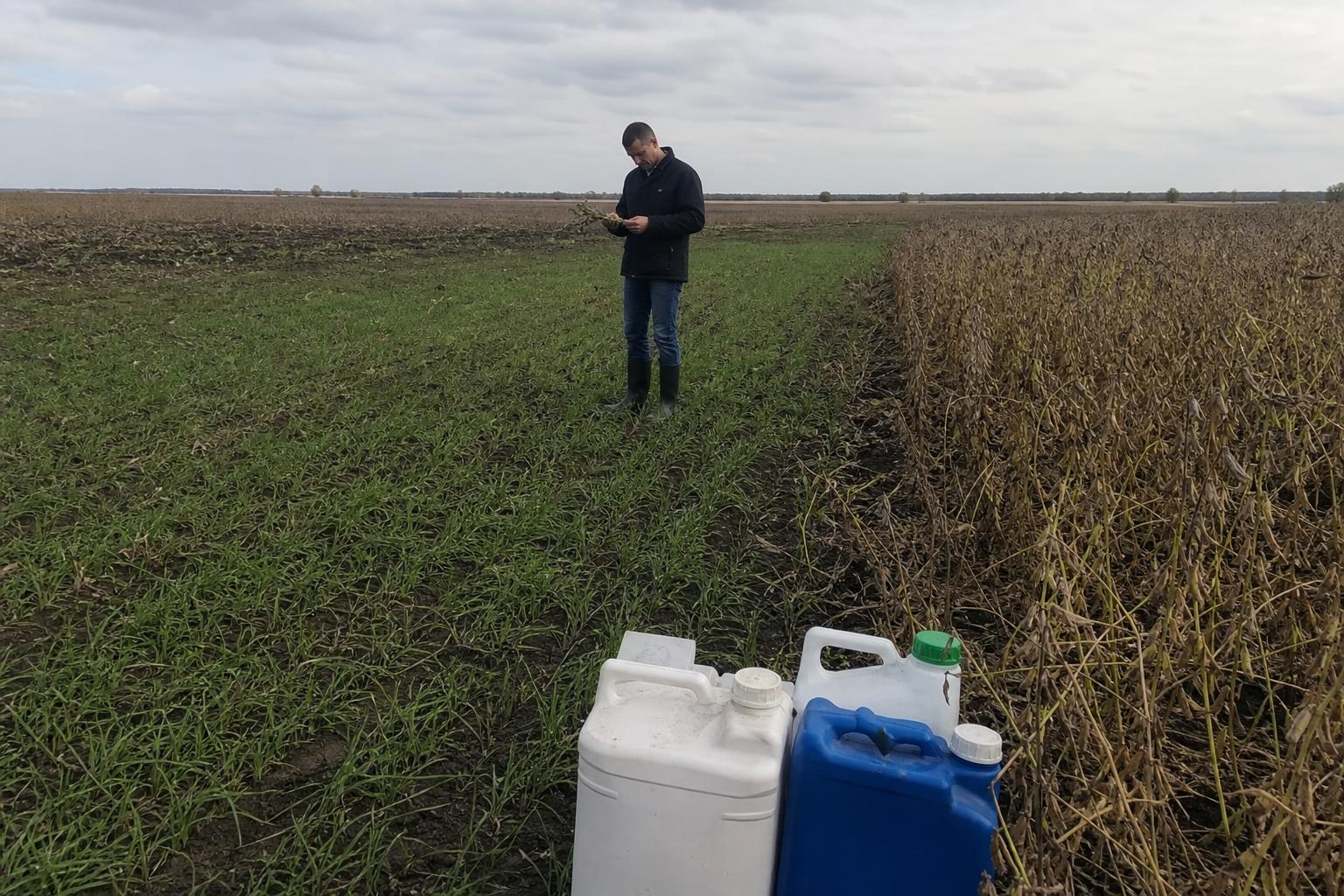
The autumn crop protection market enters a period when farmers simultaneously complete the harvesting of late crops and prepare the winter crop front. For pesticide suppliers, this is a time to more accurately assess stock levels, while buyers should compare their needs for seed treatments, herbicides, and fungicides with the actual field conditions.
In Cherkasy region, the sunflower and soybean harvest has begun with yields exceeding last year's figures at the same date. While this is not a direct indicator of the effectiveness of specific protection schemes, it provides the market with a practical reference point: oilseeds remain a focus, and demand for solutions for them will persist into the next season.
Initial Harvest Results
According to regional agricultural statistics, cereals and legumes have already been harvested from an area of 285.7 thousand hectares. The total grain harvest amounts to 1,484.8 thousand tons, with an average yield of 52 centners per hectare, compared to 55.6 c/ha at this time last year.
The situation with oilseed crops is different. Sunflower has been harvested from 15.2 thousand hectares, or 5.6% of the area, with a yield of 36.1 thousand tons. The current average yield is 23.8 c/ha, compared to 23.5 c/ha last year.
Soybeans have been harvested from 12.9 thousand hectares, representing 19.9% of the planned area. The harvest totals 20 thousand tons, with a yield of 15.5 c/ha versus 14.4 c/ha at the same date last year.
Impact on Pesticide Demand
For the crop protection market, such data are important not as a basis for quick conclusions but as a signal for planning. If farms see competitive results in sunflower and soybean crops, they are more likely to review their technological schemes for these crops for the next season.
Practically, this means paying attention to three groups of products: herbicides for weed control in oilseed crops, fungicides for risk mitigation during vegetation, and seed treatments for a quality start of crops. On AgroPost, sellers should clearly specify the crops for application, spectrum of action, and packaging, as buyers during the planning season compare not only prices but also product suitability for specific schemes.
An additional focus is on remaining products for autumn work. If a product is needed for quick application or seed treatment, it is advisable to specify actual stock availability, region of shipment, and the possibility of prompt delivery in the listing.
Winter Crops: Seed Treatment Remains Critical
Alongside the harvest of late crops, farmers are beginning to sow winter cereals. During this period, demand shifts toward seed treatments, as seed protection is a fundamental element of successful sowing.
Fungal diseases of cereals require particular attention. If they are not controlled at the seed stage, such problems cannot be resolved later during vegetation with standard foliar treatments. Therefore, buyers should check not only the price of seed treatments but also the claimed spectrum of action, application rates, and compatibility with their farming technology.
Practical conclusion: autumn pesticide purchases should be divided into two categories — products for completing the current season and products that form the basis for the next harvest’s start.
What Sellers and Buyers Should Consider on AgroPost
- For pesticide sellers: update stock levels for herbicides, fungicides, and seed treatments, and add crop application details and packaging options.
- For buyers: compare offers based on active ingredients, application rates, shelf life, and logistics.
- For oilseed farms: use harvest results as an opportunity to review technological schemes but avoid conclusions without your own field analysis.
- For winter crops: do not delay purchasing seed treatments if sowing is already underway.
What this means for the market: in the near future, the crop protection category will be driven by two factors — winter crop preparation and planning for oilseed technologies. For AgroPost, this creates demand for precise, well-described pesticide offers, where buyers quickly understand which crop and task the product suits.
Comments
No comments yetNo comments yet - be the first.