
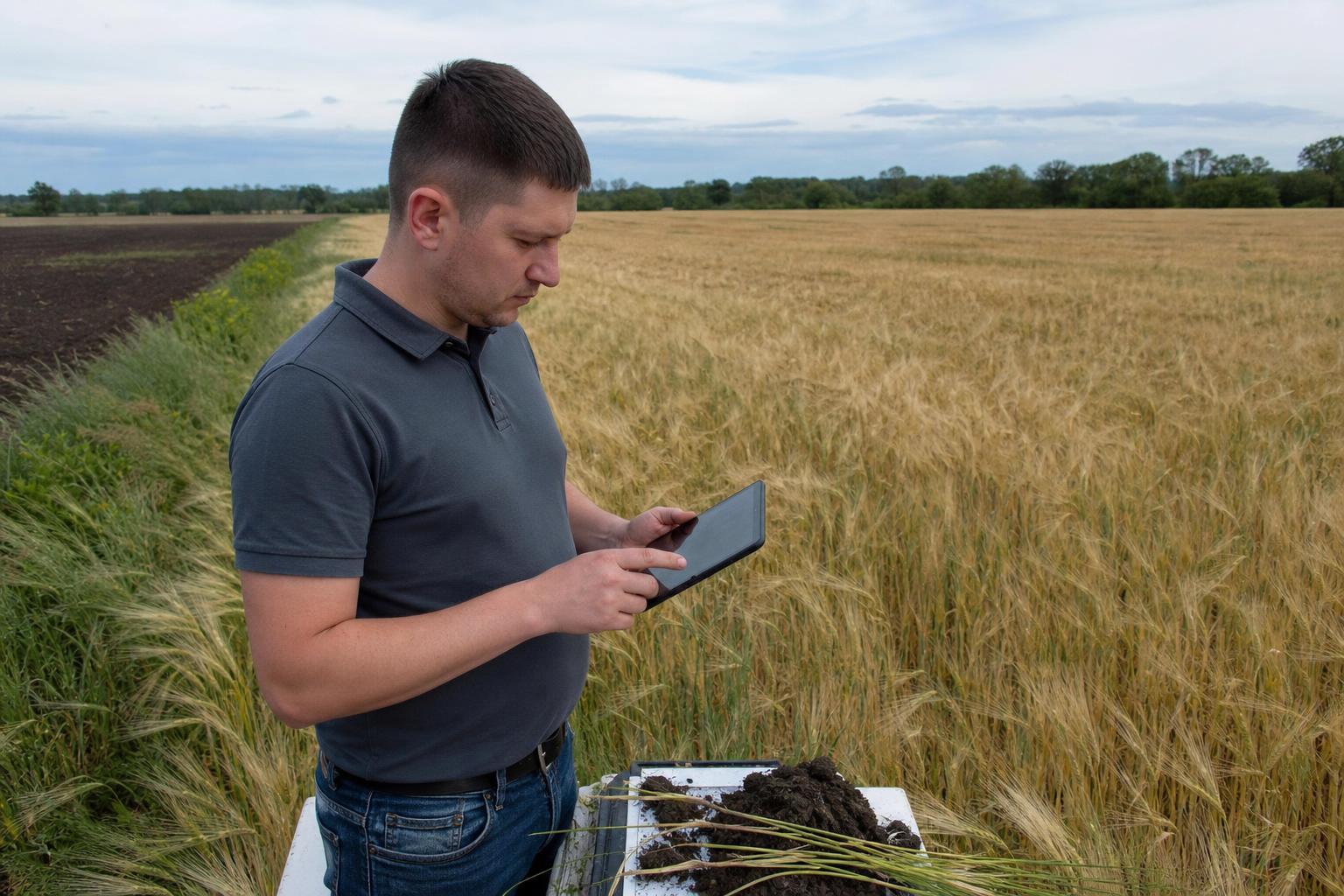
The initial results of early grain harvesting in southern Ukraine provide an important practical signal for the crop protection market: the condition of the crops on certain fields confirms that disease and pest control measures during the season have been effective without critical failures.
At the same time, the agricultural sector increasingly links crop protection not only to crop treatments but also to soil health. The opening of Ukraine’s first Living Soil Museum emphasizes this shift: attention to soil ecosystems is becoming part of a broader discussion on efficient and responsible resource use.
Southern Ukraine Shows First Field Indicators of the Season
In the Bolhrad and Izmail districts of Odessa region, the Agrograin group of companies has begun harvesting spring barley. According to reports, approximately half of the area under this crop has already been harvested.
The average barley yield is 6 t/ha, with figures ranging from 5.5 to 7 t/ha depending on the agro-ecological zone. The grain has a moisture content of 12–14%, so it does not require drying.
For the pesticide market, a particularly indicative factor is the phytosanitary condition: preliminary data suggest the grain is well-filled, with proper weight and without significant disease or pest damage. Final quality parameters will be confirmed through laboratory analyses.
What This Means for Pesticide Sellers and Buyers
The start of harvest is a moment when farmers begin evaluating not only yield but also the effectiveness of spring-summer protection schemes. If there is no significant damage in the field, this becomes an argument for reordering proven products or adjusting application rates and timing for the next season.
For sellers on AgroPost, such data are useful as a reference point in communication with farms: demand may be driven not only by price but also by tangible results on specific crops and regions.
Buyers should record which herbicides, fungicides, and insecticides were used on fields with the best agro-conditions. This will help plan pesticide procurement more accurately for winter and spring crops, avoiding excessive stockpiling.
Soil Focus Reinforces Crop Protection Demands
The Poltava State Agrarian University has opened Ukraine’s first Living Soil Museum, SOIL MUSEUM. It is positioned as a scientific and educational space for studying soil ecosystems, promoting soil literacy, and ecological awareness.
This context is significant for the pesticide segment. The market is gradually shifting from a “solve the problem” approach to a model that considers crop rotation, agro-ecological zones, soil biological activity, and stress accumulation risks in crops.
This does not mean abandoning chemical protection. On the contrary, effective crop protection requires more precise selection of products, proper application, and alignment with the field’s agronomic practices.
Key Conclusions for the Pesticide Market
- The phytosanitary condition of barley at the start of harvest in Odessa region appears stable based on preliminary field assessments.
- Crop protection quality should be evaluated after harvest, by comparing yield, agro-conditions, and damage levels across different fields.
- Pesticide suppliers should tailor proposals to specific crops and regions, rather than offering only universal product sets.
- The soil health theme increases demand for well-informed technological recommendations regarding herbicides, fungicides, insecticides, and compatibility of solutions.
Implications for the market: In the coming weeks, the Ukrainian crop protection segment will enter a period of practical insights: farmers will assess the results of seasonal treatments, sellers will develop proposals for upcoming purchases, and AgroPost buyers can rely on real field signals rather than only seasonal expectations.
Comments
No comments yetNo comments yet - be the first.