
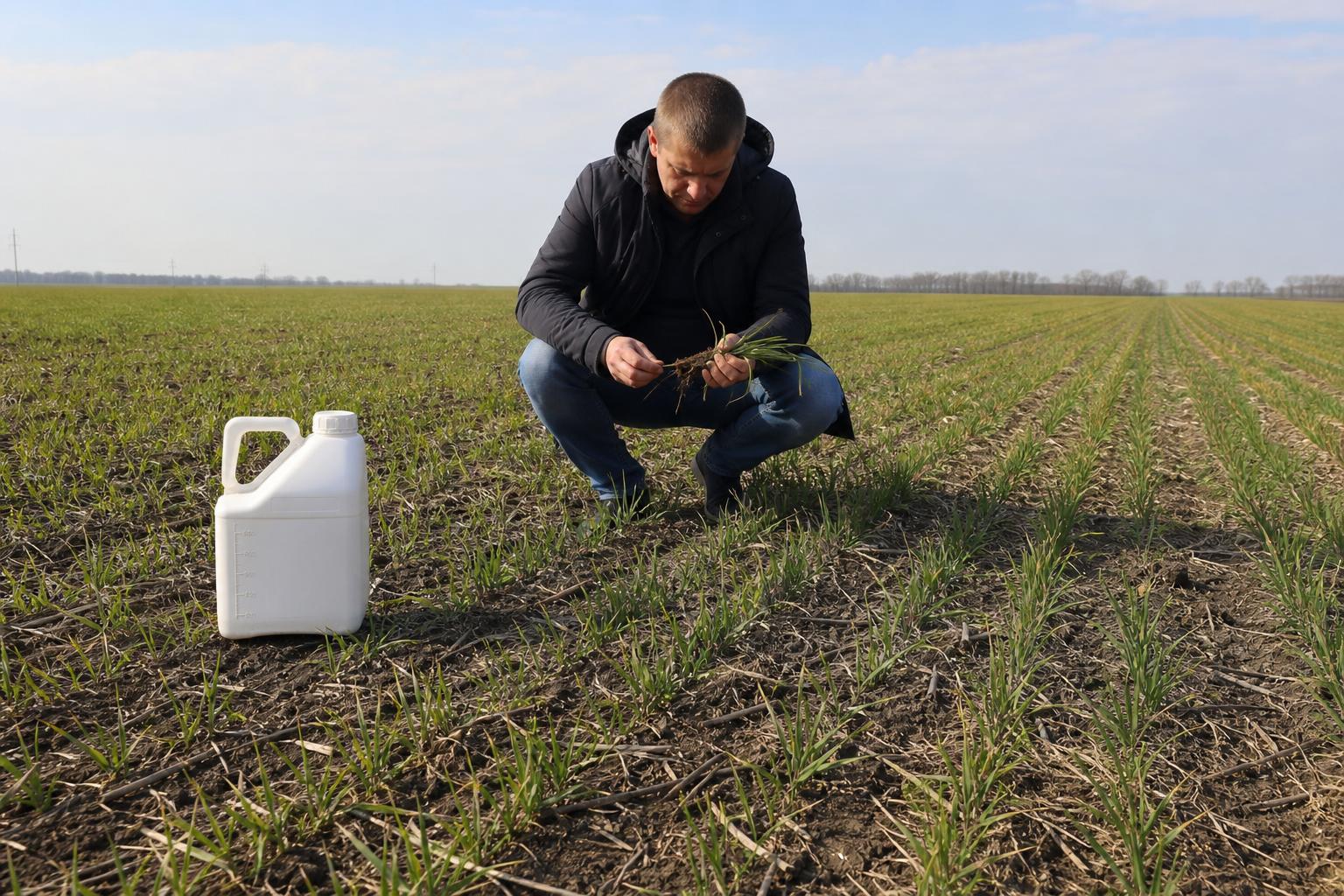
The crop protection market increasingly depends not only on crop type and growth stage but also on the fundamental soil condition. Acidity, humus level, and availability of phosphorus and potassium do not replace field diagnostics but help farmers more accurately develop their technological maps.
According to the 2023 research results from the Soil Conservation Institute, samples from controlled regions of Ukraine were analyzed for over 20 indicators. For sellers and buyers on AgroPost, this data serves as a useful reference: where demand may shift toward integrated solutions involving protection, nutrition, and application condition adjustments.
Regions with problematic soils: where farmers need more precise technology
Low soil quality has been recorded in Sumy, Volyn, and Zhytomyr regions. Volyn and Zhytomyr belong to Polissya, characterized by high soil acidity and low humus content — averaging 2.43%.
Rivne region, also part of the Polissya zone, slightly exceeds the low soil quality threshold. For farms in such areas, it is especially important not to purchase pesticides and herbicides based on a template but to verify recommendations regarding application conditions, tank mix compatibility, and the need for correction agents in the working solution.
Sumy region, according to researchers, showed the greatest decline in soil cover quality compared to previous study rounds. In practice, this means that herbicide and fungicide programs should be more closely tied to crop condition, previous crop, and actual agrochemical analysis of the field.
Acidic and alkaline soils: an important factor in choosing technological support
Most regions of Ukraine fall into areas with medium soil quality, but their properties vary noticeably. A high proportion of acidic soils is found in Vinnytsia, Chernihiv, and Zakarpattia regions.
Conversely, Zaporizhzhia, Odesa, Kherson, and Mykolaiv regions are characterized by widespread alkaline soils. For the pesticide market, this does not mean a need to universally change products but emphasizes the importance of reading regulations carefully, testing water pH, application conditions, and manufacturer recommendations regarding adjuvants.
Buyers should ask sellers not only about the price of herbicides or fungicides but also for technological advice: which crop, growth stage, soil type, and water conditions the scheme is designed for. Pesticide sellers should tailor proposals to regional conditions rather than offering generic sets.
Phosphorus, potassium, and humus: changes in background conditions for crops
Research data show significant variation in soil phosphorus saturation: from 56 mg/kg in Chernivtsi region to 176 mg/kg in Kherson. Overall, Ukrainian experts note a decrease in phosphorus and potassium concentrations.
The greatest humus deficit is observed in Odesa, Cherkasy, and Zaporizhzhia regions — at 810, 760, and 630 kg per hectare, respectively. The source attributes this to insufficient fertilization with mineral and organic residues.
For crop protection systems, these indicators are important as part of the overall assessment of stress resilience. A weakened plant does not always require higher pesticide doses but almost always needs better monitoring, timely application, and avoidance of technological errors.
Regions with the highest soil quality
High average soil quality has been recorded only in two regions — Kirovohrad and Kharkiv. Kharkiv region shows the highest humus content — 4.3%, although there is also a decline in phosphorus and potassium levels.
Despite the high average soil quality, Kirovohrad region has one of the lowest organic fertilizer application rates and a decrease in zinc content. This reminds us that even in strong agro-regions, crop protection should be planned together with nutrition and agrochemical control.
Key conclusions for buyers and sellers of pesticides
- Buyers should compare not only the price but also the technological suitability for specific fields, water, and soil conditions.
- Sellers should include information about the crop, target weed or disease, application conditions, and compatibility in tank mixes in their listings.
- Polissya farms should pay particular attention to soil acidity and verify recommendations regarding working solutions.
- Southern regions with widespread alkaline soils should monitor water quality and application conditions.
- In all regions, a decrease in phosphorus, potassium, or humus signals the need to combine crop protection with nutrition systems rather than viewing pesticides separately.
Implications for the market: The demand for crop protection products in Ukraine is increasingly shifting from simple price-based choices of herbicides and fungicides to regionally adapted solutions. On AgroPost, this creates an advantage for sellers who can explain application technology and for buyers selecting products based on real field conditions rather than average schemes.
Comments
No comments yetNo comments yet - be the first.