
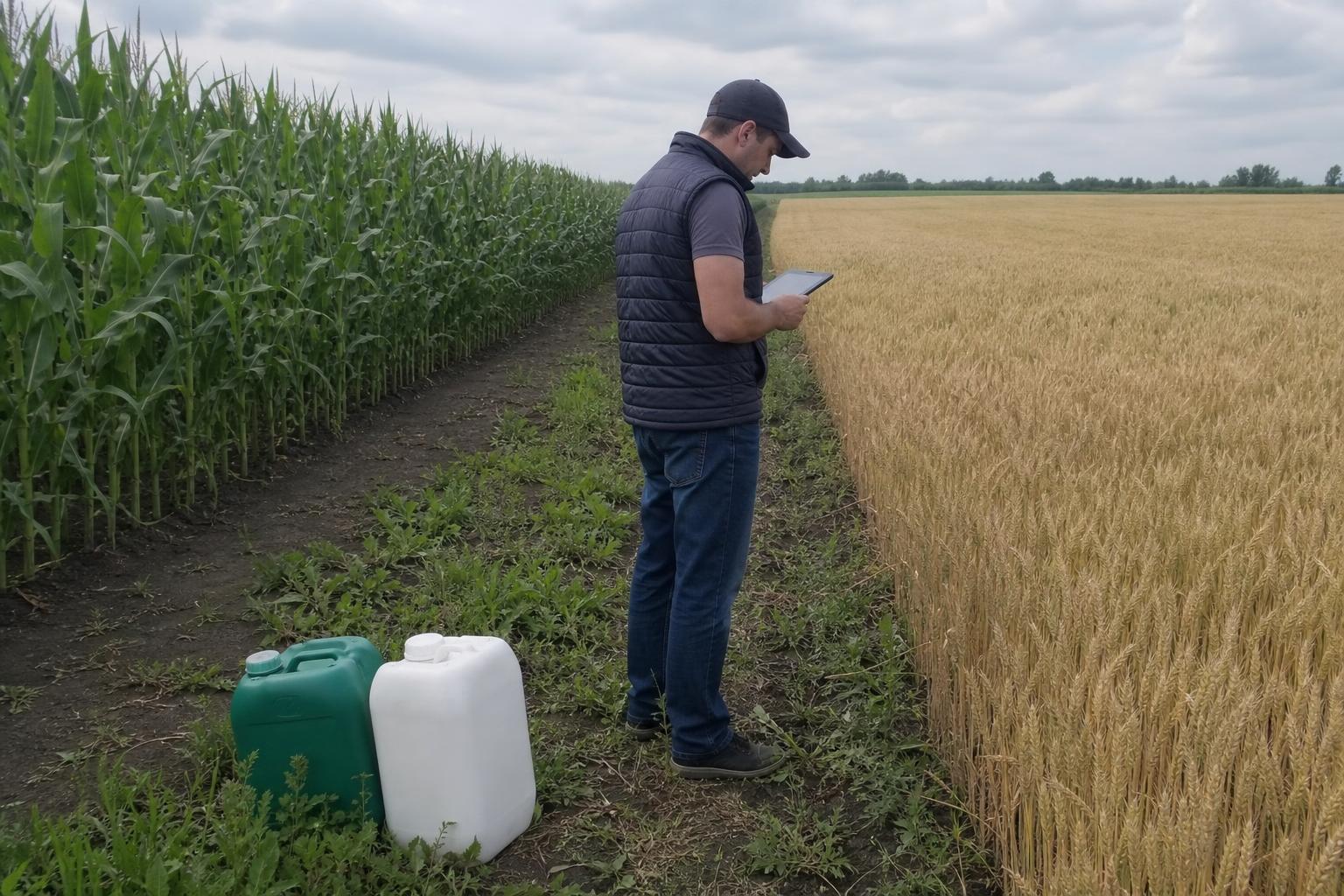
The crop protection market is entering a period when procurement increasingly depends not only on agronomic factors but also on farmers’ working capital. As of early July, Ukraine's grain and legume stocks amounted to 7.7 million tons, which is 3 million tons, or nearly 65%, more than the same period last year.
For suppliers and buyers of crop protection products (CPP), this means a need for more precise seasonal planning. Large grain reserves alone do not determine pesticide demand but can influence the pace of purchases, the structure of prepayments, and farmers’ willingness to fix prices in advance.
Which crops shape the demand for crop protection products
The largest stockpiles are in corn — 3.9 million tons, which is 94.1% more than on the same date last year. Wheat stocks totaled 2.3 million tons, with a 36.7% increase, and barley — 1.1 million tons, up 77%.
These crops remain key for the herbicide, fungicide, insecticide, and seed treatment markets. Therefore, sellers on AgroPost should clearly differentiate their offers by crop: separately for corn, separately for winter wheat and barley.
For buyers, it is important not to purchase crop protection products in a “package” without field-specific considerations. It’s better to calculate needs based on crop type, predecessor, weed infestation, disease history, and planned yield.
Corn: focus on herbicide protection and farm residue management
Significant corn stocks in warehouses are not an automatic signal to reduce planting areas or spending on protection. However, they can alter farmers’ financial behavior: some may delay purchases until grain is sold or seek flexible payment terms.
In herbicide offers for corn, sellers should specify the spectrum of weeds, application timing, crop rotation restrictions, and compatibility with other products. This helps buyers compare options quickly and avoid selection errors.
Buyers should check not only the price per liter or kilogram but also the application rate per hectare. The cost per hectare provides a more accurate understanding of protection expenses.
Wheat and barley: demand shifting toward seed treatments and fungicides
Wheat and barley form a stable base for autumn and spring demand for crop protection products. For winter crops, seed treatment, control of volunteer plants and weeds, and early fungicide application in case of disease risks remain priorities.
On AgroPost, sellers should specify whether the product is intended for seed treatment, post-emergence application, or vegetative fungicide protection. The more precise the description, the fewer clarifications needed before closing a deal.
Farmers should pre-check their stock of products: expiration dates, storage conditions, container integrity, and relevance to current season needs.
What sellers and buyers should consider on AgroPost
- Crop protection product sellers should create listings with specific crop names: corn, wheat, barley, soy, sunflower.
- Buyers should request documents confirming registration, batch number, expiration date, and delivery conditions.
- For wholesale deals it is important to agree on packaging, minimum order quantities, reservation options, and payment terms upfront.
- For seasonal purchases it is advisable to compare not only prices but also protection costs per hectare.
Logistics considerations should also be taken into account. Reports of tension in Black Sea-Azov logistics and increased risks in international grain trade do not provide a direct forecast for Ukraine’s crop protection market but serve as a reminder: agricultural procurement should be planned with buffer time.
Implications for the market: Large grain stocks reinforce the importance of financial planning in crop protection procurement. For sellers, this means offering clearer, crop-oriented proposals on AgroPost. For farmers, it’s an incentive to calculate protection costs per hectare, verify stock levels, and pre-book critical products for corn, wheat, and barley.
Comments
No comments yetNo comments yet - be the first.