
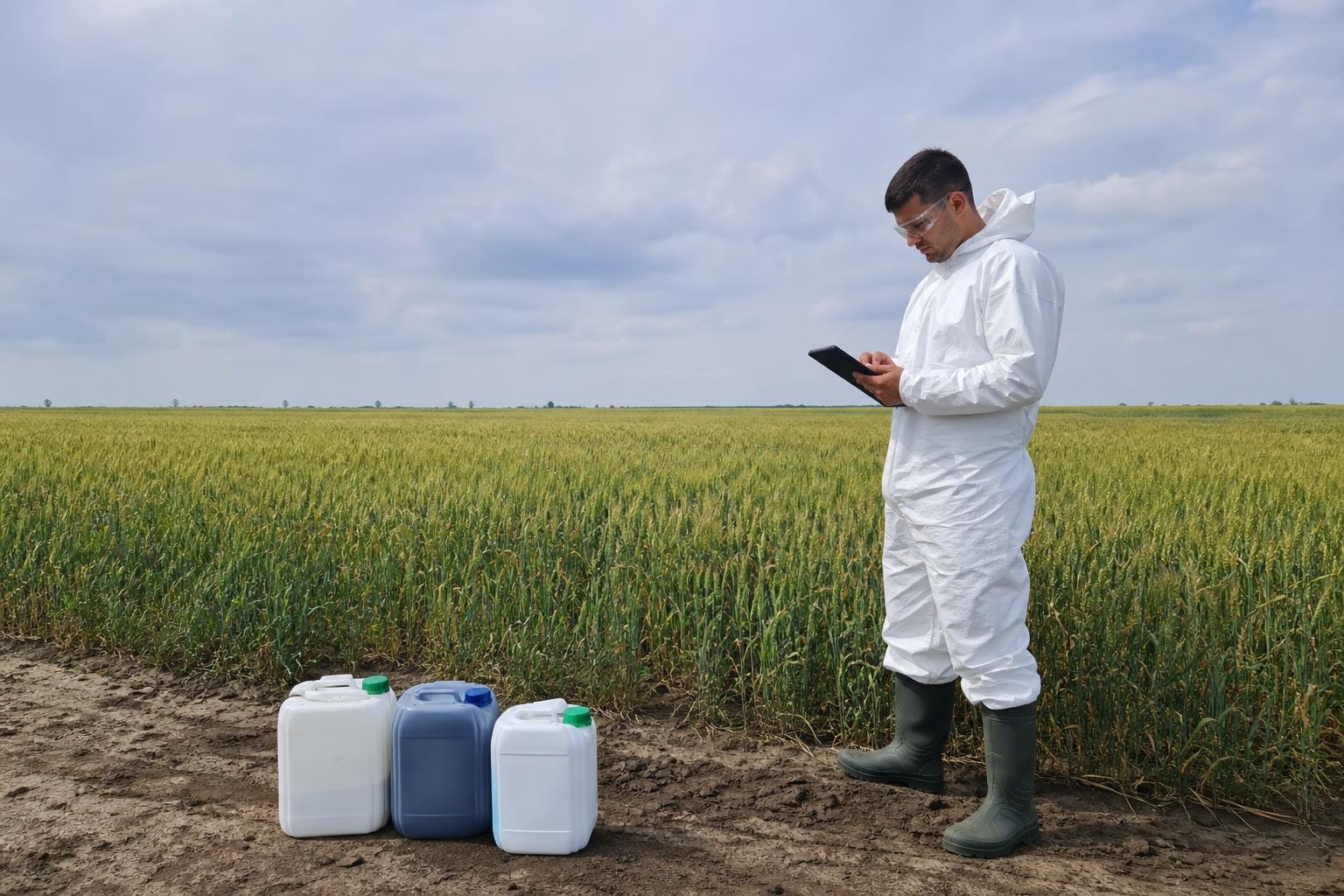
The plant protection market in Ukraine will increasingly depend not only on the price of products but also on transparency regarding their origin, registration, and application rules. The reason is the European integration block, where one of Ukraine’s key tasks is harmonizing the use of plant protection products with the European Green Deal requirements.
For agricultural producers, this does not mean an immediate overhaul of all regulations. However, already now, sellers of herbicides, fungicides, insecticides, and seed treatments should prepare for more discerning buyers who will inquire not only about active ingredients and application rates but also about documentation, legality, and crop suitability.
What’s happening in the regulatory field
The EU Council has initiated technical preparations to open negotiations with Ukraine on five accession clusters. Among them is Cluster 5, “Resources, Agriculture, and Cohesion,” which covers a significant portion of agricultural policy.
Ukraine must fulfill 16 indicators within three sections: “Agriculture and Rural Development,” “Food Safety, Veterinary, and Phytosanitary Measures,” and “Fisheries.”
For the plant protection segment, the phytosanitary direction and tasks related to harmonizing plant protection product use rules with EU approaches are particularly important. This creates a longer timeline for changes for manufacturers, importers, distributors, and farms.
How this affects the sale of plant protection products
In the short term, the market will remain practical: farmers need products tailored to specific field problems — weeds, diseases, pests, or seed treatment. However, product descriptions are increasingly emphasizing details that were often previously “behind the scenes.”
For sellers on AgroPost, a competitive advantage can be a comprehensive product listing: crop, spectrum of action, active substance, formulation, packaging, manufacturer, availability of documents, storage conditions, and application recommendations according to the label.
Buyers, on their part, will become more cautious about overly cheap or poorly described offers. In the plant protection segment, a low price without transparent origin may entail additional risks for crop yield, residues in the product, and subsequent sales.
What herbicide and fungicide buyers should pay attention to
- Registration and purpose. Verify whether the product is approved for the specific crop and target object.
- Active substance. Compare not only the trade name but also the concentration and formulation.
- Documents. Request proof of origin, batch details, and basic accompanying documentation.
- Expiration date. Especially important for residues from warehouses and seasonal sales.
- Storage conditions. Improper storage can reduce the effectiveness of even high-quality products.
What sellers on AgroPost should do
Sellers of plant protection products should update their listings to allow buyers to quickly assess the suitability of the product for their farm. The less ambiguity in the product card, the higher the chance of receiving a quality inquiry.
It is also important to specify whether the product is available, the minimum sales volume, the region where the product is located, and whether delivery is possible. For seasonal items — herbicides for cereals, fungicides for rapeseed, sunflower, or corn — quick communication is often as important as price.
Key signal for the market: the EU integration process gradually increases the value of legal, well-documented, and clearly described plant protection products.
What this means for the market
The Ukrainian plant protection segment is moving toward greater transparency. For buyers, this is an opportunity to reduce risks when purchasing herbicides, fungicides, and other plant protection products. For sellers, it’s a chance to stand out not only through price but also through quality information, documentation, and trust in the product.
Comments
No comments yetNo comments yet - be the first.