
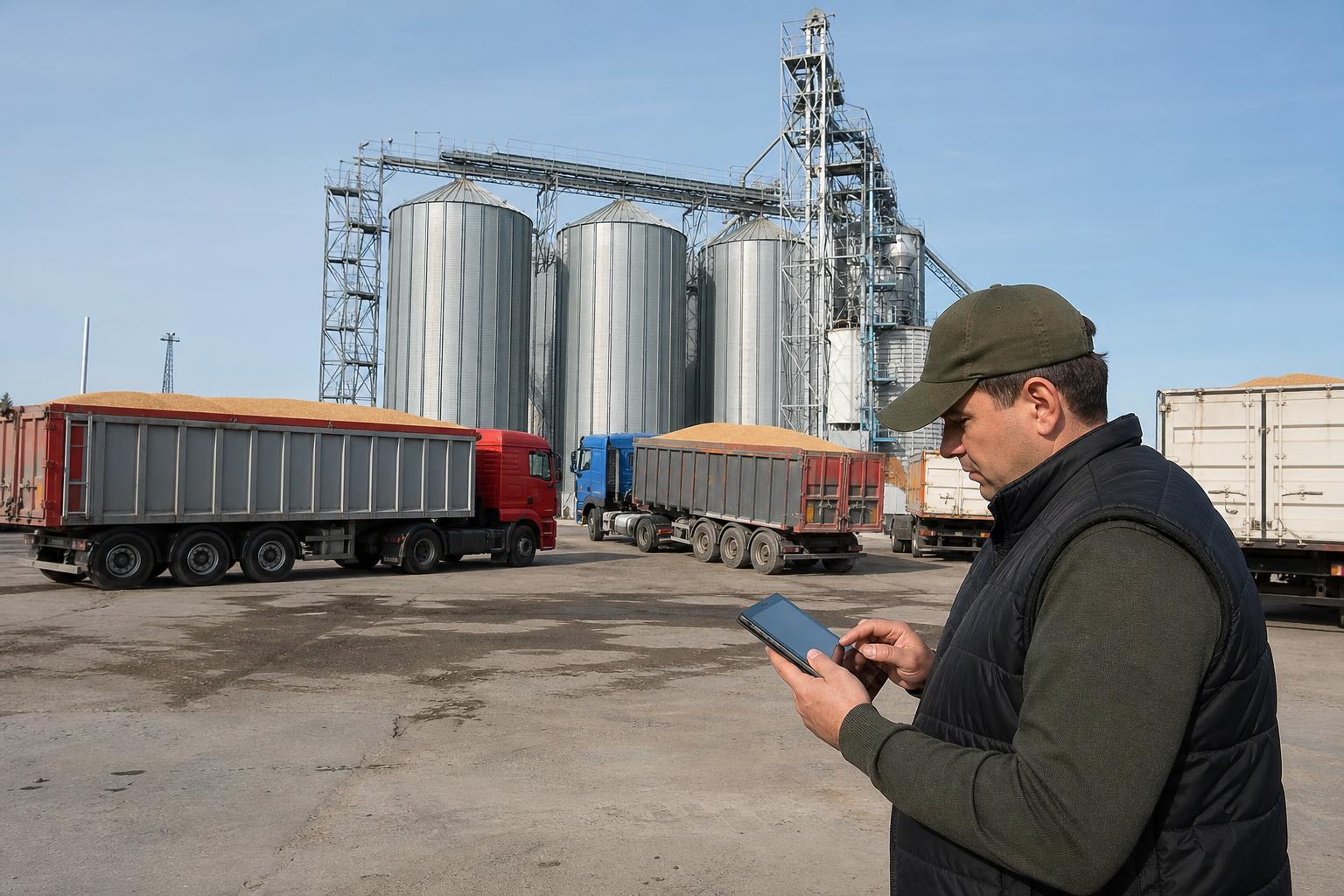
The Ukrainian grain market is entering a period where for sellers, not only the price of wheat or corn matters, but also access to working capital, storage quality, and the speed of confirming shipments under contracts.
Recent signals from the financial and elevator segments indicate that grain is increasingly viewed not only as a commodity for sale but also as a liquid asset that can be used to attract financing and plan shipments.
Lending against grain: the collateral weight of the harvest is increasing
The National Bank of Ukraine is set to increase the collateral coefficient for grain from 0.4 to 0.75. This means that banks will be able to evaluate grain as collateral for loans at a significantly higher rate than before.
For example, previously, a ton of wheat valued at 10,000 UAH could secure a loan of about 4,000 UAH, whereas at the current lower price of 6–7 thousand UAH per ton, the loan could be approximately 4,500–5,000 UAH per ton.
This is important for farms during periods of price decline. Instead of quickly selling the entire batch to cover operational costs, farmers can consider grain as collateral and postpone sale until better conditions or a specific buyer appears.
The "5-7-9" program: more room for working capital
Within the framework of the updated "5-7-9" program, farmers, according to the government, can attract up to 80 billion UAH in credit funds for working capital financing. The interest rate for such loans has been reduced to 10%.
It is also permitted to use the entire loan amount for operational expenses and to extend existing loans. For the grain sector, this can become a tool to reduce the need to sell the harvest immediately after harvest, when market supply is traditionally higher.
For grain sellers on AgroPost, this is a practical signal: if there is an opportunity to store grain and confirm its quality, announcements can be built not only around price but also around readiness for shipment, class, moisture content, weight, and other parameters that interest buyers.
At the same time, large operators are investing in digital control of elevator processes. "Continentale Farmers Group" is preparing its own elevator management system, "Silosna Doshka," with full launch scheduled for the end of 2026.
The system will display which crop, in what volume, and with what quality indicators is stored in a specific silo or warehouse. Analytical report updates are planned once daily.
For the market, this is not just internal automation of a single company. The more accurately an elevator can see stocks and quality, the faster it can match a batch under a contract, avoid confusion between grain classes, and plan shipments.
Logistics and acceptance: speed becomes part of the price
"Continentale" also announced the installation of automatic vehicle sampling units at elevators in Khorostkiv and Horodenkа by the end of 2026. In Krasne, similar equipment is expected to accelerate the acceptance of early grains.
According to the company, this could add at least one acceptance truck per hour. For grain sellers, this means fewer delays during peak periods, and for buyers — faster movement of batches from field or warehouse to contractual shipment.
Additionally, the company reported investments of $52.09 million in elevator operations from 2019 to 2026, including acquisition of elevators, modernization, automation, and equipment procurement.
Key takeaways for AgroPost participants
- Farmers should check with banks the possibility of crediting against grain under the new collateral coefficient.
- Grain sellers should update data on batch quality: class, moisture, protein, gluten, weight, volume, and storage location.
- Buyers should pay attention not only to price but also to confirmed quality, availability of the batch, and shipment speed.
- Elevator operators digital stock accounting and automation of acceptance can give an advantage during high-load seasons.
What does this mean for the market
The Ukrainian grain market is moving towards a model where the competitiveness of a batch is determined not only by the hryvnias per ton but also by the seller’s financial flexibility, storage transparency, and logistics speed. For AgroPost, this emphasizes the importance of high-quality listings with precise grain parameters, as buyers increasingly seek not just a product but a ready-to-transaction batch.
Comments
No comments yetNo comments yet - be the first.