
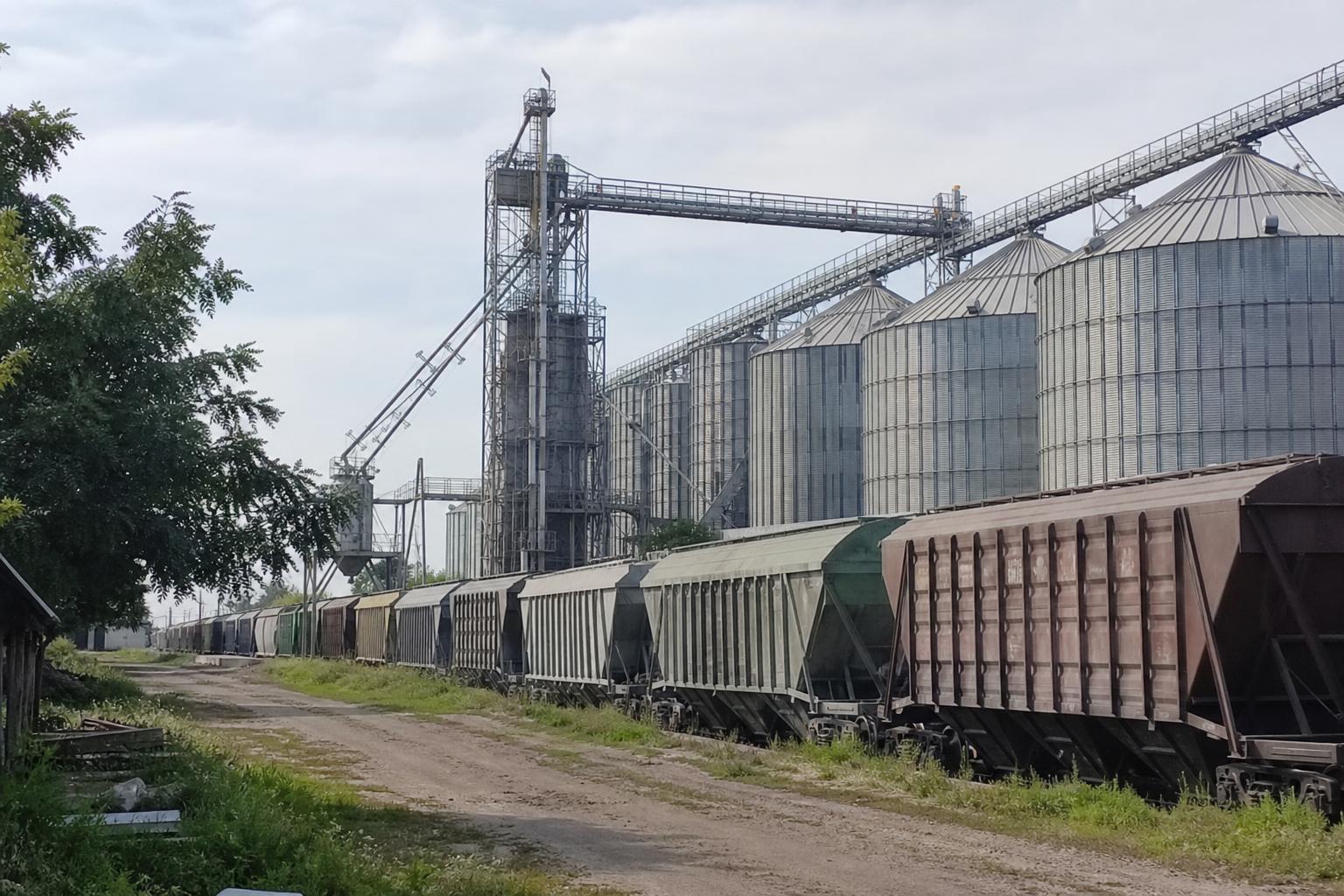
The Ukrainian grain market is entering a new marketing period with uneven logistical loads. According to Spike Brokers, at the end of July, the accumulation of grain wagons near western border crossings increased more than threefold — from 58 to 201 wagons.
The paradox is that this occurred despite a decrease in grain and meal shipments across the border. For market participants, this means: the formal existence of a route does not guarantee the swift fulfillment of a contract.
Western border: queues grow, transshipments decrease
In July, the average daily transfer of grains and meals through border crossings was 135 wagons per day. This is 20% less than at the end of June.
The largest average daily volume of grain wagon transfers was on the Hungarian route — 37.6 wagons per day. Next were Slovakia — 17.3 wagons and Poland — 14.9 wagons. The Romanian route across the border showed only 1.1 wagons per day.
For exporters, this increases the risk of planning errors. If a grain batch is tied to a specific crossing, it is necessary to check not only tariffs and wagon availability but also the actual capacity of the route.
Seaports remain the main channel for grain
Over 28 days in July, railway transportation of grain cargoes amounted to 1.89 million tons. This is 30.2% less than in June but 82.3% more than during the same period last year.
During this period, 1.564 million tons of grain and milling products were transported by rail for export. Seaports accounted for 88% of railway grain exports, while 12% passed through land border crossings.
This structure confirms that for large grain shipments, port routes remain fundamental. The western border is important as an alternative channel, but its capacity is limited by infrastructure competition.
Odesa ports slowed down, Danube activity increased
At the end of July, movement towards Odesa ports noticeably slowed. The number of grain wagons heading to these ports decreased to 1,356 wagons.
The average daily unloading in this direction was 690 wagons, with an average daily loading of 580 wagons. According to brokers, at the end of the month, additional restrictions were imposed due to conventional bans on certain shipments to port stations caused by terminal congestion and unloading stoppages at water terminals.
The Danube cluster moved differently: the number of grain wagons in transit increased to 1,141 wagons, with an average daily unloading of 51 wagons. This does not diminish the role of Odesa ports but shows that the market is actively seeking backup options.
What sellers and buyers should consider on AgroPost
- Grain sellers should specify not only crop type, grade, and volume but also the actual point of dispatch: elevator, station, port, or border route.
- Buyers should clarify whether the price accounts for risks such as wagon delays, route changes, or waiting times for unloading.
- Elevators need to communicate current readiness for reception, drying, storage, and dispatch, especially if farms are reorienting shipments between ports and borders.
- Traders should cautiously set execution deadlines if the contract depends on a specific railway crossing or port station.
In July, 1.38 million tons of grain were transported to seaports by rail, which is 37% less than in June. Therefore, in short-term agreements, logistical factors can be just as important as the base grain price.
What this means for the market
The Ukrainian grain market currently operates under conditions where demand for logistics is unevenly distributed among ports, the Danube, and the western border. For sellers, this underscores the importance of carefully calculating the net price after delivery, and for buyers, verifying the realism of delivery timelines before signing a contract.
Comments
No comments yetNo comments yet - be the first.